
Article: Your Guide to the Andean Cosmological Calendar
Your Guide to the Andean Cosmological Calendar
The Chakana Calendar
In the Andean tradition, time is not a straight line. It is a cross - a chakana - held by four cardinal moments (the two solstices and two equinoxes) and four cross moments that fall between them.
Together, they form eight thresholds. Doorways. Each one asks a specific thing of the person who walks through it.
Here they are, in the order they arrive through the year.
June 21 - Winter Solstice / Andean New Year
The longest night of the southern hemisphere. In the Andean world, this is when the year begins. Not with noise. Not with celebration. With stillness. The sun is at its lowest arc. Everything is held in the dark.
The invitation: to be still. To notice what has quietened in you as well. To sit with what you have carried and what you are ready to release before the light returns.
At Chavín, this day is understood as the opening of a new cycle. KANTU launched on this day in 2026 for exactly that reason.
August 1 - Pachamama Raymi
The day the earth opens. The formal ceremonial beginning of the agricultural cycle in the highlands.
The invitation: to give before you ask. To offer something to the ground - a flower, a few drops of water, a word of gratitude - before you begin whatever you are about to plant this year.
Read the full teaching in Pachamama Raymi - The Day of Offering.
September 22/23 - Spring Equinox (Southern Hemisphere)
Equal light and dark. A moment of balance. From here, the days will grow longer.
The invitation: to notice what is in balance in your life, and what is not. The equinox is not a permanent state. It is a doorway. Watch what wants to rise into the light.
November 1/2 - Ayamarka Killa
The month of the ancestor-seeds. Across the Andes, this is the time to honor those who came before - not as absent, but as present in a different form.
The invitation: to remember. To speak the names. To place food on the table for those whose bodies are no longer here but whose lineage continues in you.
December 21 - Summer Solstice
The peak of the light. The longest day of the southern hemisphere.
The invitation: to notice what has grown. To celebrate what has come into form since the winter solstice. To let the fullness be felt without rushing to name what comes next.
February 1/2 - Pawkar Raymi / Washiwalito
The flowering season. Carnival. The return of water.
The invitation: to receive. To let the year's abundance land in you. To make room for color, for water, for the joy that comes from a full earth.
March 20/21 - Autumn Equinox (Southern Hemisphere)
Balance again. This time, moving into darkness. The days will grow shorter now.
The invitation: to notice what needs to go with the leaves. What has held on past its season. What is ready to be composted so the next cycle has room.
May 3 - Chakana Raymi / Cruz Velakuy
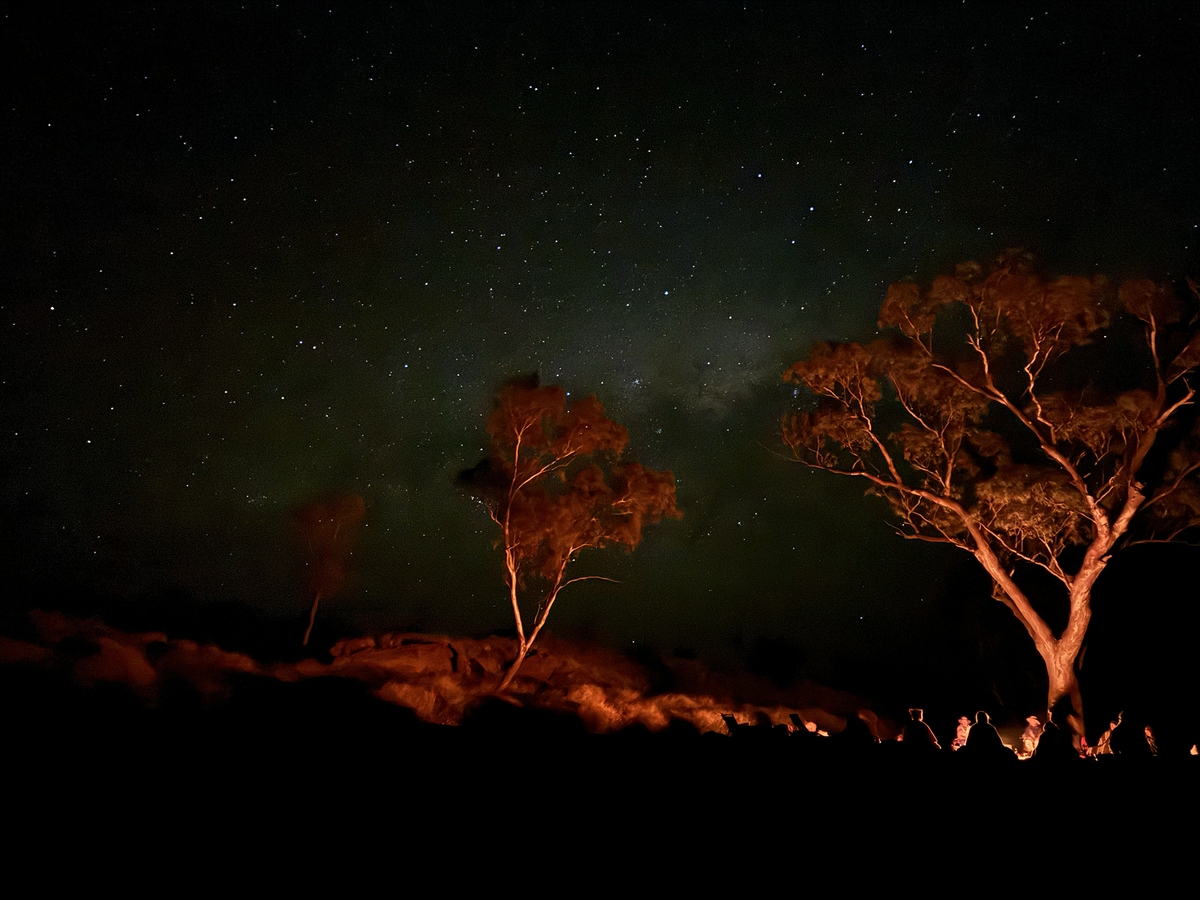
The Southern Cross reaches its highest point in the night sky. The Chakana - the sacred cross of the Andes - becomes visible in the stars. One of the most important moments of the calendar year.
The invitation: to look up. To remember that the pattern is bigger than the day. That the stars have always been there, holding the cross that holds the calendar.
How to walk with the calendar
You do not need to observe every moment. The tradition does not ask for perfection. It asks for presence.
Pick one moment this year and pay attention. Sit with what it asks. See what shifts.
The calendar has been walking for thousands of years. It will hold your steps, whatever pace you keep.
%20and%20four%20cross%20moments%20tha...)
Leave a comment
This site is protected by hCaptcha and the hCaptcha Privacy Policy and Terms of Service apply.