
Article: Quru - The Smaller Serpents
Quru - The Smaller Serpents
When the stone carvers of Chavín de Huántar covered their sacred objects with serpentine forms, they were not depicting one thing. They were depicting a world in which the serpent was the visible form of energy itself - the pattern that living force takes when it moves through matter.
But within that broad understanding, the tradition makes a distinction that Western scholarship has not always attended to carefully.
Two names, two natures
In the broader Andean world, Amaru names the great cosmic serpent - the mythological, transformational being that moves between the worlds above and below, holds the cosmic axis, appears in lightning and rainbow and the movement of underground water. The Amaru is the serpent as cosmological principle.
In the Áncash Quechua of the Conchucos valley - the specific linguistic and cultural tradition of the Chavín region - Quru names the smaller serpents. The ones of the earthly world. The ones that move through the world of daily life - of rivers and soil and stone.
The Quru is not a diminished Amaru. It is a different being, with a different relationship to the human world.
Where the Amaru represents the vast movement of cosmic energy - the transformational, the mythological, the invisible made visible - the Quru represents the immediate. The serpent you could actually encounter on a path through the mountains. The one that lives in the rock wall beside the river. The one whose movement through the grass reminds you that the earth is alive and inhabited.
What the Quru carries
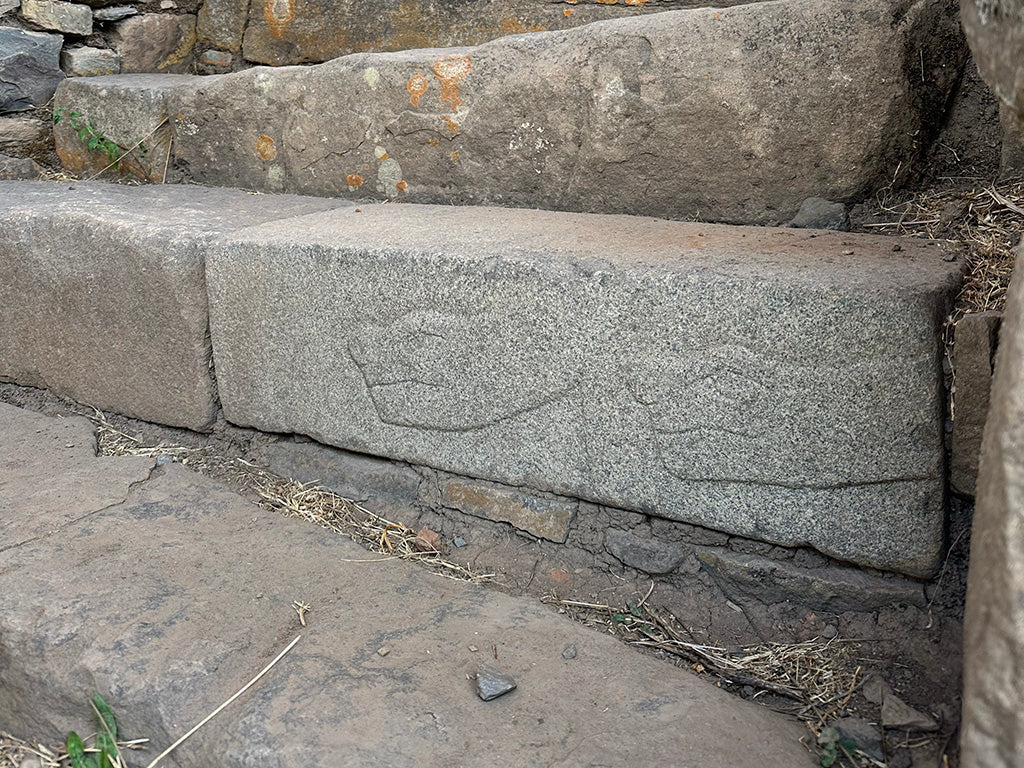
The Quru serpents carved at Chavín appear in their hundreds across stone reliefs, in the hair of deity figures, coiling around sacred objects. They are the living current of the earthly world made visible in stone - the reminder that the earthly world is not simply a neutral background to human life but a world teeming with presence, intelligence, and communication.
In the tradition, the Quru teaches through proximity. Where the Amaru asks you to hold the vastness of the cosmos in mind, the Quru asks you to notice what is immediately alive. The energy moving through the ground beneath your feet. The current in the river beside you. The quiet life in the stone wall you pass every day without looking.
This is the teaching of the earthly serpent: that the sacred is not only in the great and the cosmic. It is in the immediate and the physical.
The Quru earrings
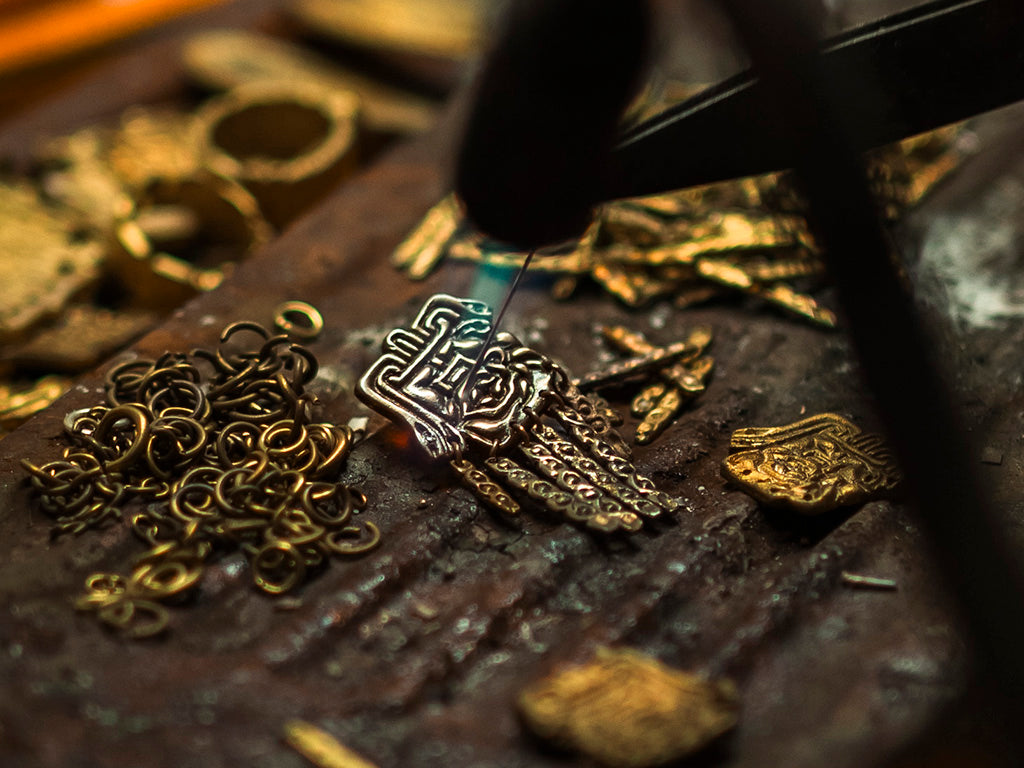
The Quru earrings carry two serpents in mirrored dialogue - the ancient teaching that transformation happens not alone, but in relationship. They are worn at the ears: the portals through which the world enters, the places where attunement begins.
To wear the Quru is to carry a reminder that the living current moves through everything - not only the vast and mythological, but the small, the immediate, the physical. The river you walk beside. The soil you stand on. The breath that moves through you right now.
The earth speaks constantly. The serpent has always known how to listen.

Leave a comment
This site is protected by hCaptcha and the hCaptcha Privacy Policy and Terms of Service apply.