
The Artisan - What It Means to Make by Hand
Every piece in the KANTU collection is held by hands you will never see.
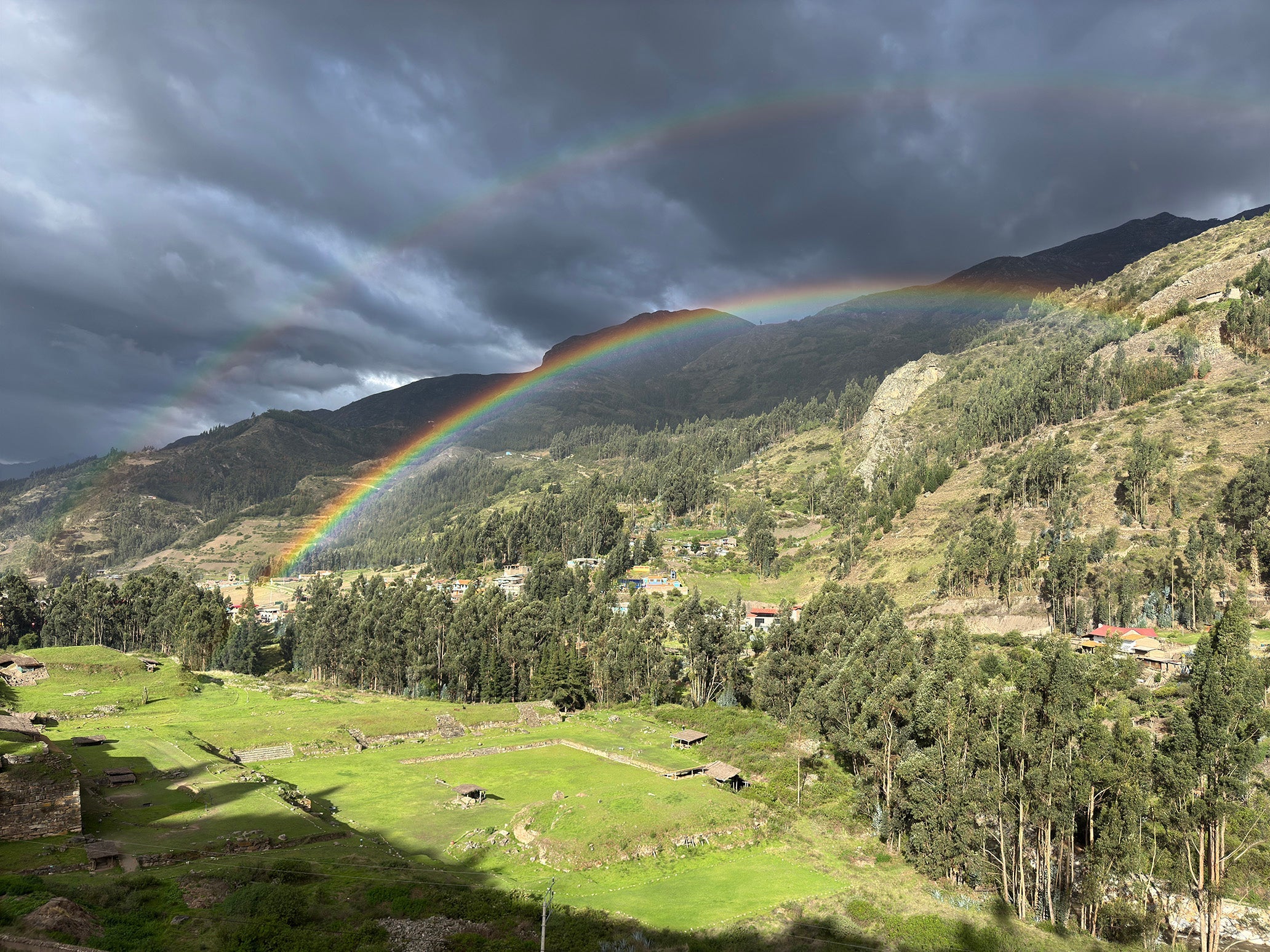
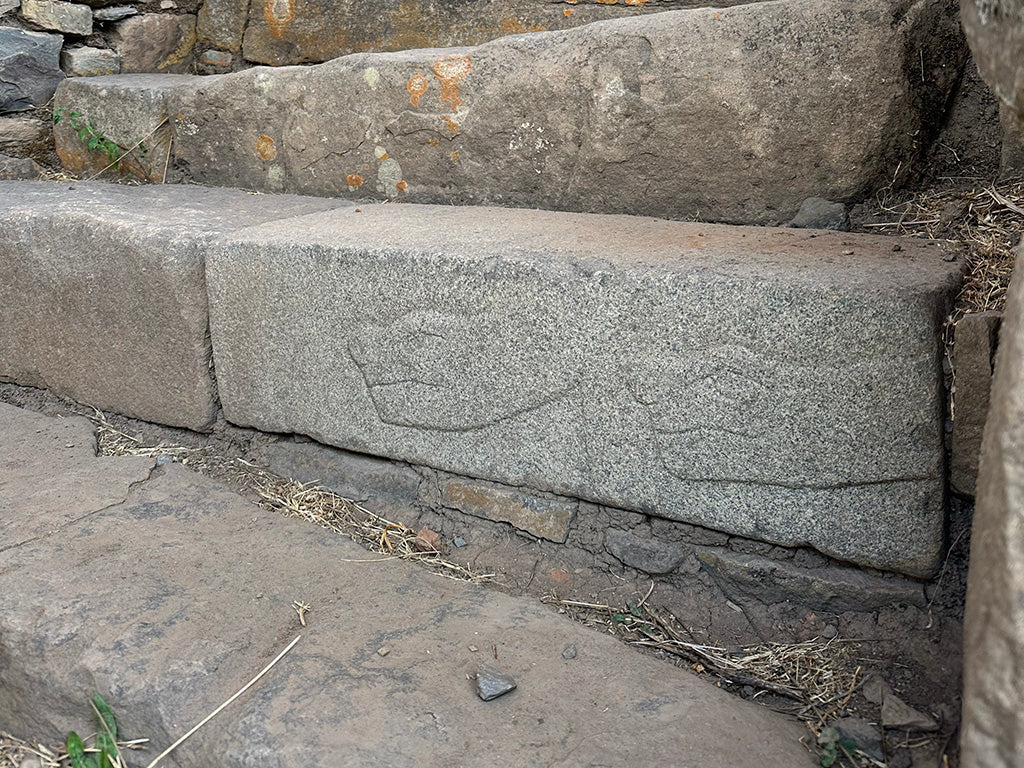
They begin in Peru, drawn from the iconographic language of Chavín de Huántar, refined through years of study and dialogue with the living tradition. The symbols are ancient. The decisions about how to render them today are intimate. Each piece is a slow conversation between what the stone has carried for three thousand years and what the body needs now.
But the drawing alone does not become a piece. For that, the work travels.
It travels to Bali, where an orfebre - a master of metalwork - brings each design into form.
The word matters
In Spanish, orfebre carries weight that artisan does not carry. Jeweler misses the lineage entirely. Orfebre names something specific: someone who works in metal as ceremony, who treats the material as something living, who understands the shape as a vessel for intention.
The Andean lineage reveres the orfebre. In the world of Chavín, the goldsmiths and bronzeworkers were ritual specialists. Their hands carried the responsibility of giving form to the sacred. What they made was alliance: between human and stone, between body and cosmos.
To carry that word forward in KANTU is intentional. The men who make these pieces are orfebres. The word fits.
Bali was not chosen by accident
The first conversations about KANTU happened in Peru. The morning after, the orfebre who would lead the work - through a sequence of small, almost-impossible coincidences - was already drawing the first samples in Bali. The introduction happened through a friend, on a regular afternoon, without anyone planning it. By the next morning, the original sketches existed. By the morning after that, the first work had begun.
The pieces did not move slowly into the world. They moved as if they were already ready.
Beyond that recognition, there is a deeper truth. Bali carries its own living ceremonial memory. It is an island where craft and devotion have never been separated, where the temple, the home, and the workshop are continuous spaces. To make KANTU here, between the Andean highlands and this island, is itself a tinkuy: the sacred meeting of two rivers.
Two ancient cultures. Two living traditions. Meeting in brass.
The making is slow
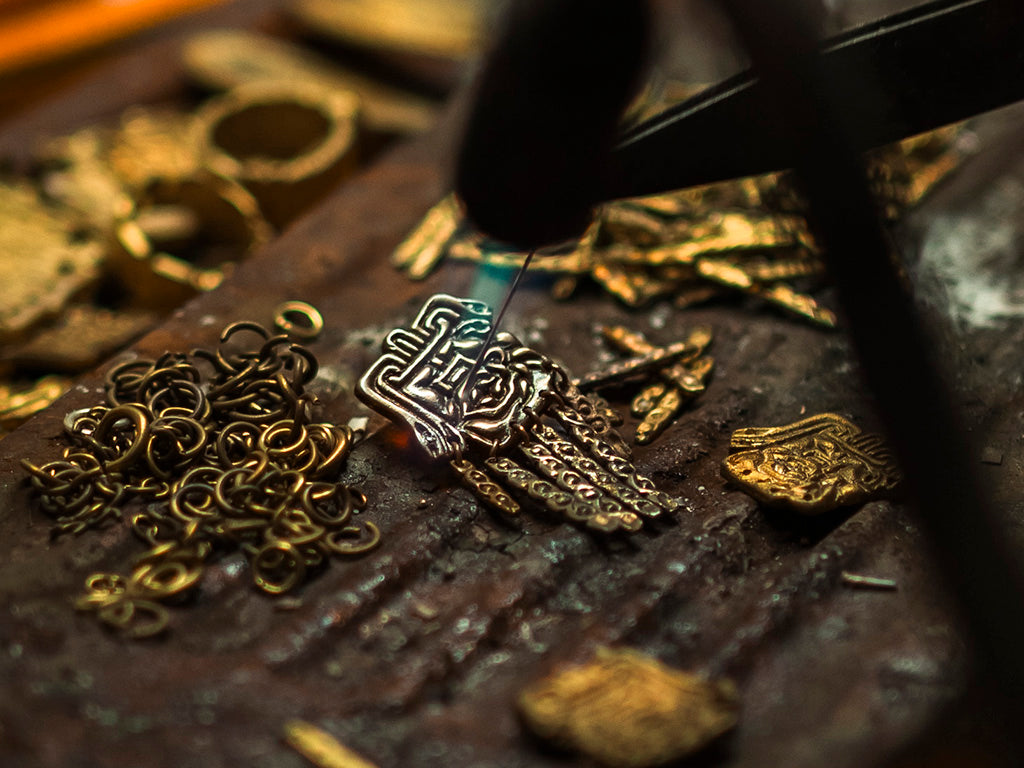
A piece begins as a drawing. Then a wax model - shaped by hand until every curve holds. The wax is set inside a ceramic shell. The shell is fired, and the wax burns away. Molten brass is poured into the space the wax has left behind.
When the brass has cooled and the shell is broken open, the piece emerges - still rough, still holding the marks of the pouring. Then the slower work begins. Each edge filed. Each curve smoothed. Each surface brought to the finish that will meet the skin.
The orfebres work in small batches of fifteen. There is no production line. There is a long table, light through the rattan walls, and the small, precise sounds of file and stone.
When a batch is finished, they begin the next. When that batch is gone, the next begins again. This is the rhythm.
The pieces are made one at a time, by the same hands, in a place where the work has always been done with attention. Each piece carries the unrepeatable evidence of being made by a body that was present to it: the fine trace where a file passed, the soft grain on the inside of a cuff where a hand steadied the piece as it cooled.
These are signatures. The mark of a piece made by someone who was there.
Every piece carries hands you will never see
This is the lineage. From the stone carvers of Chavín, whose names are mostly lost but whose work has lasted three thousand years, to the modern teachers of the tradition, to the years of listening that shaped each design, to the orfebres in Bali, to the parchment that explains what you are wearing, to the linen bag, to your hands.
The lineage continues past the workshop in Bali. Past the website. To you, wearing the piece, in your own life, in your own days.
That is what it means to make by hand. The presence of attention, kept all the way through, from the first drawing to the last gesture of opening the box.
A piece that has been held by attention at every step is a piece that can hold attention back.
La forma es oración cuando nace del centro.
With love - KANTU

Leave a comment
This site is protected by hCaptcha and the hCaptcha Privacy Policy and Terms of Service apply.