
Amaru - The Cosmic Serpent
Amaru - The Serpent That Holds All Worlds
In the Western imagination, the serpent carries a long shadow. From Eden onward, it has been associated with temptation, deception, the fall from grace. Even where serpents are revered - in certain strands of ancient Greek and Egyptian tradition - they carry an ambivalence, a sense of power that must be carefully handled.
The Andean Amaru is something else entirely.
The serpent of all three worlds
The Andean cosmos is organized into three realms: Hanan Pacha (the upper world, celestial), Kay Pacha (the middle world, earthly), and Ukhu Pacha (the inner world, underworld). These are descriptions of different dimensions of reality, each with its own qualities, each necessary to the whole.
The Amaru is the being that moves through all three. It descends into Ukhu Pacha - into the depths, the inner, the ancestral - and it rises into Hanan Pacha, the celestial. Its body traces the full axis of the cosmos. It does not belong to one world; it connects them all.
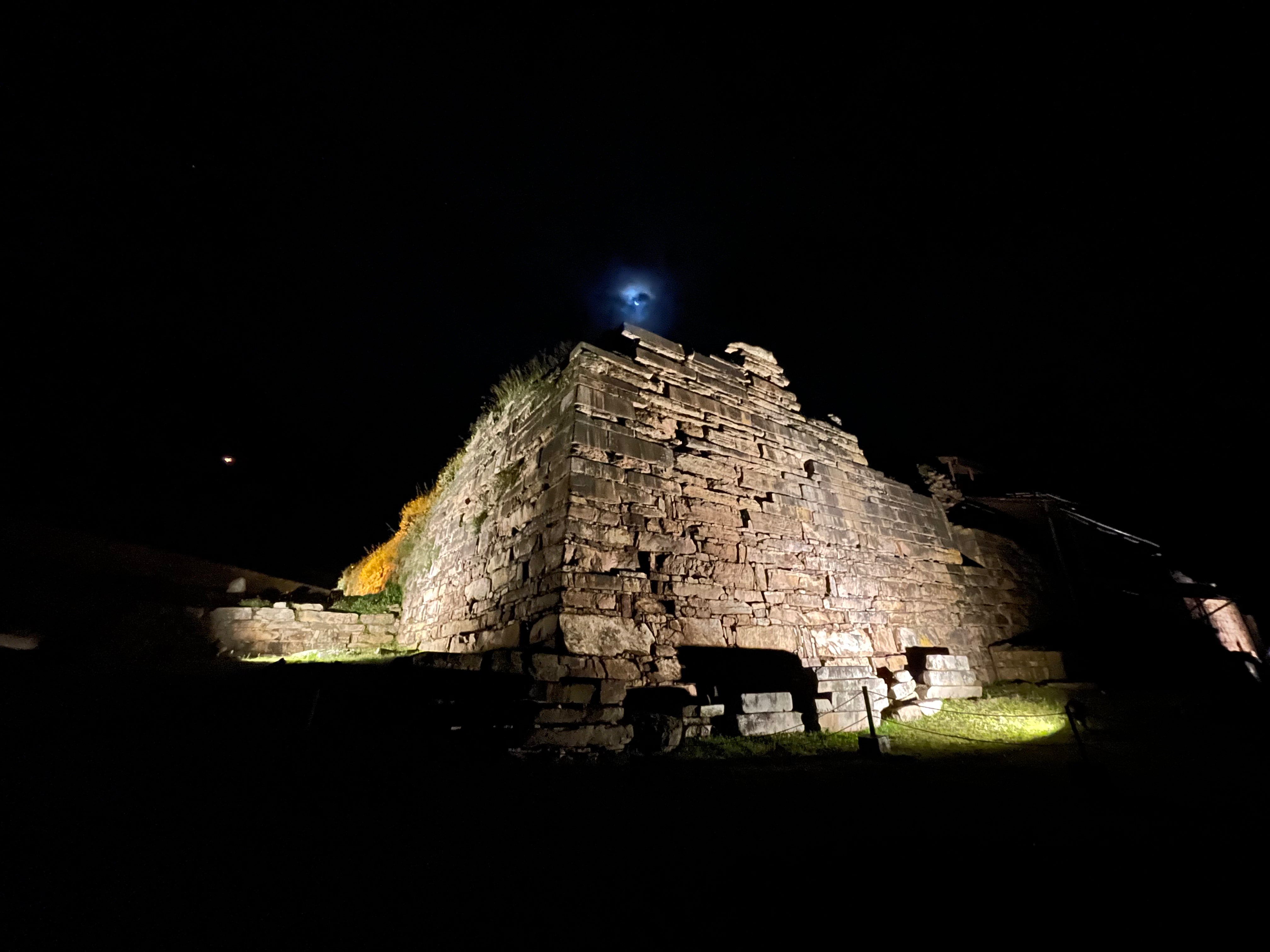
This is why the serpent appears so prominently in the iconography of Chavín de Huántar. In the stone carvings of that three-thousand-year-old ceremonial center, serpents appear everywhere: as hair, as belts, as appendages of larger figures, as independent beings moving through the visual field. They are not decorative. They are structural - they show the viewer how the cosmos is held together.
Two names, two beings
The serpent carries different names in different Quechua traditions - and the distinction matters. In the broader Andean world, Amaru refers to the great cosmic serpent: the vast, transformational being that moves through all three worlds, holds the axis of the cosmos, is twin within itself. In the Áncash Quechua of the Conchucos valley - the specific tradition of the Chawpin region - Quru refers to the smaller serpents of the physical world.
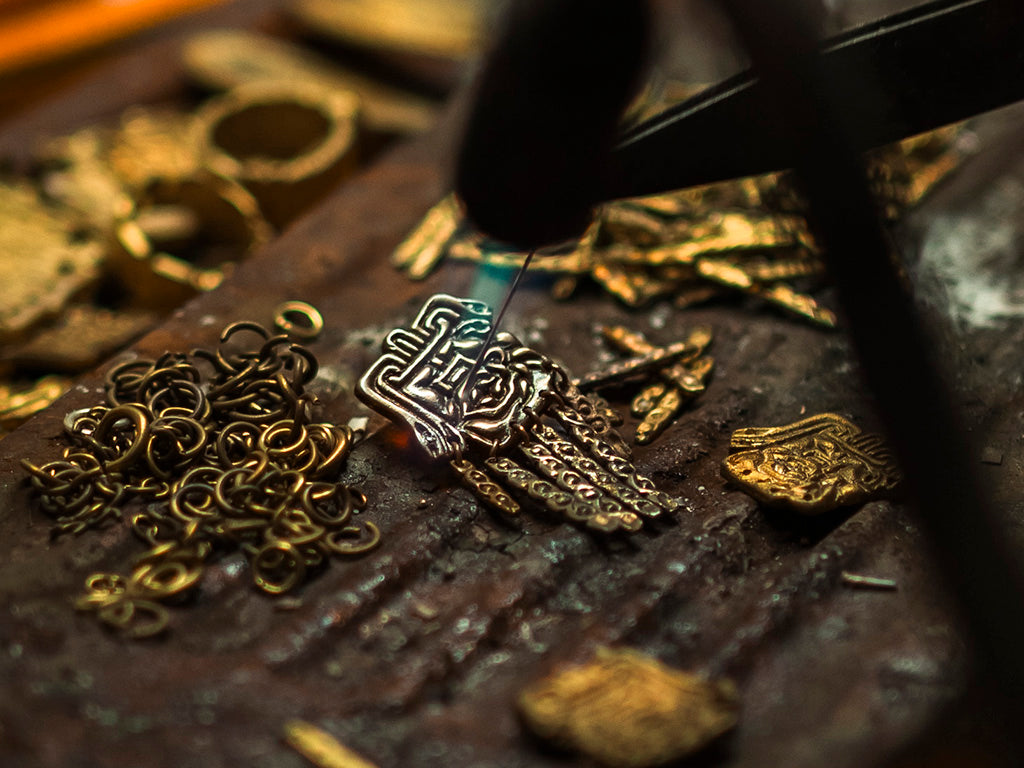
This Journal entry speaks of the Amaru - the great cosmic being, the cosmological force. The product pieces in the KANTU collection depict Quru - the smaller serpents whose forms were carved into the stone and goldwork of Chavín. Both are honoured. Both are distinct.
To use both names with precision is to respect the specificity of the tradition: that knowledge lives in particular landscapes and languages, and those landscapes have their own ways of calling things.
Twin within itself
One of the most striking teachings about the Amaru is that it is gemela en sí misma - twin within itself. It is both male and female simultaneously. In its male aspect it is swift, rapid as thunder, arriving to help transmute before returning to its invisible world. In its female aspect it is the invisible serpent that inhabits the deep layers of consciousness and the deep layers of the earth - she who embraces, holds, digests, and sleeps. Neither aspect is superior; together they form a unity that is, as the teaching says, impredecible - unpredictable. An archetype so complex it spirals outward infinitely, beyond what the human mind can fully comprehend.
This is a cosmological statement about the nature of reality. The universe is organized around the creative tension between complementary forces. The Amaru, moving through all three worlds, holding both poles of every duality within itself, is the living image of that understanding.
Water, rain, and the turmanye
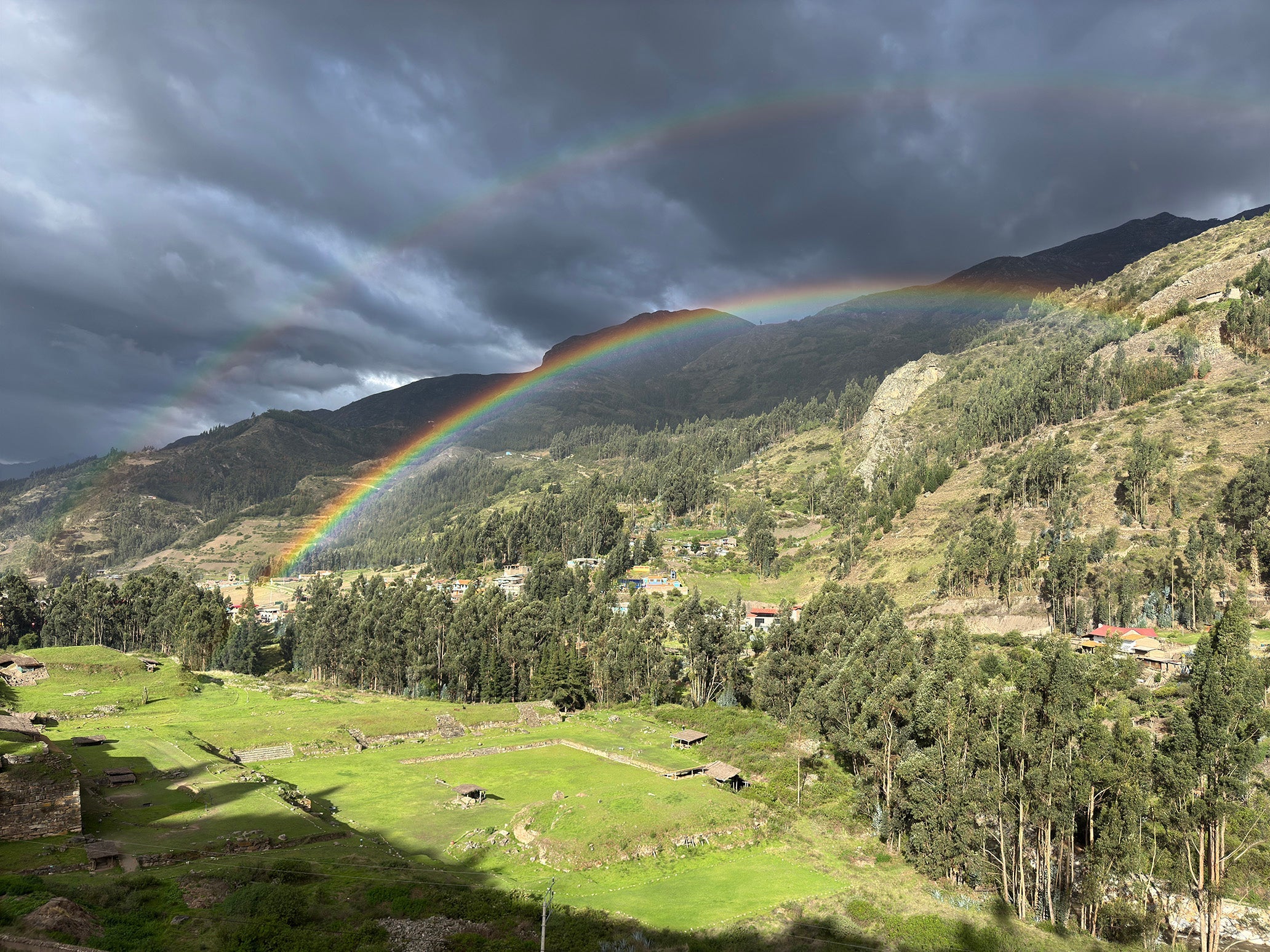
The Amaru is deeply associated with water - with rivers, with rain, with the cycle that connects sky and earth. In the Quechua of Áncash, the rainbow is called turmanye, and it is understood as the Amaru moving across the sky: the cosmic serpent made visible for a moment, its body shimmering with the colors of its passage.
The rainbow as cosmic serpent appears in different forms across many traditions. In the Andean understanding, it carries a specific set of meanings: it is the symbol of the harmony of the universe and its fertility, the celestial rain. It is the serpent coiled in the sky, marking the restoration of cosmic order and the gestation of a new cycle. It is, as my teacher says, "el arco iris enrollado como una serpiente, la restauración del orden cósmico" - the rainbow coiled like a serpent, the restoration of cosmic order.
There are white rainbows, black rainbows, and colored ones - each a different messenger from the natural world. They are feared and adored. Their symbolism, as the tradition holds, is vast.
The Amaru in KANTU
Several pieces in the KANTU collection carry the Amaru. Not as decoration, and not as a symbol borrowed casually from a culture. As a teaching.
To wear the Amaru is to wear a reminder of wholeness. Of the capacity to move through different states, different worlds, different dimensions of experience without being broken by the transition. Of the twin nature within each of us - the complementary forces that we carry and that, when held in balance, give us our full range.
The serpent, in this tradition, teaches. And what it teaches is this: you are larger than the world you can see.

Leave a comment
This site is protected by hCaptcha and the hCaptcha Privacy Policy and Terms of Service apply.