Skip to content

Cart

Your cart is empty

Amaru Cuff

Sale priceRp 3.187.000,00 IDR

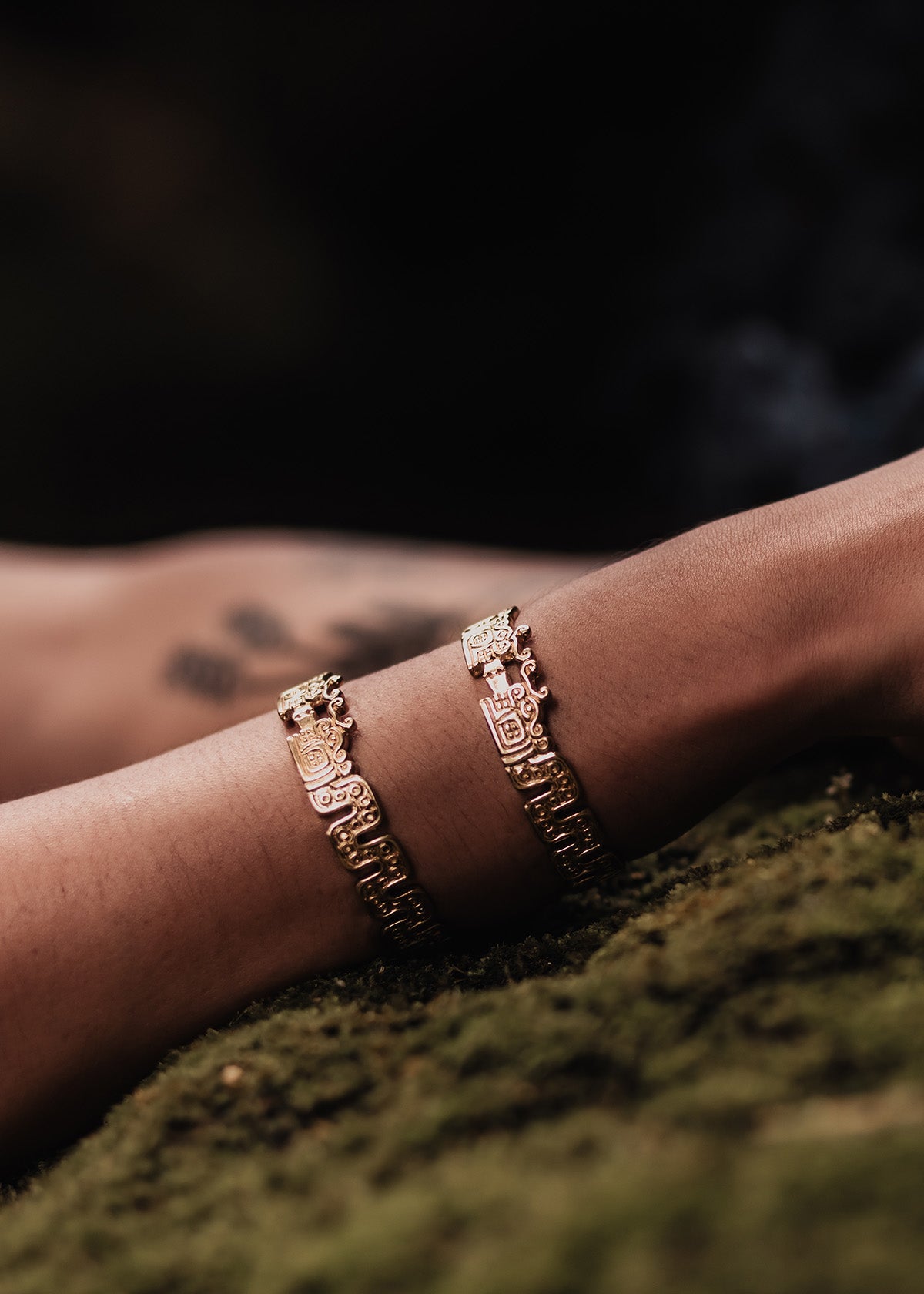
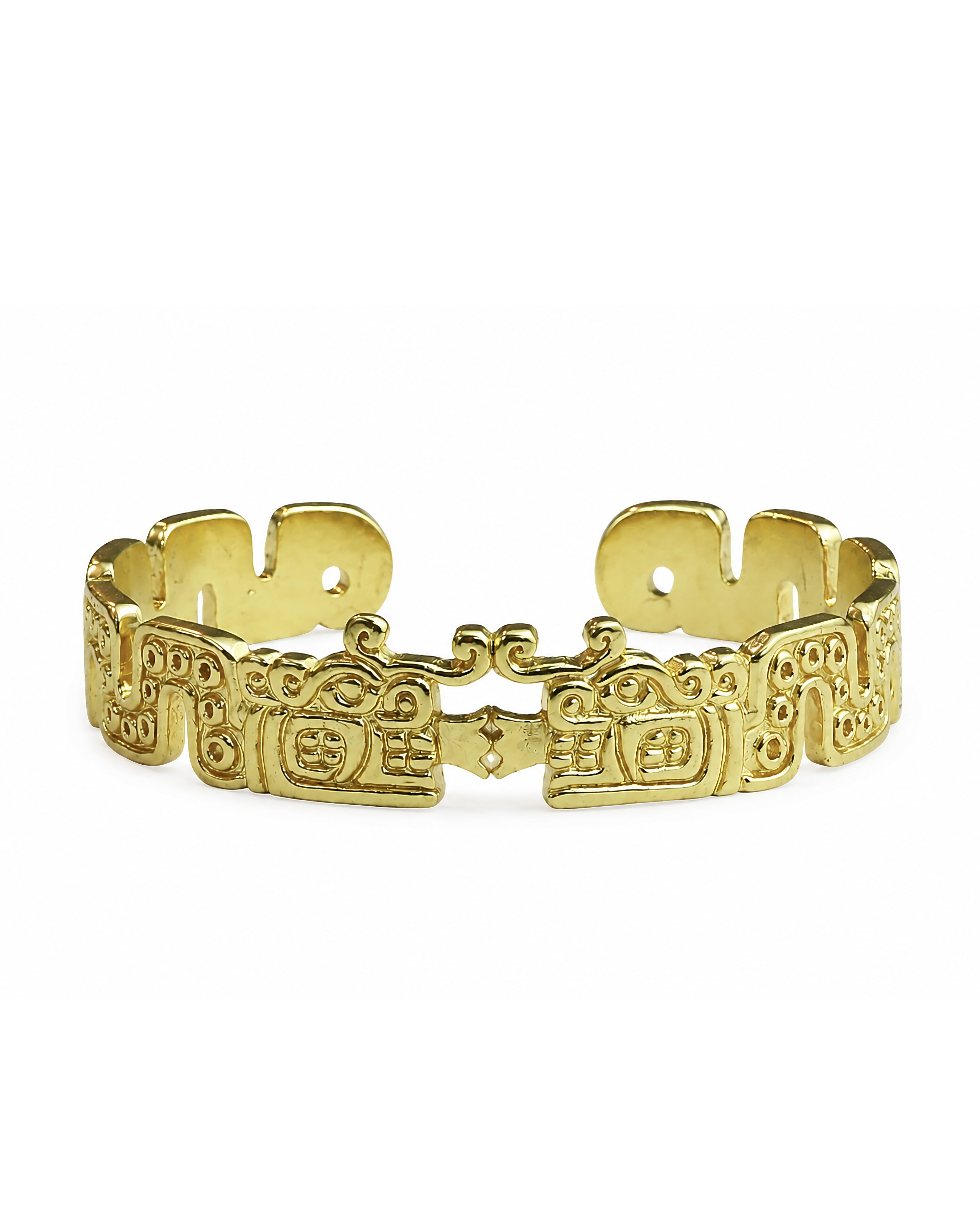
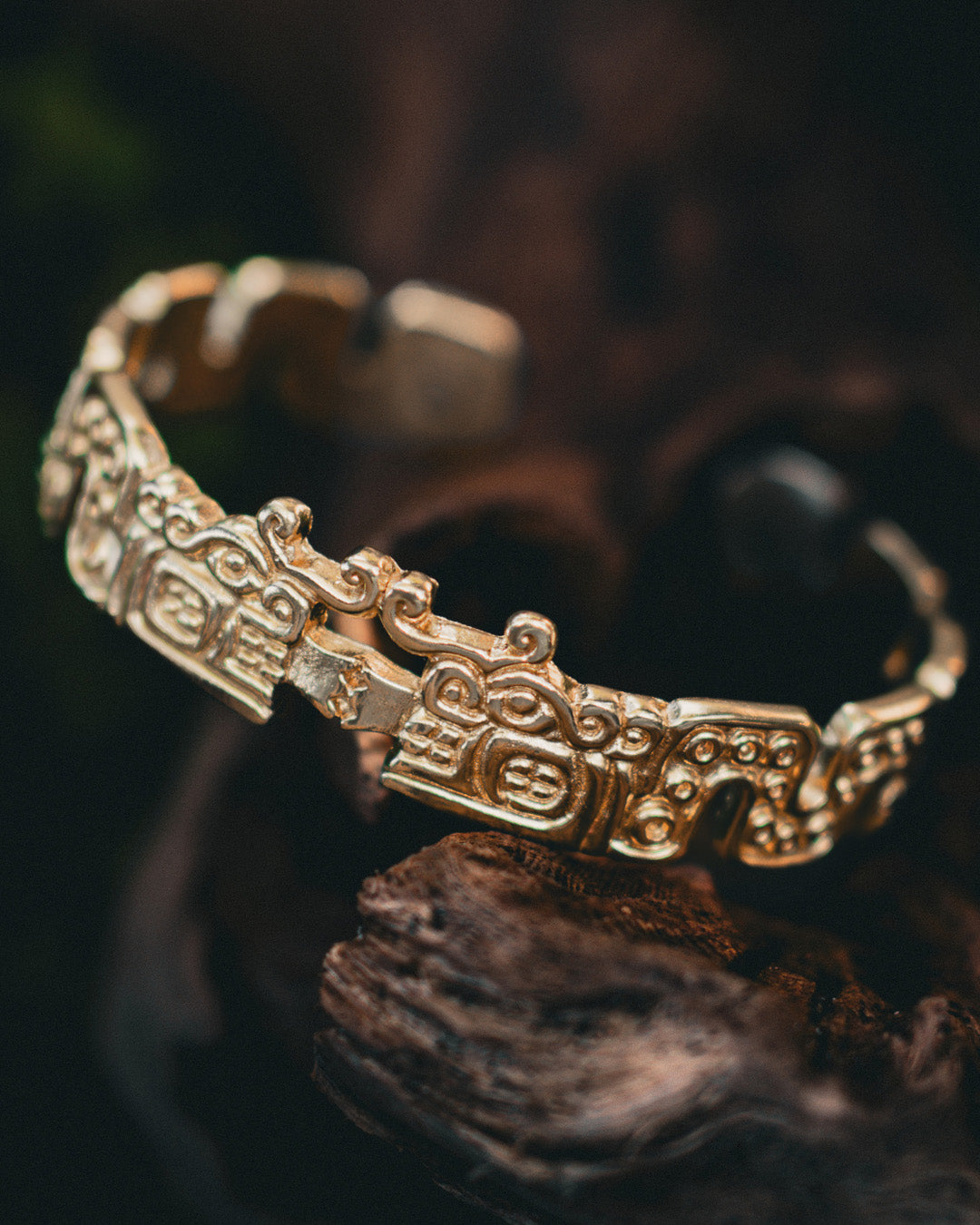
Amaru - the cosmic serpent. The living current that moves through all worlds. Two feline-serpents flow outward in perfect mirror - bodies alive with circular marks, scales and seeds and eyes all at once. Their faces carry the upward gaze: not toward the sky, but within.

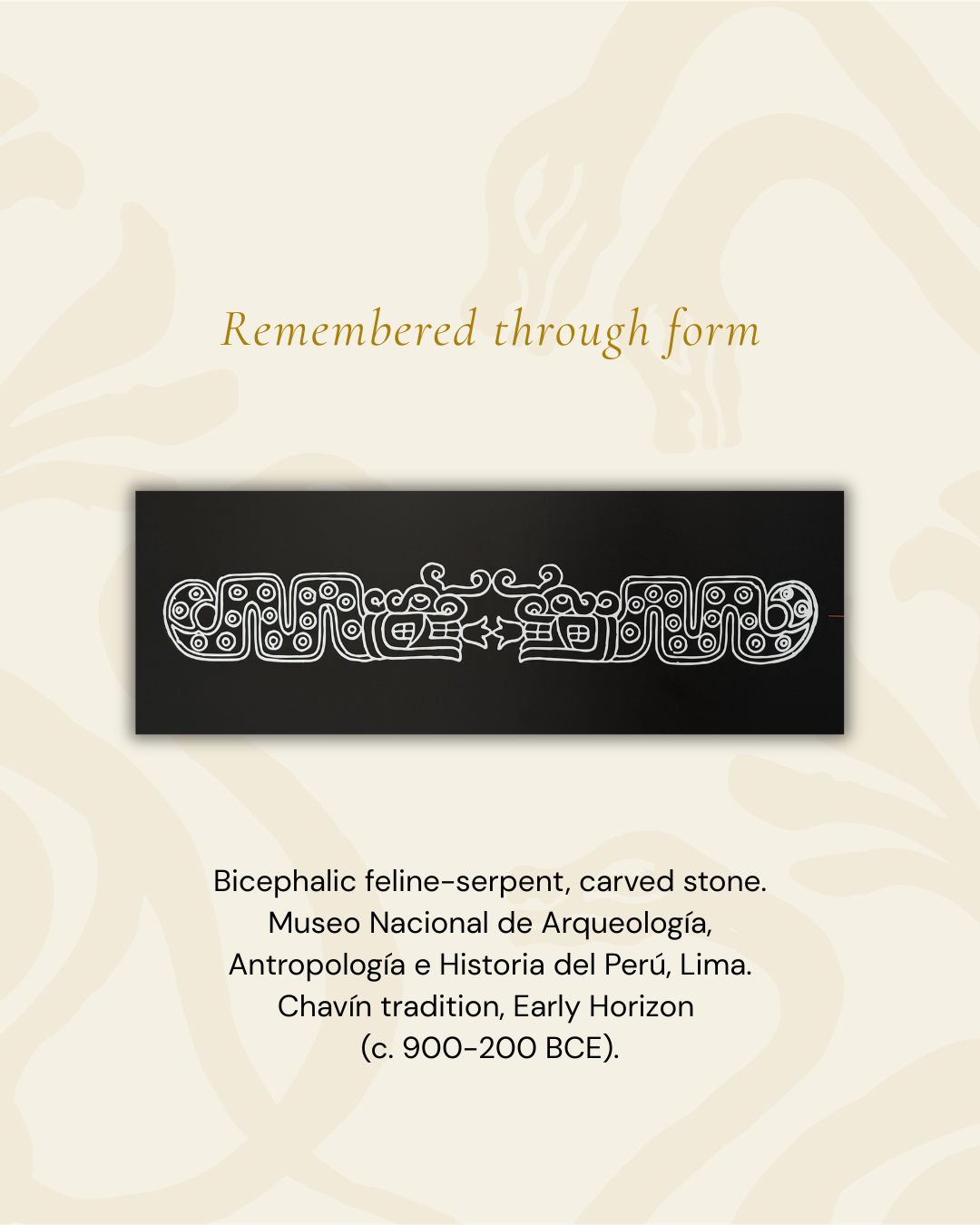
Two currents in Ayni - sacred reciprocity - made visible. Dialogue, not opposition. Inspired by a stone carving at the Museo Nacional de Arqueología in Lima. Chavín tradition, Early Horizon c. 900-200 BCE.

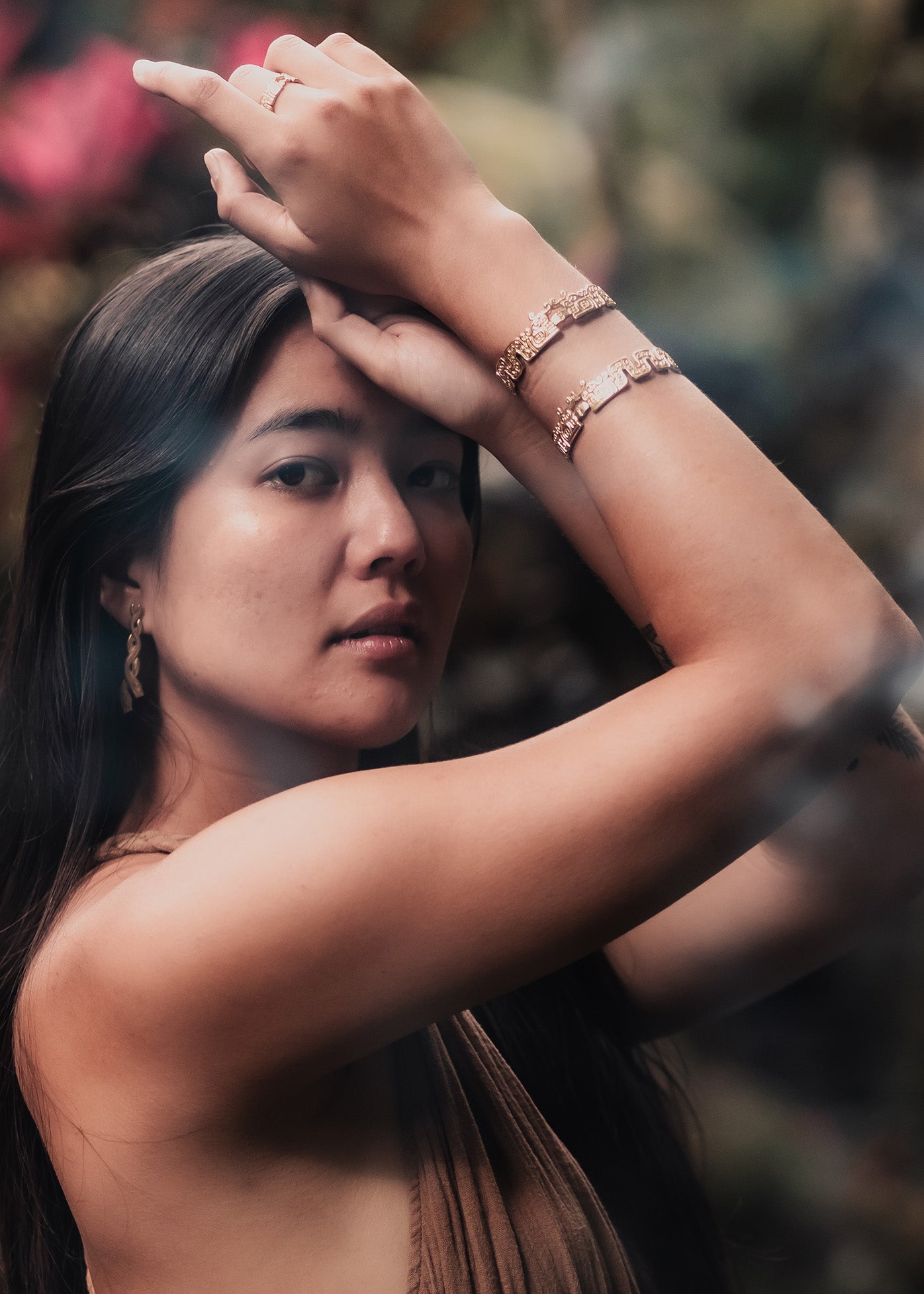
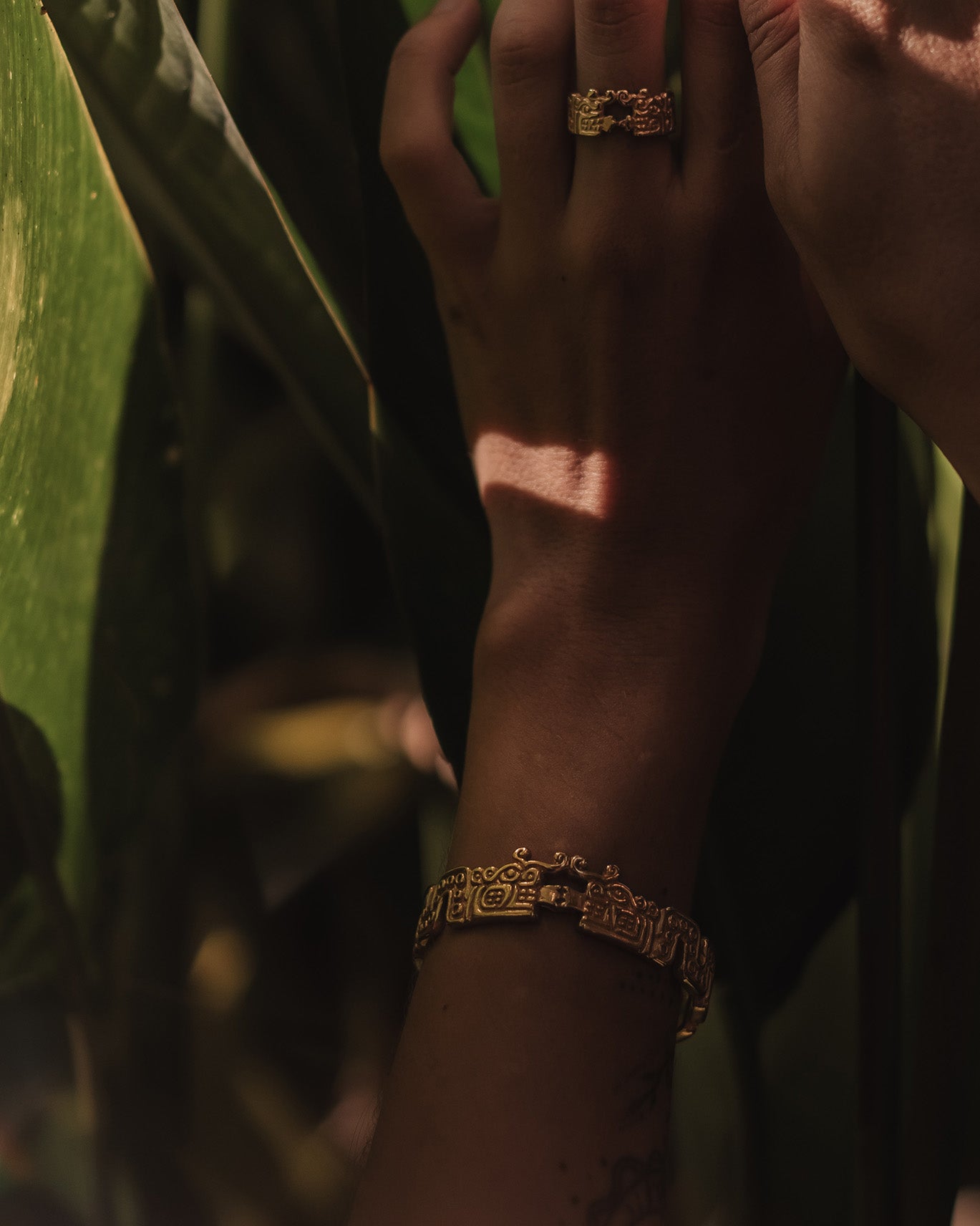
Worn at the wrist - the full passage from heart to hand - this cuff holds every gesture you make.

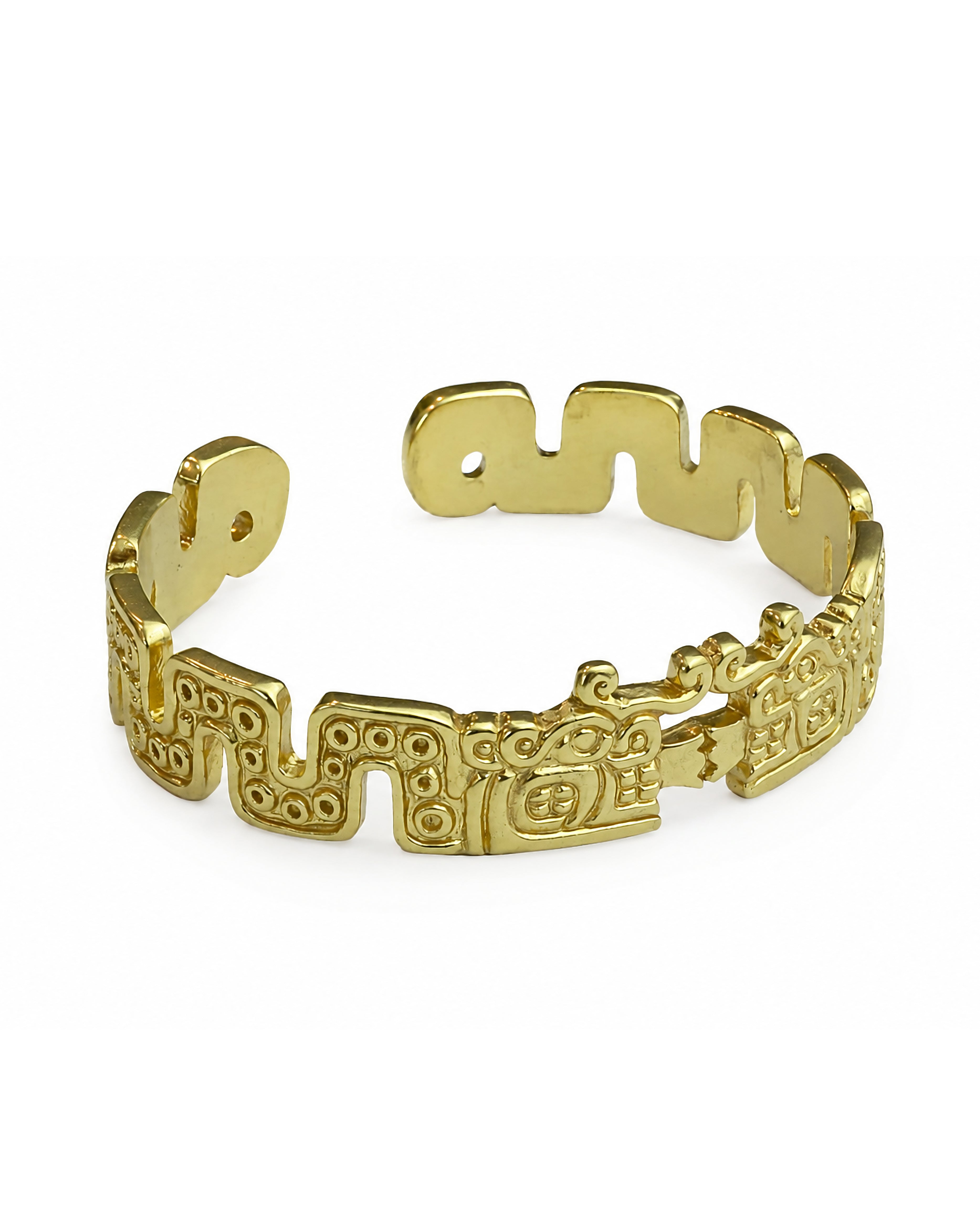
Adjustable, unisex. Handcrafted in brass.

ABOUT YOUR PIECE

The Feline-Serpents: Living Current, Crowned with Vision These serpents carry feline faces, the eyes of the guardian, the fangs that mark every threshold worth crossing. In Chavín cosmology, the serpent, known as Amaru in Quechua (the great cosmic serpent) and Quru in the Áncash Quechua of the Chavín tradition (the smaller serpents), was the living current of vibration: the form energy takes as it moves through all worlds, all matter, all time. It is not confined to one realm. It travels through them all. The feline face it wears changes everything. It says: this energy is not wild. It sees where it is going. Flow with direction. Vibration with clarity. The two forces that in Chavín thought are always, ultimately, one. The Circular Marks: Everything at Once The bodies of these serpents are covered in concentric circles, marks that are simultaneously scales, water, seeds, and eyes. In Chavín visual language, this ambiguity is not accidental. It is theological. The technique of contour rivalry, where one line holds multiple truths at once, was the grammar of Chavín art. A circle is a scale and a seed and an eye and a moment of awareness, all at the same time. This density of vision in the serpent's body says: everything is alive. Everything sees. Everything communicates. The Bilateral Mirror: Duality as Dialogue Two presences in perfect mirror. One rises as the other falls, one gives as the other receives. This is *Ayni*, the Andean law of sacred reciprocity, written into the body of the piece itself. Not two forces in conflict but two forces in conversation. Two currents that define each other, sustain each other, together make a wholeness that neither could make alone. To wear the twin serpents is to remember that we are always in relationship: with ourselves, with others, with the living pulse of the world. The Eyes That Look Up Both feline faces gaze upward, not toward the sky, but inward. The posture of ceremony, of deep listening, of the one who acts from what they know rather than what they fear. Before the current flows outward, it turns within. That is the teaching of the upward gaze.
The wrist is the passage between the inner world and the outer, where the heart's pulse is closest to the surface, where feeling becomes gesture, where intention becomes contact with the world. The cuff holds this entire passage. Not just the fingertip of a single action, but the full flow from center to expression. The twin serpents at the wrist say: let what moves through you, move freely. The feline faces say: see clearly before it does. The upward gaze says: look within first. Beneath the brass, the pulse continues. The body's rhythm joins the serpents' own. Two currents flowing as one. What vibrates from the center already knows its way.
The Twin Serpent Feline Cuff shares its visual ancestry with the Twin Serpent Feline Ring, both inspired by the bicephalic feline-serpent motif: a bilateral composition with two feline-headed serpents flowing outward in mirror symmetry, bodies dense with circular eye-like markings. The source carving is displayed at the Museo Nacional de Arqueología, Antropología e Historia del Perú in Lima. The museum's own label reads: "Serpiente, animal que se relaciona con el mundo de abajo. Muestra en la imagen rostro de felino. (Serpent, animal associated with the lower world. The image shows a feline face.)" The panel presents this carving as part of a three-tiered cosmological map: birds (world above), feline (earthly world), and this serpent-with-feline-face. A complete map of the Chavín universe in one display, and this cuff carries the third image, the current that travels deepest. 📌 Note from our teacher: The framing of the serpent as belonging to the lower world reflects the museum's simplified display. In the living tradition, the serpent moves through *all* worlds. This understanding informs the language used here. The circular marks covering the bodies are characteristic of Chavín contour rivalry: one mark that is simultaneously scale, eye, seed, and water drop. Rowe (1962) first formalized this as Chavín visual grammar; Burger (1992) extended the analysis across stone, metal, and coastal Chavinoid material. The bilateral composition embodies the foundational Chavín teaching of sacred duality: two forces not in opposition, but in reciprocity. Together they make one wholeness. Primary references: Burger, Chavín and the Origins of Andean Civilization (1992); Rowe, Chavín Art: An Inquiry into its Form and Meaning (1962); Lumbreras 1977; Rick et al., Stanford Chavín Archaeological Project; Tello 1943.
Handcrafted in brass, chosen for its warmth, its quiet luminosity against the skin, and its long history of being worn close to the body. Brass is a living metal. It breathes with you, responding to your skin, your climate, the life you live. Over time it may deepen in tone or develop a soft golden patina, the metal recording the life it has been part of. - Material: Brass - Finish: Protective coating to slow oxidation - Wide cuff band: two feline-serpents in bilateral symmetry, bodies covered in circular eye-marks, feline faces at both ends with upward gaze - Diameter: 6 cm. Designed to fit most wrists. A larger size for wider wrists will follow later in the year. - Adjustable and unisex, designed to accompany any wrist that feels its call - Band height: 1.5 cm (tallest part) - Weight: to confirm - Made by hand in Bali, in collaboration with 'orfebres' (masters of metalwork) who carry this lineage with devotion - Designed in Peru Dreamed in Peru. Handcrafted in Bali.

PRACTICAL INFORMATION