Skip to content

Cart

Your cart is empty

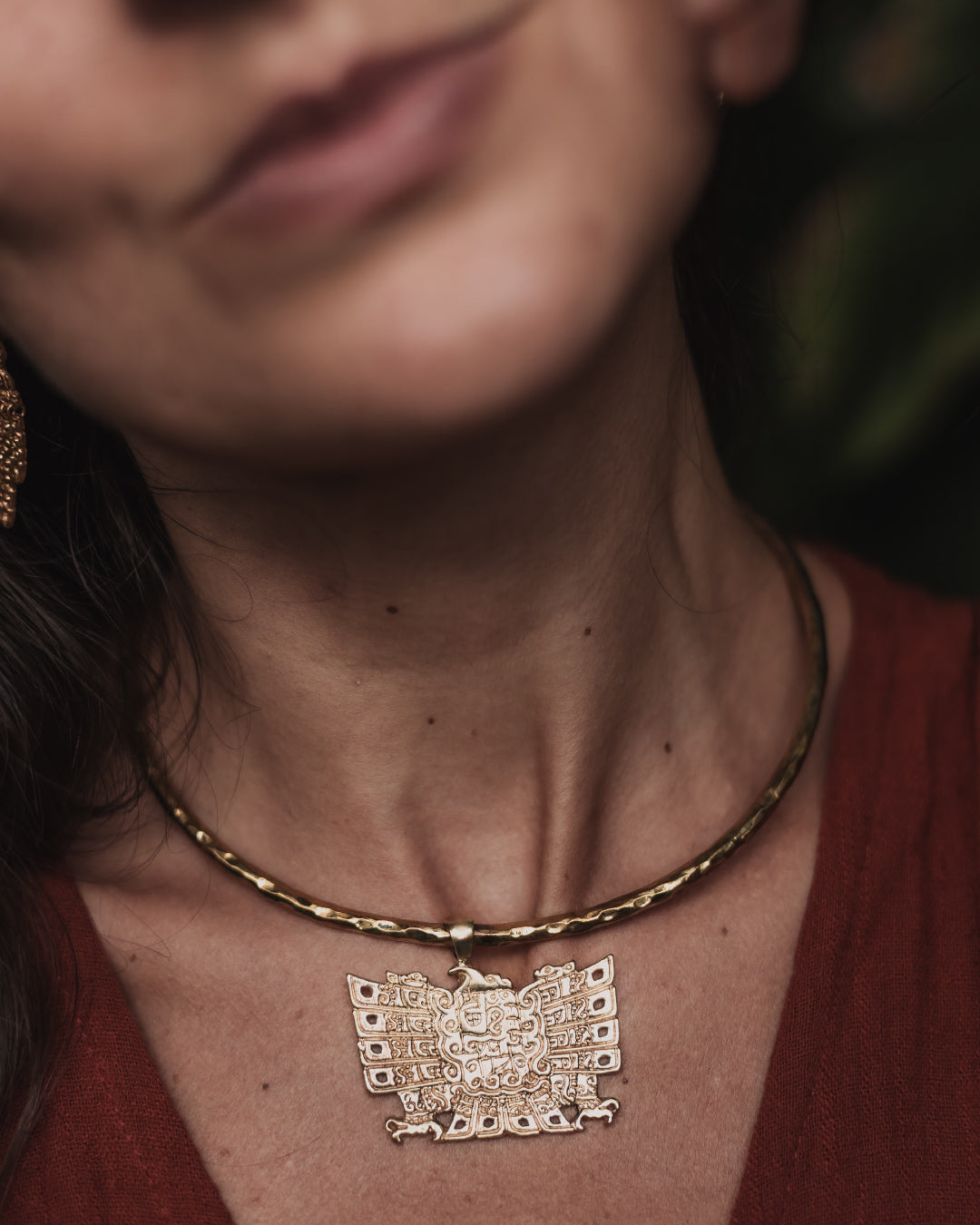
Ankash Necklace

Sale priceRp 2.675.000,00

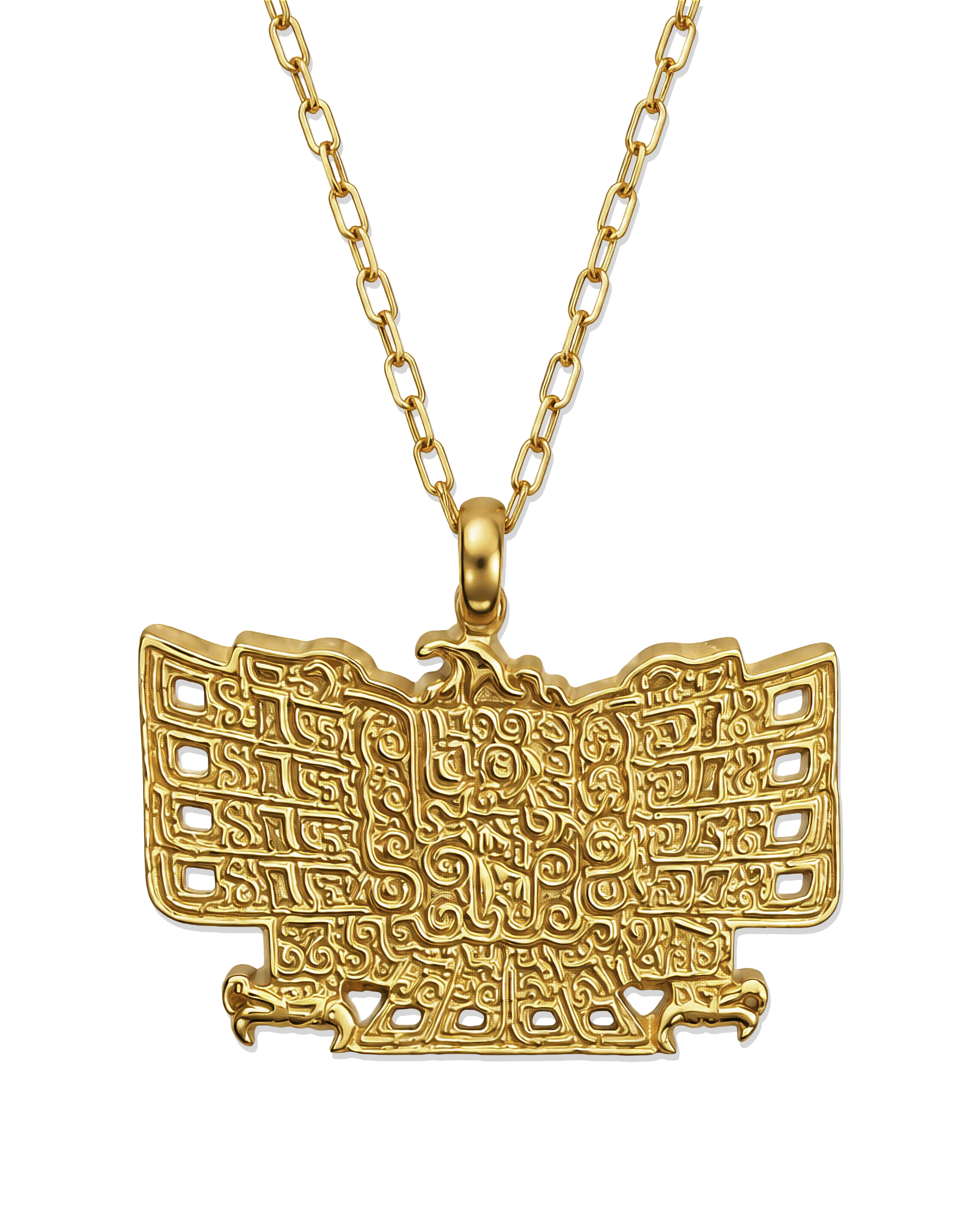
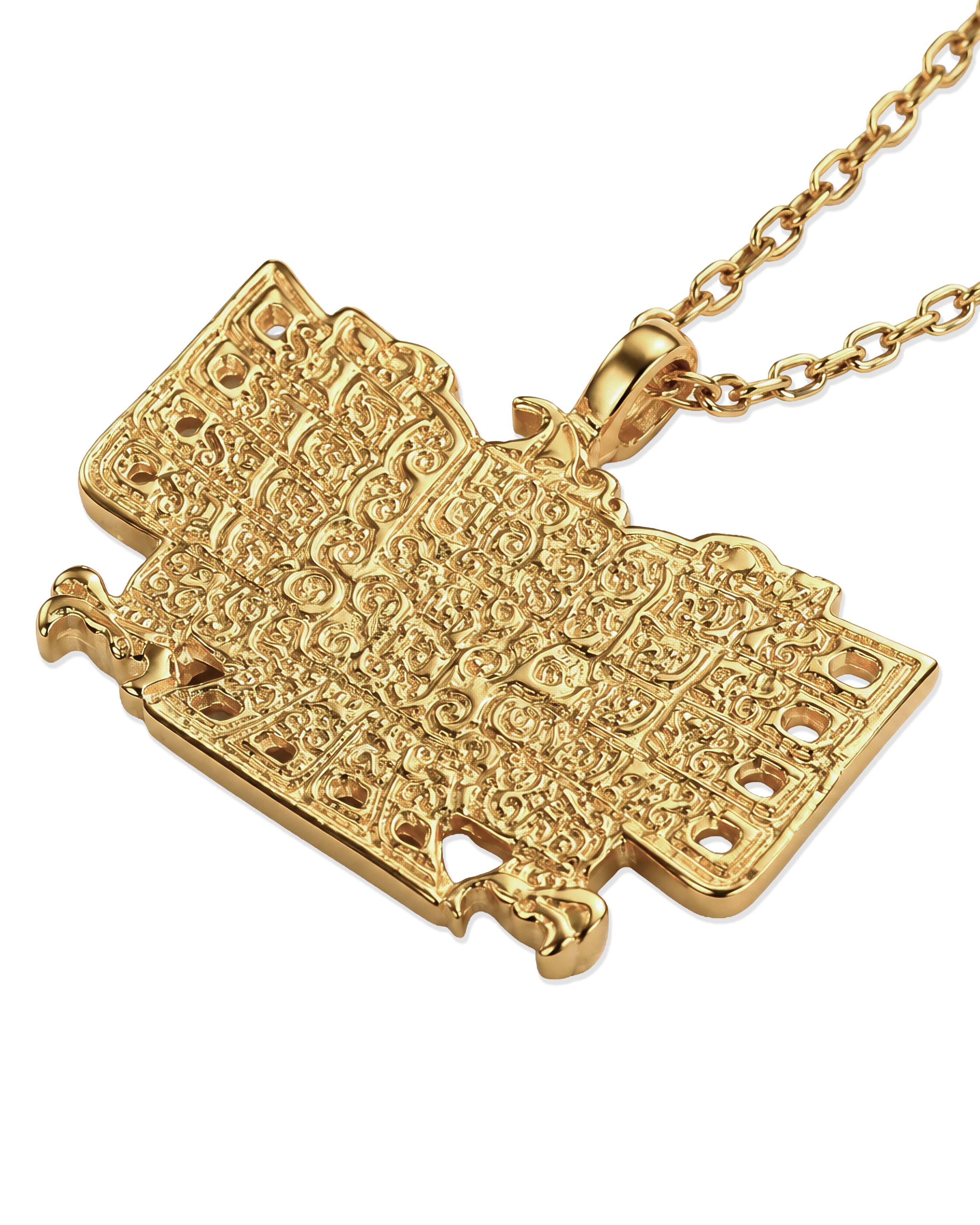
Carved into the stones of Chavín de Huántar is the image of a great bird - wings spread wide, gaze lifted, body alive with hidden forms. At first glance, it is a condor. Look closer, and feline fangs emerge, serpent lines flow through its feathers, and multiple eyes appear across the wings, each one watching from a different world.

This is not a bird as nature made it. This is a being as the Chavín understood it: a living intersection of forces, a messenger who moves between worlds by holding them all within.

Wings open. Eyes open. The inner world and the outer world - one flight.

A note for clarity: this necklace comes complete - on its own handmade brass chain. The Quru Choker is offered separately, as an alternative chain, on its own page.

ABOUT YOUR PIECE

The Ankash - All Birds of Ascension In the living tradition, Ankash means light, swift, fleet. And the iconographic figure at the heart of this piece carries more than one bird: condor, eagles, falcons - camouflaged into one form, representing stellar movement. Not a portrait of a single creature, but the principle of flight itself. Ankash is like praying for the light flight: awakening consciousness and letting go of what is heavy. The Feline Fangs - Guardianship and Inner Power Emerging from within the bird form: the feline. The guardian of thresholds, the one who sees in darkness, who moves between worlds with courage and clarity. Fangs do not always mean aggression in Chavín iconography. They signal capacity - the power to hold what is fierce, to embody what is difficult, to walk through the dark without turning away. The Serpents - Energy in Motion Serpentine lines flow through the wings and body of the Kuntur, the Amaru visible in the carving's rhythms and contours. They are not separate creatures but the energy of the condor itself - vibration made visible, the living current that animates all things. The condor does not merely fly; it resonates. The Eyes - Multiple Worlds Watching Scattered across the wings: eyes. Not one gaze but many - each one a portal, each one seeing from a different angle, a different realm. This is contour rivalry in its most alive form: one being that holds many beings, one form that reveals many truths depending on where you look. The Chavín understood that reality was not fixed but layered, that wisdom required the ability to hold multiple perspectives at once. The Upward Gaze - Looking Within The central eye looks upward. In this tradition, that was not a gaze toward escape or the heavens as a place outside. To look upward was to look within - the posture of inner journey, of the vision that arises when the surface world quiets and the deeper world speaks. The Ankash does not seek the sky. It seeks the center of itself, and in that center, finds the sky.
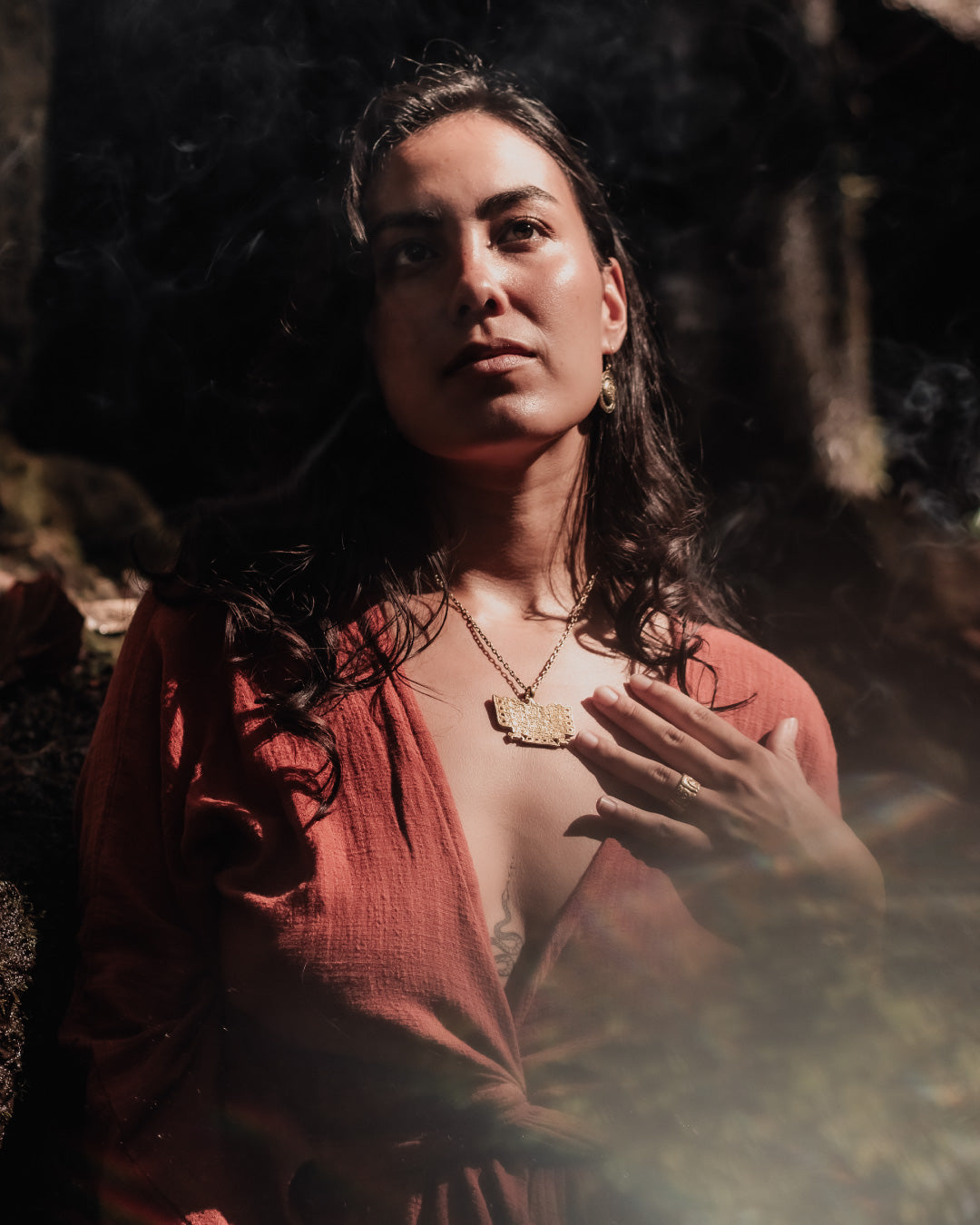
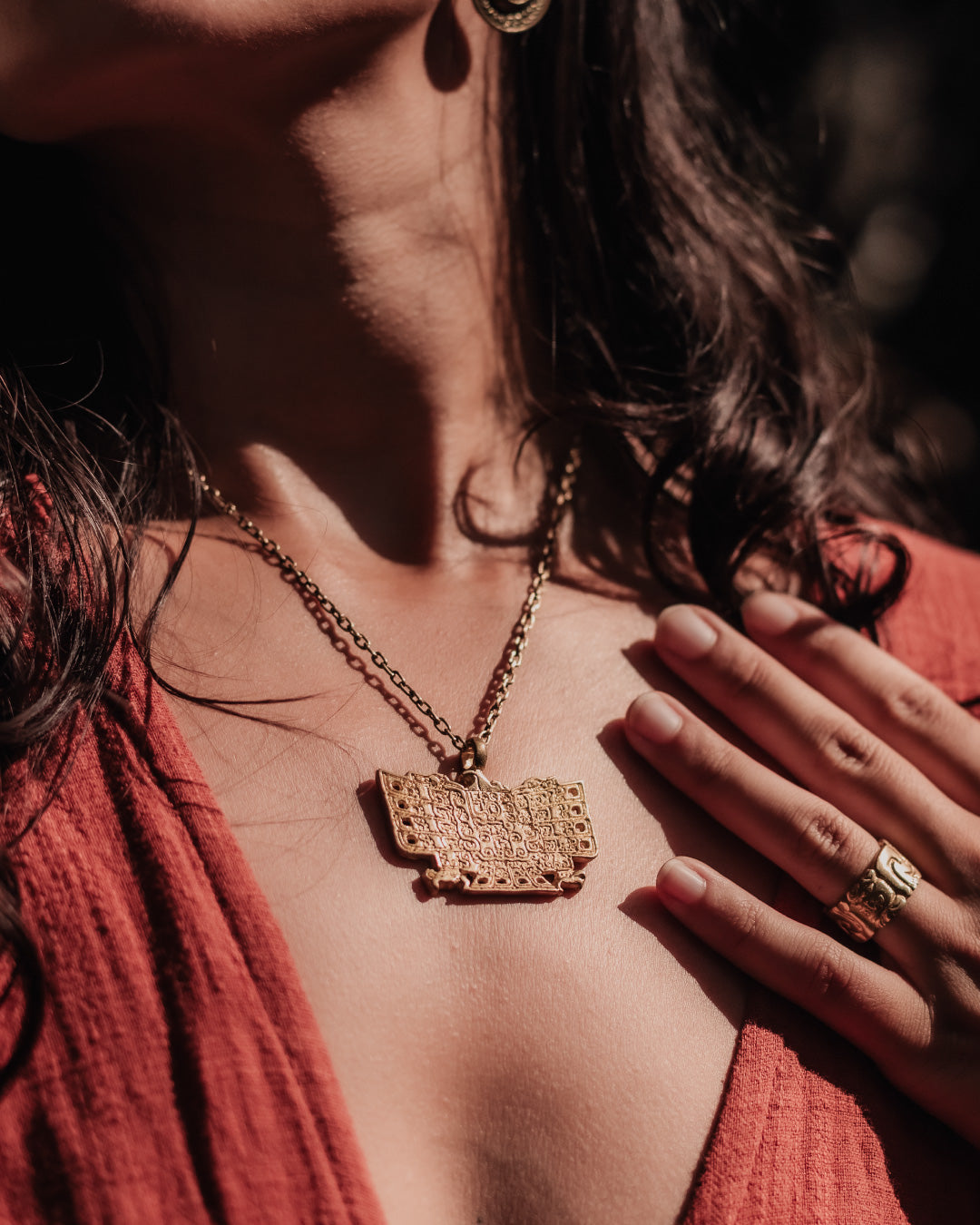
This pendant is alive to where it lands. Worn over the heart on a chain, the Ankash opens remembrance and compassion - connecting the wearer to the breath of life, to the wisdom of ancestors, to the felt sense of being held within something larger. The wings across the chest like a blessing: you are held, you are seen, you are part of the great exchange. Worn higher, at the collarbone on a choker, it becomes an invitation - aligning heart and voice, the courage to express what is known. What do you know that you have not yet said? Neither placement is more correct. The body will tell you where it belongs. El cuerpo recuerda lo que el alma sabe ~ The body remembers what the soul knows.
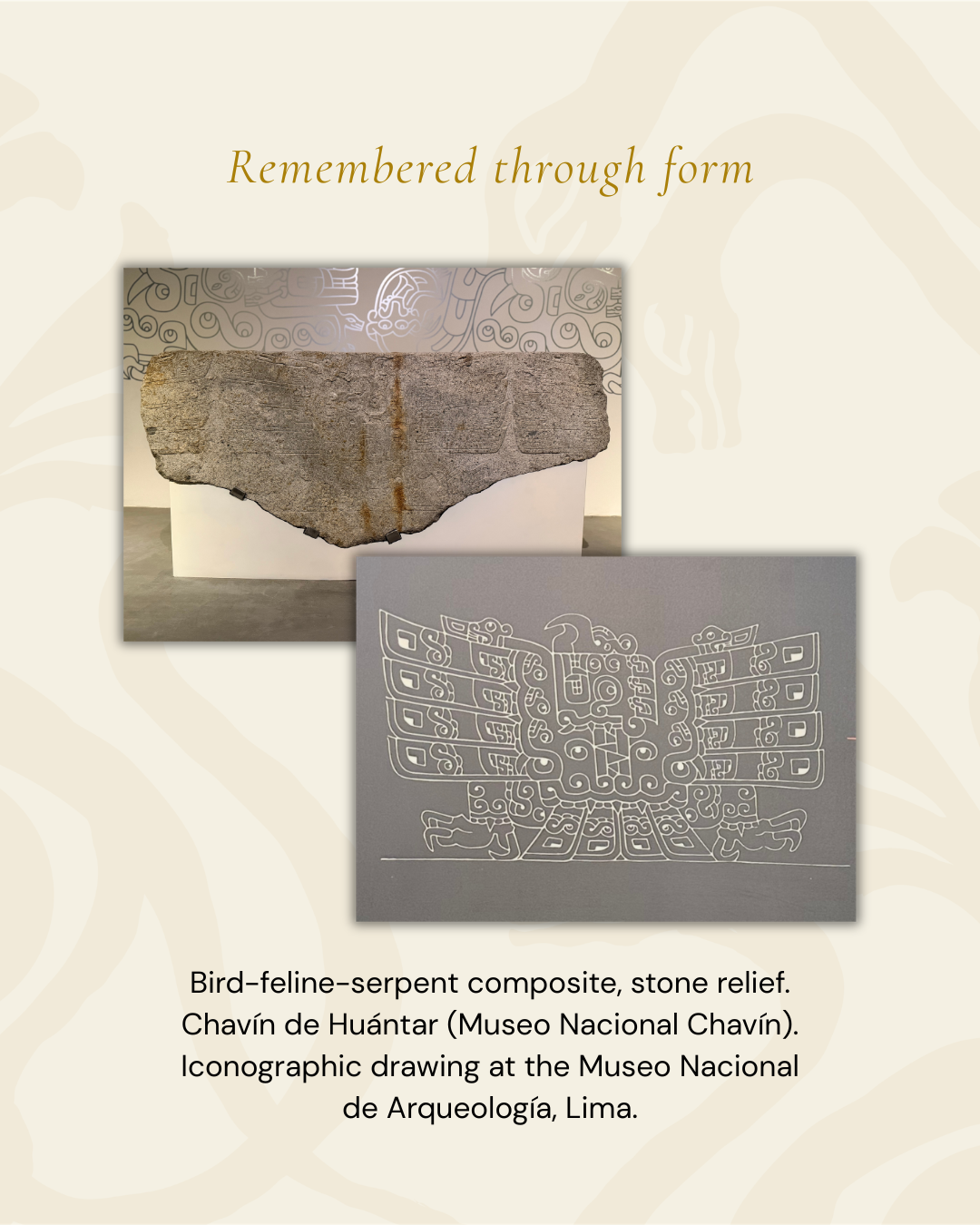
The Ankash Necklace draws from a carved stone relief at Chavín de Huántar depicting a great winged being rendered in the classic Chavín iconographic style. The carving is characterized by the dense, interlocking visual language for which Chavín is celebrated: a body filled with secondary faces, serpentine forms, and what scholars call contour rivalry - the technique in which one outline simultaneously defines two or more figures. The original stone fragment is held at the Museo Nacional Chavín, on the archaeological site itself in the Áncash highlands. A reconstructed iconographic drawing of the same being is displayed at the Museo Nacional de Arqueología, Antropología e Historia del Perú in Lima, where the lines of the figure become legible in a way the weathered stone alone cannot show. The living tradition teaches that this figure carries multiple birds of ascension camouflaged into one - condor, eagles, falcons - representing stellar movement, the full principle of flight. Wings spread wide; feline fangs beneath the feathers; serpent lines flowing through the wings as energy made visible. One composite presence, holding many beings at once. The upward-looking central eye is a recurring motif in Chavín ceremonial imagery, associated with visionary states and inner journeying. To look upward, in this tradition, was not to look away from the world but to look more deeply into it. Primary references: Burger, Chavín and the Origins of Andean Civilization (1992); Rowe 1962 (contour rivalry and Chavín iconography); Tello 1923 & 1943; Rick et al., Stanford Chavín Archaeological Project; on the condor in Andean cosmology: Allen 1988; Urton 1981.
Handcrafted in brass - chosen for its warmth, its quiet luminosity against the skin, and its long history of being worn close to the body. Brass is a living metal. It breathes with you, responding to your skin, your climate, the life you live. Over time it may deepen in tone or develop a soft golden patina. - Material: Brass - Finish: Protective coating to slow oxidation - Includes a handmade brass chain. The Quru Choker is offered separately as an alternative. - Made by hand in Bali, in collaboration with artisans who work metal from a place of respect - Designed in Peru Dreamed in Peru. Handcrafted in Bali.

PRACTICAL INFORMATION