Skip to content

Cart

Your cart is empty

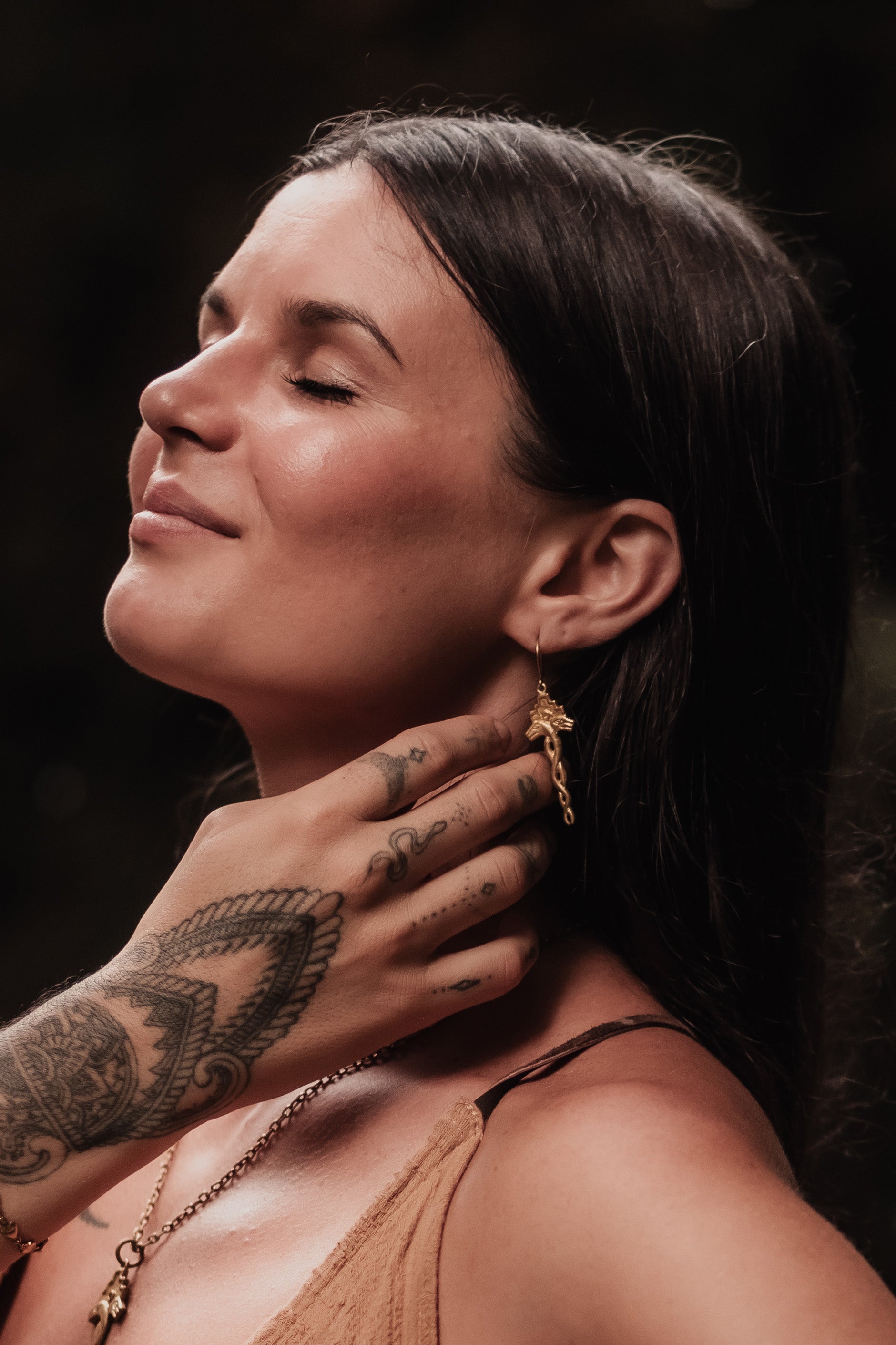
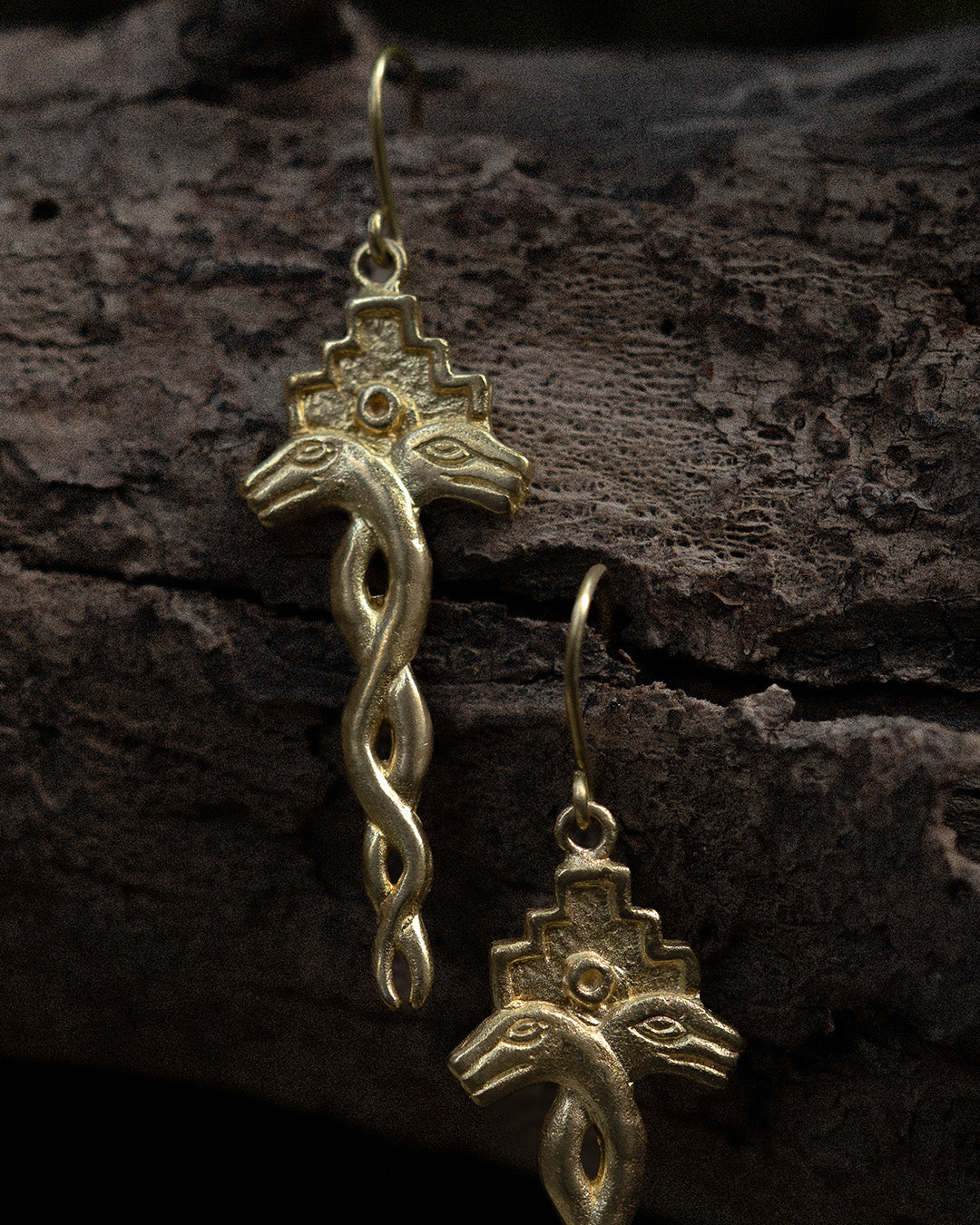
Awaq Earrings

Sale priceRp 1.594.000,00 IDR

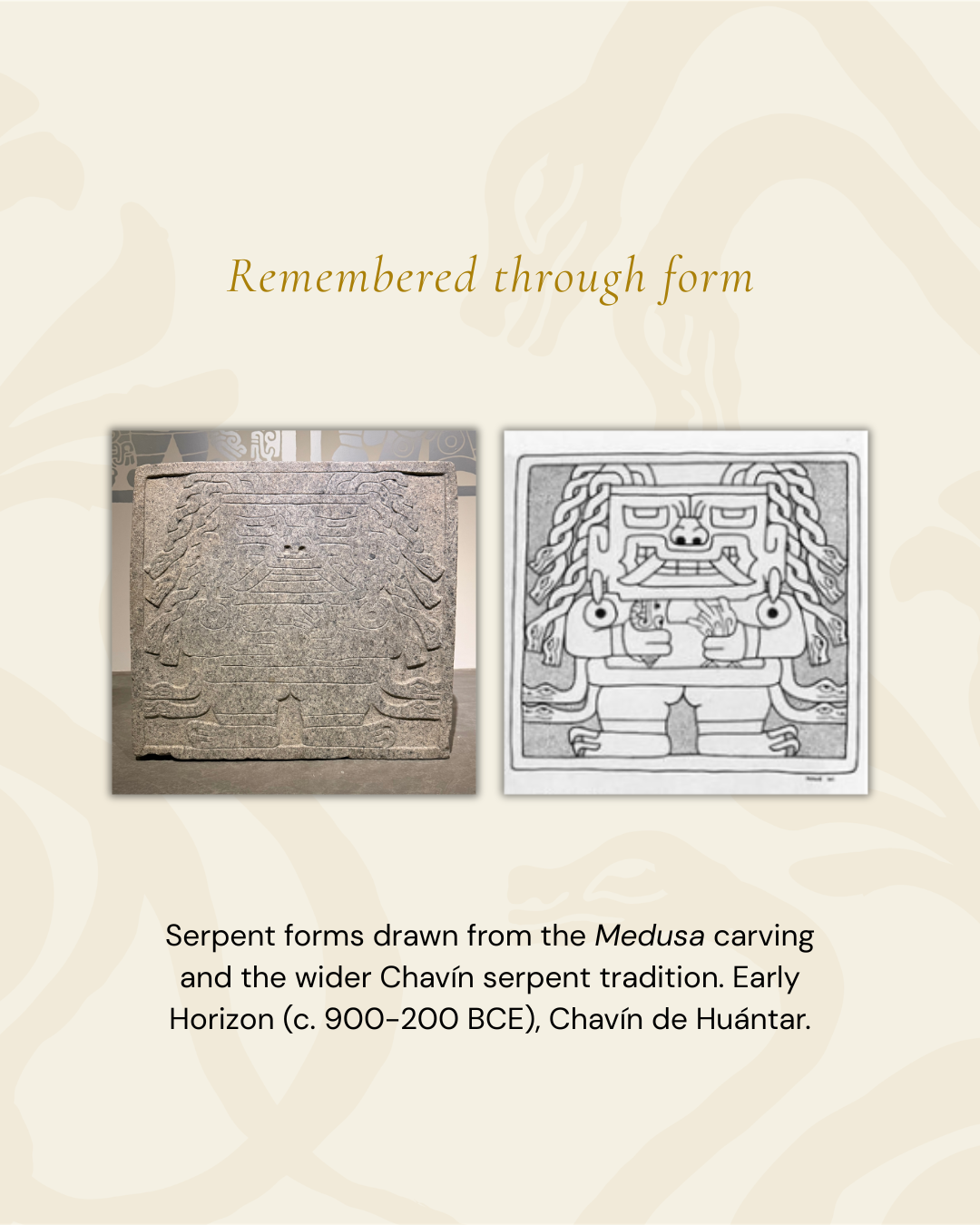
Among the most striking images at Chavín de Huántar is a face that has never been forgotten: serpents flowing as hair, a gaze fierce and luminous at once, a presence felt before it is named. Scholars call it the Medusa carving. To the Chavín, it was simply the truth of what energy looks like when it moves through a living world.

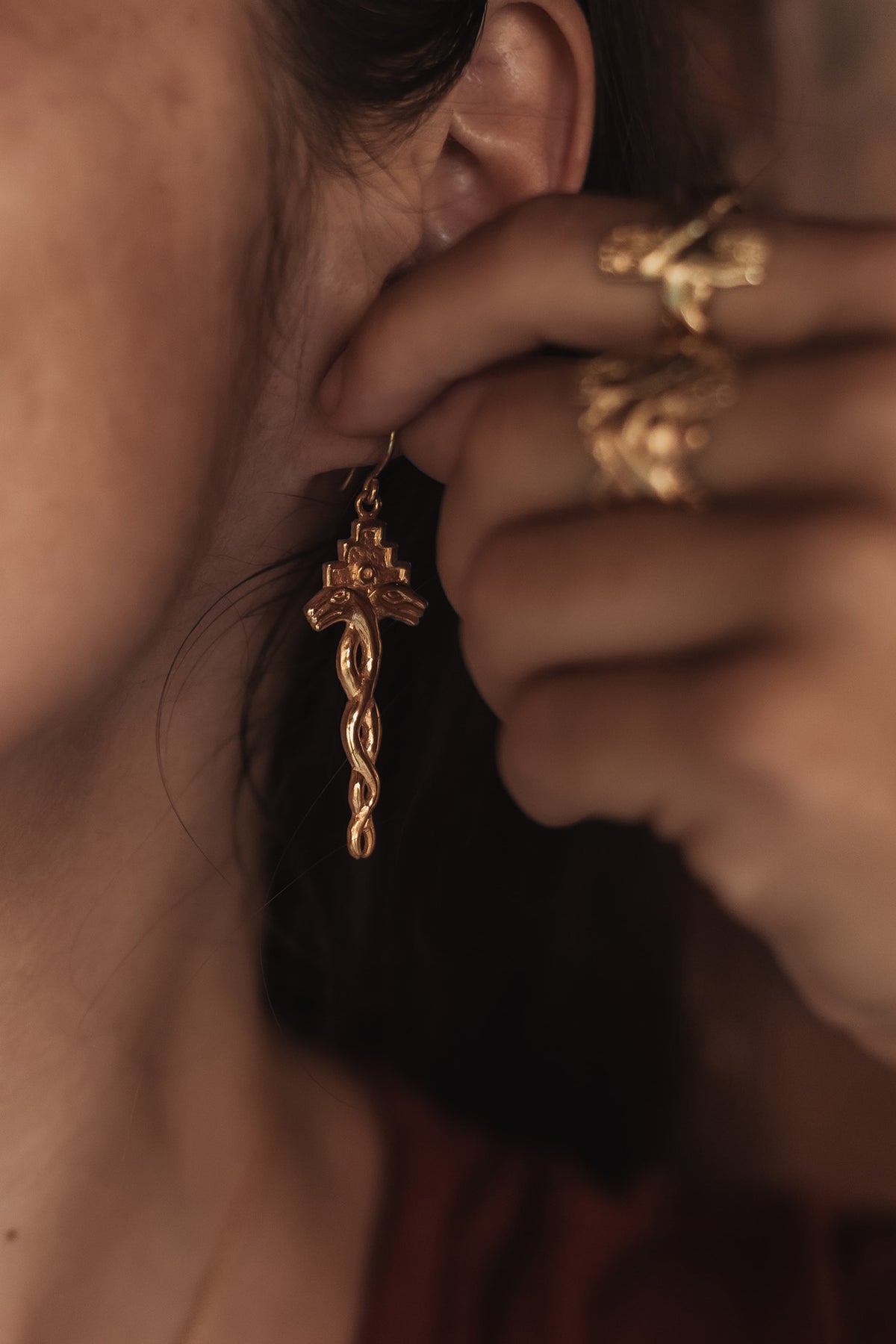
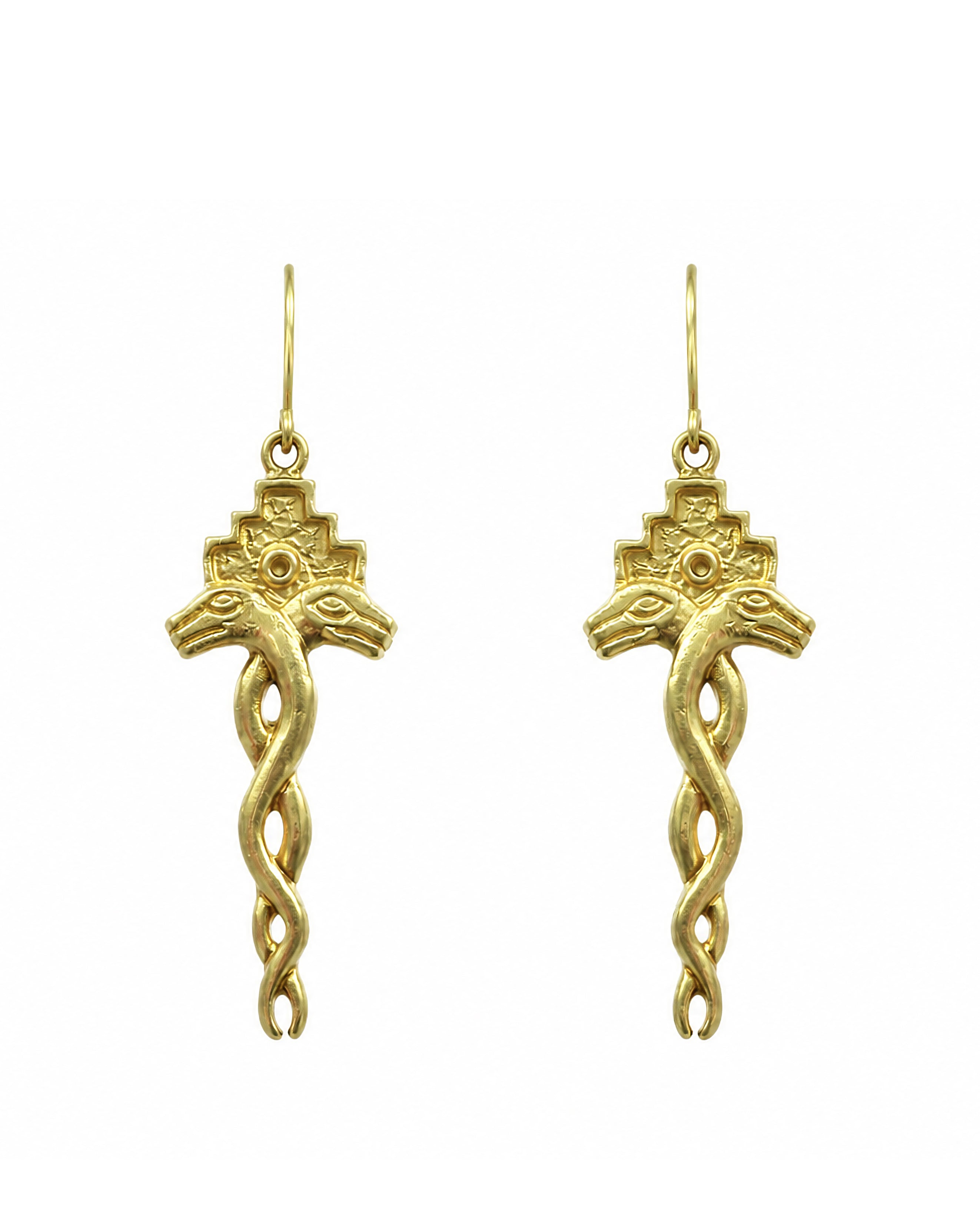
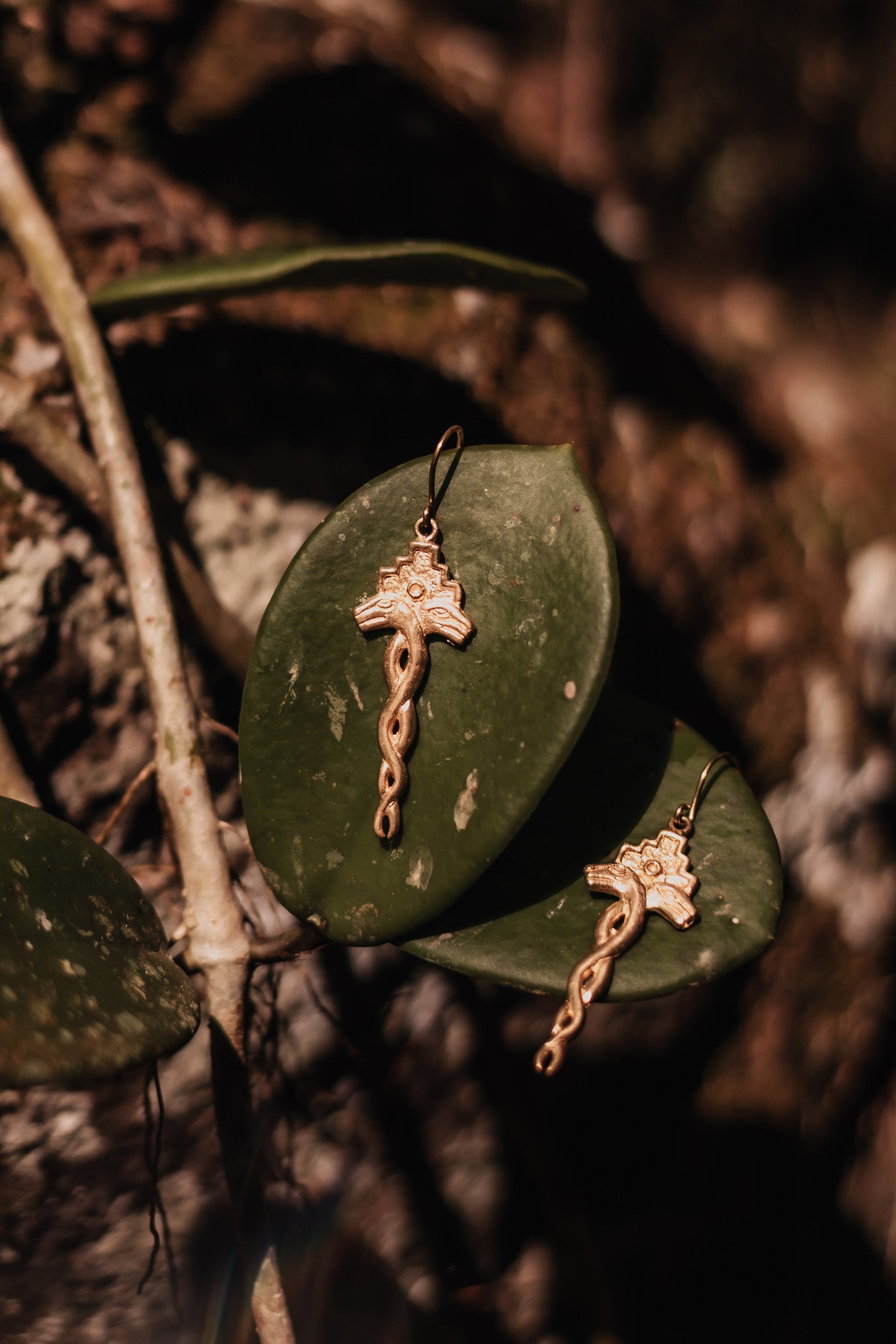
The serpents rise in mirrored ascent - flow meeting form.

Two serpents rise. One axis holds. Everything between them is the teaching.

ABOUT YOUR PIECE

The Serpents - Amaru / Quru The serpent is one of the oldest and deepest presences in Chavín cosmology. Known as Amaru in Quechua (the great cosmic serpent) - and in the Áncash Quechua of the Chavín tradition as Quru (the smaller serpents) - it is not a symbol of danger but of vibration itself. The living current that moves through stone, water, wind, and body. For the people of Chavín, all matter - animate and inanimate - contained energy, and the serpent was the visible form of that energy in motion. To carve a serpent was to show communication alive. Dwelling in rivers and beneath the earth, appearing in visions and flowing through stone, the Amaru is messenger, protector, and bridge - between realms, between states, between what is seen and what moves beneath the surface. It sheds its skin as a teaching: renewal is not the end of something, but its transformation. Here, two serpents rise in mirrored ascent - not in opposition, but in dialogue. Their intertwined movement is the dance of duality: two forces that do not cancel each other, but complete each other. The Half-Chakana - The Crowned Ascent At the summit of the serpents' rise rests a half-Chakana: a twelve-pointed stepped cross, one of the most enduring sacred geometries of the Andes - appearing across many cultures and centuries, long before the Inka and long after. Circle at center, stepped arms reaching toward the four directions, each threshold a teaching about the movement between worlds. Where the serpents carry energy and movement, the Chakana steadies their ascent - rooting vibration in balance, holding flow within form. When serpent and Chakana meet, a new teaching emerges: flow and structure, vibration and harmony, movement and center. This is not a symbol of stillness. It is a symbol of wisdom rising.
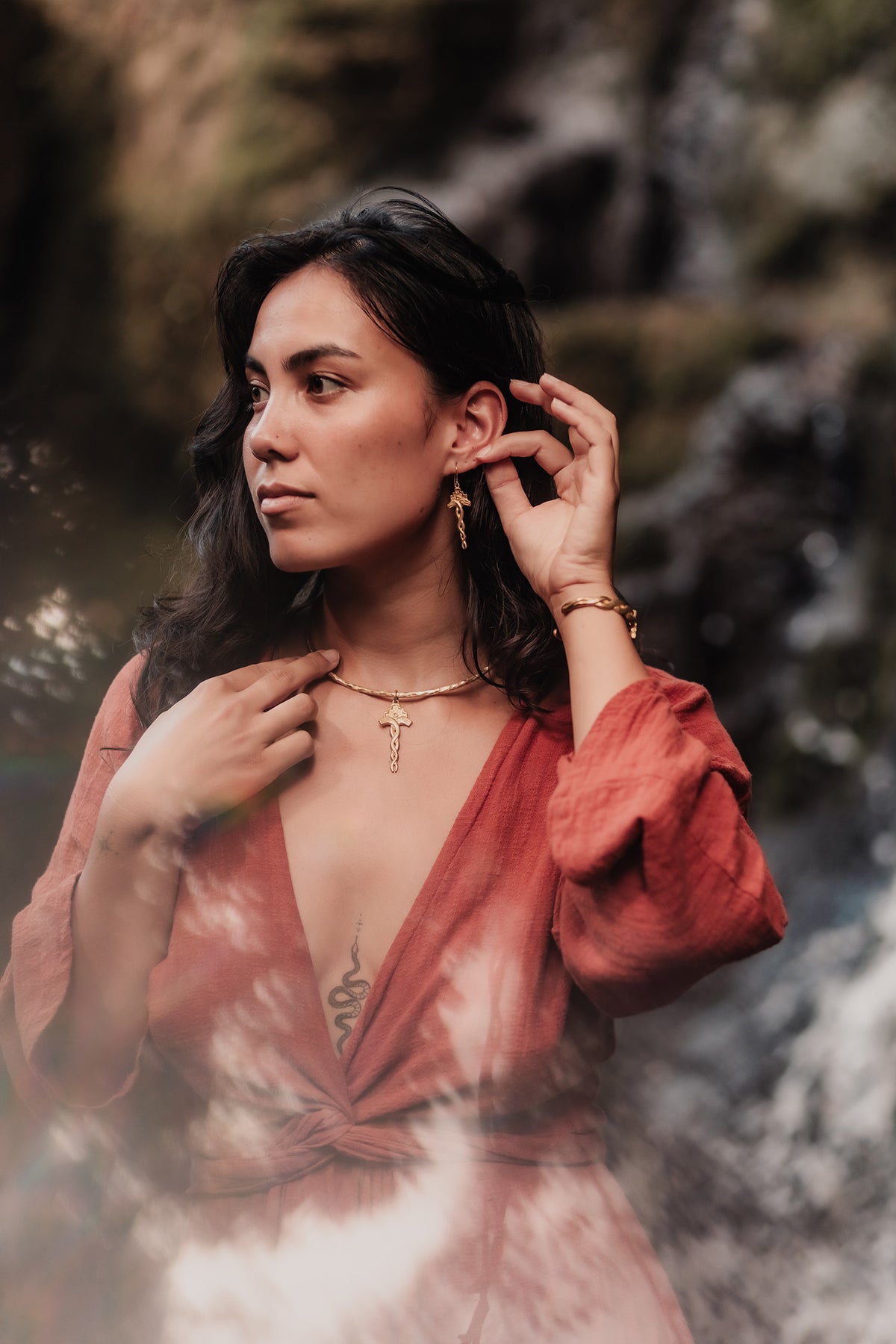
The Medusa carving from which this piece draws its serpent forms was not placed randomly. In Chavín cosmology, serpentine hair represented vibration radiating outward from the self - the body as a living instrument, sending and receiving the frequencies of the living world. At the ears - the sacred portals of perception - the Chakana Amaru earrings turn that image inward. The serpents that once radiated outward now rise toward your listening. They invite not broadcast, but attunement. Not speaking, but hearing - below the level of words, in the register where stone and water and ancestor communicate. To wear this piece is to ask: what is moving beneath the surface of what I can hear? It is a reminder that the deepest listening is not passive. It is a practice - the serpent's way of moving through the world, alert, receptive, alive to the vibration of all things.
The serpent forms in this design are drawn directly from what scholars have called the "Medusa carving" - one of the most celebrated images in Chavín iconographic tradition. This relief depicts a deity or supernatural being with serpents flowing as hair or emanating from the head, its face fierce and luminous with layered meaning. The image appears across multiple media at Chavín de Huántar and at related sites, reflecting the centrality of serpentine energy in the Chavín ceremonial worldview. In Andean cosmology, the serpent - Amaru in Quechua (the great cosmic serpent), Quru in the Áncash Quechua of the Chavín tradition (the smaller serpents) - held a unique position: it was not merely an animal but an embodiment of the energy that moves through all living things. Chavín stone carvers depicted serpents with extraordinary anatomical care - their scales, their sinuous movement, their eyes - to capture not the creature itself but the force it represented. The Chakana element of this design is the twelve-pointed stepped cross - one of the most enduring cosmological symbols of the Andes. This form appears across many cultures and time periods throughout Andean history, long predating any single civilization's use of it. Its geometry encodes a map of the cosmos: a central circle (the still axis), stepped arms reaching toward the four directions, and three levels corresponding to the upper world (Hanan Pacha), this world (Kay Pacha), and the inner world (Ukhu Pacha). The pairing of serpent and Chakana in this design speaks to a teaching that runs through Andean cosmology across time: the relationship between energy and order, the force that moves through the world, and the geometry through which it finds its center. Primary references: Burger, Chavín and the Origins of Andean Civilization (1992); Rowe 1962 (Chavín iconographic analysis); Tello 1923 & 1943; Rick et al., Stanford Chavín de Huántar Archaeological Project.
Handcrafted in brass - chosen for its warmth, its quiet luminosity against the skin, and its long history of being worn close to the body. Brass is a living metal. It breathes with you, responding to your skin, your climate, the life you live. Over time it may deepen in tone or develop a soft golden patina. - Material: Brass - Finish: Protective coating to slow oxidation - Size: 1.5 × 4 cm pendant + 1.5 cm hook. Total drop ~5.5 cm. - Weight: 2.5 g each, 5 g pair - Made by hand in Bali, in collaboration with *orfebres* (masters of metalwork) who carry this lineage with devotion for process and material - Designed in Peru Dreamed in Peru. Handcrafted in Bali.

PRACTICAL INFORMATION