Skip to content

Cart

Your cart is empty

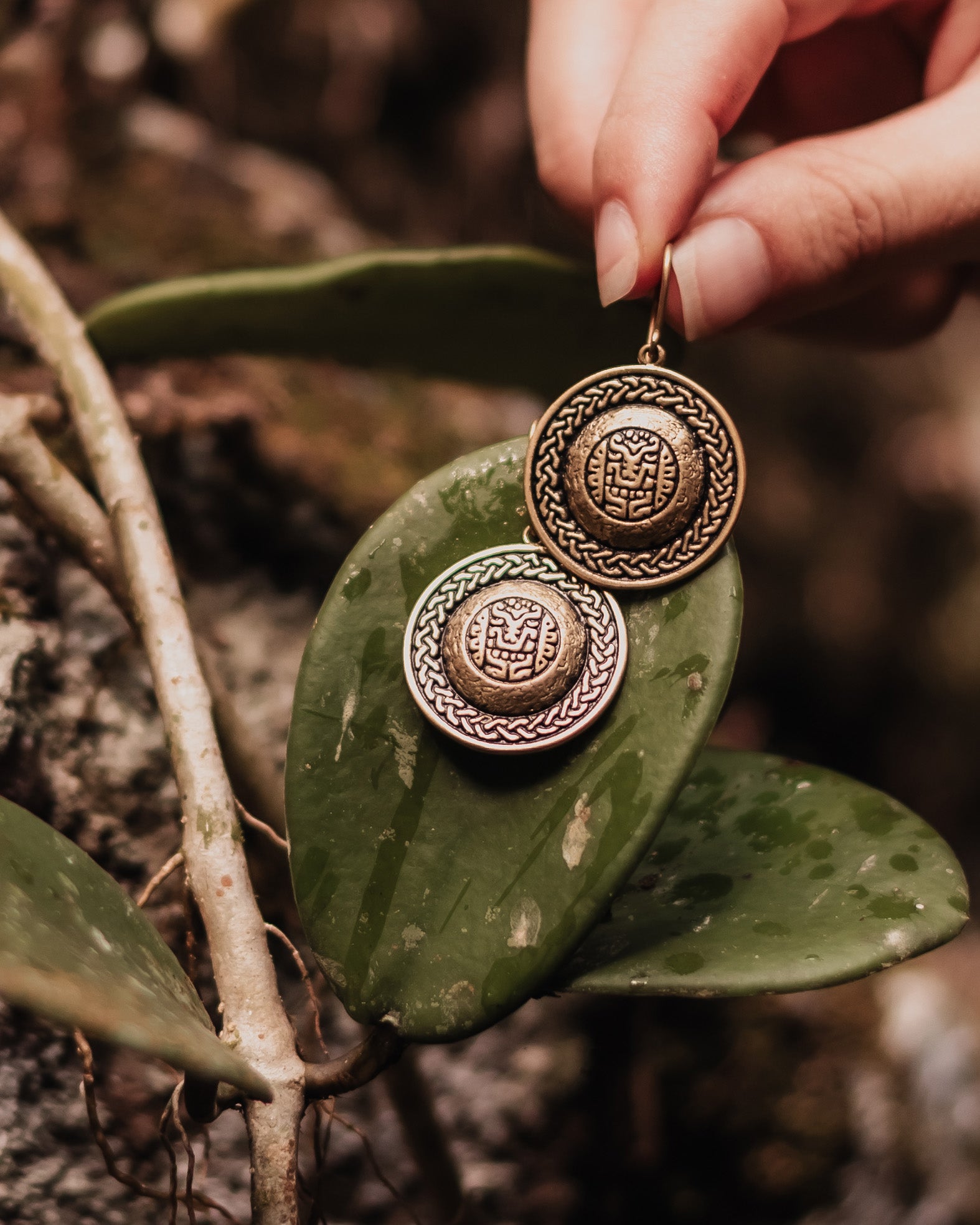
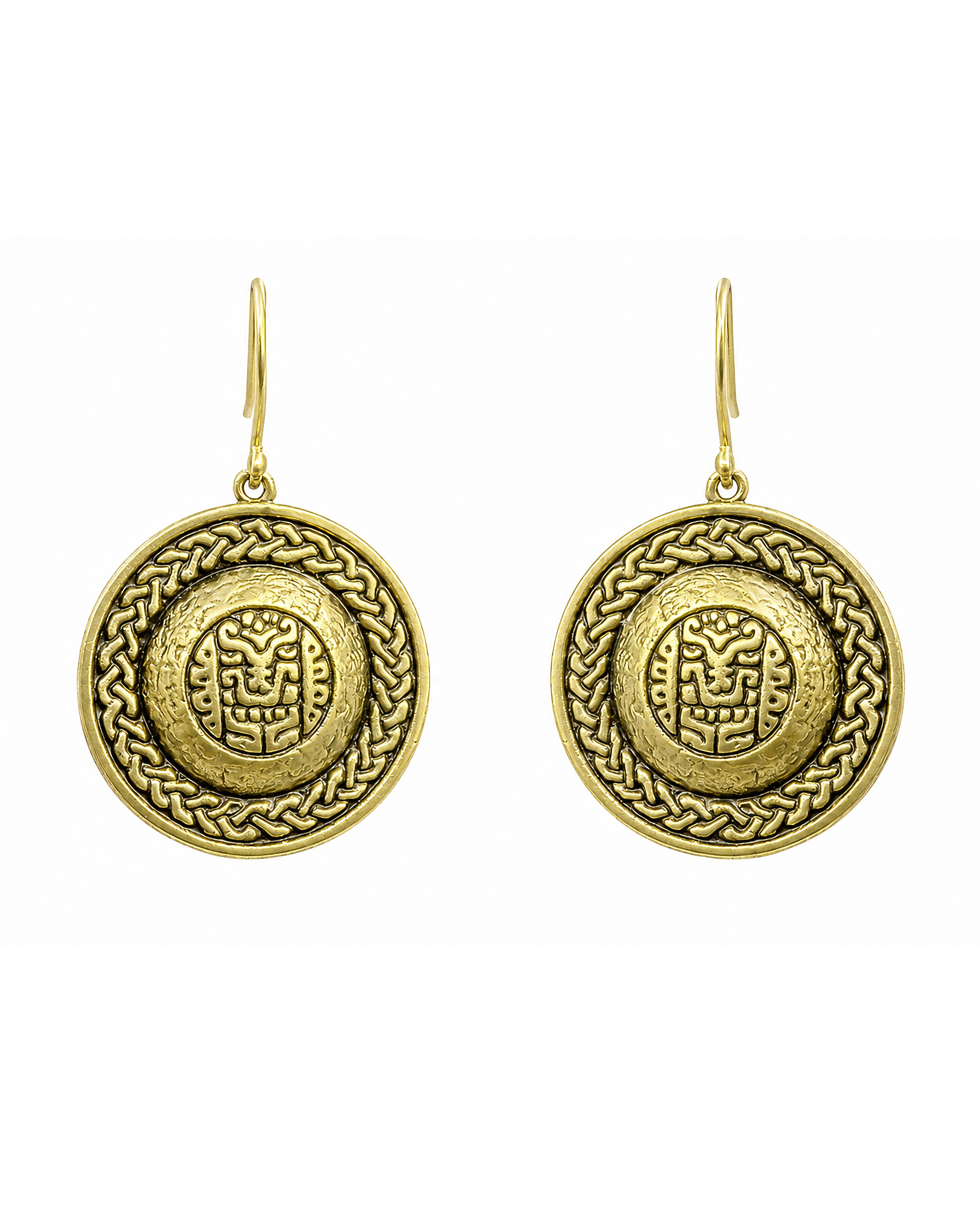
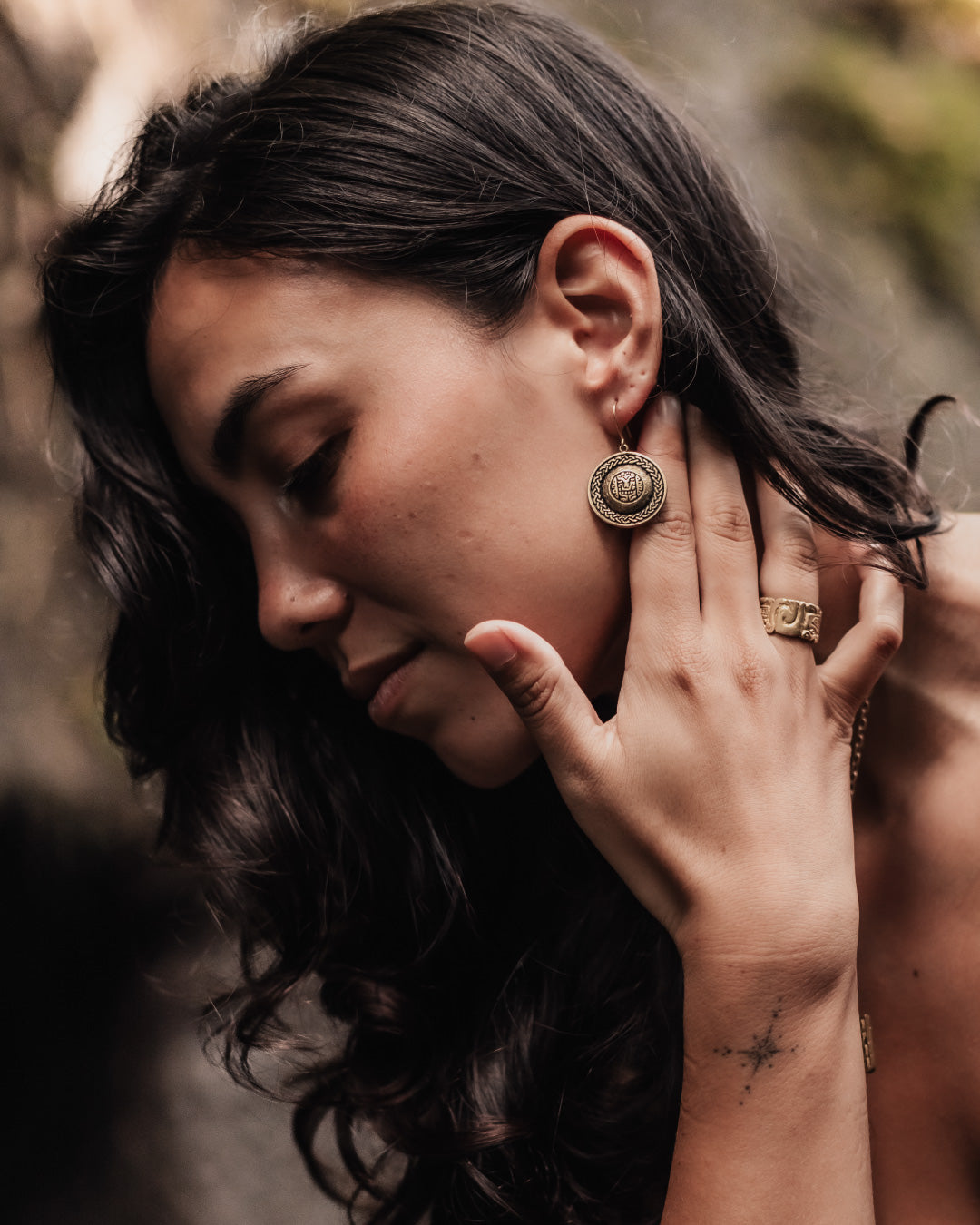
Punku Earrings

Sale priceRp 1.609.000,00

Voice beyond words. The oracle that speaks through vibration.

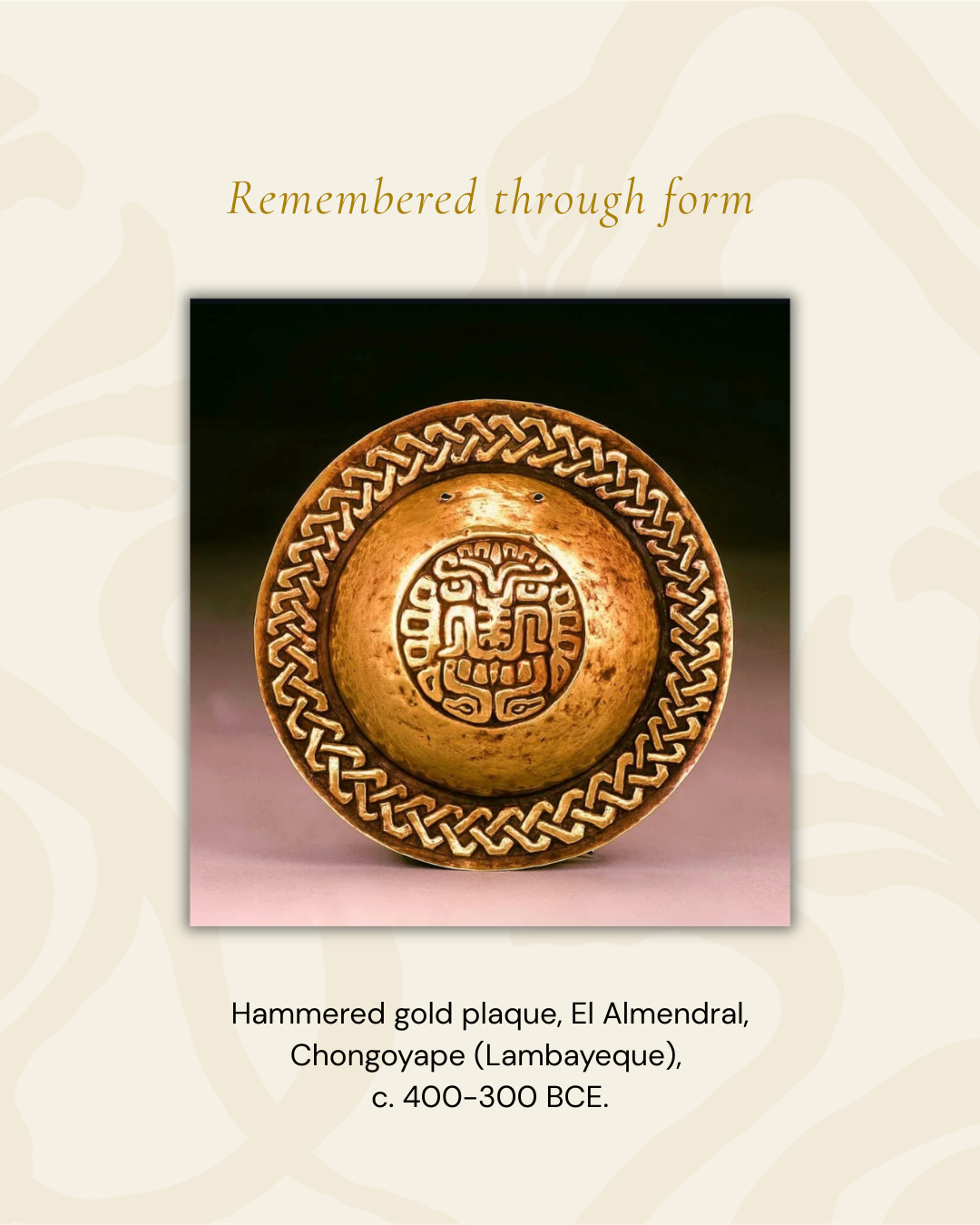
Among the most enigmatic images in the Chavín world is a face without a jaw.

Fierce, symmetrical, rimmed with a woven border that seems to breathe - and at its center, a being that looks back at you from across three thousand years. Not a god in the distant sense. Something closer. A presence that communicates not through words but through resonance.

These earrings carry that presence.

A guardian without a voice. An oracle without a mouth. Punku - the doorway through which something older than language moves.

ABOUT YOUR PIECE

The Agnathic Feline - The Jawless Guardian At the center: a feline face without a lower jaw. To modern eyes this looks incomplete. To ancient eyes, it revealed something deeper - a being whose power was not in speech but in *being*. Not a voice that commands, but a presence that resonates. The feline was already the supreme guardian of Chavín cosmology - nocturnal, fierce, visionary, able to cross thresholds and see in darkness. Remove the jaw, and something shifts. What remains is pure presence. Pure vibration. The Serpents - Currents of the Living World They do not flow as hair here. They emerge from the face itself - from the jawline, from the edges - like frequencies made visible. In ancient Andean thought, the Amaru (serpent) was energy itself: the living pulse connecting stone, water, wind, and spirit. Their presence at the very place where a mouth would be holds a paradox - where speech ends, vibration begins. The Interlaced Border - The Teaching of Duality The woven pattern that encircles the face is not decoration. This same interlaced border appears in Chavín stonework - on the back of the Wanka oracle monolith, on the Raimondi Stela - and has been interpreted as a visual meditation on duality: two strands, endlessly interweaving. Never fusing. Never separating. The meeting of opposites in continuous dialogue. Together, these three elements form a complete teaching: guardianship held in silence, energy flowing as vibration, duality woven into wholeness.
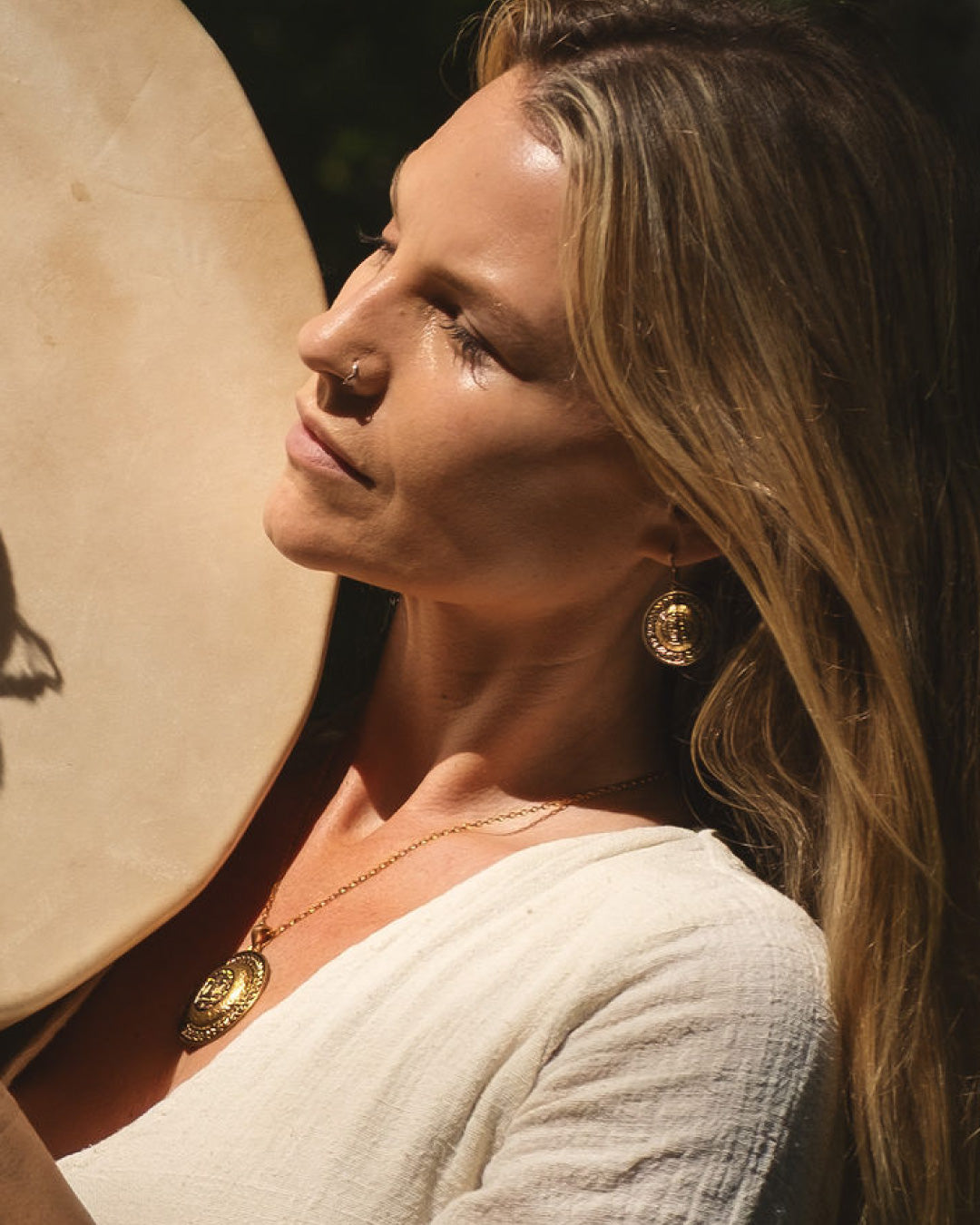
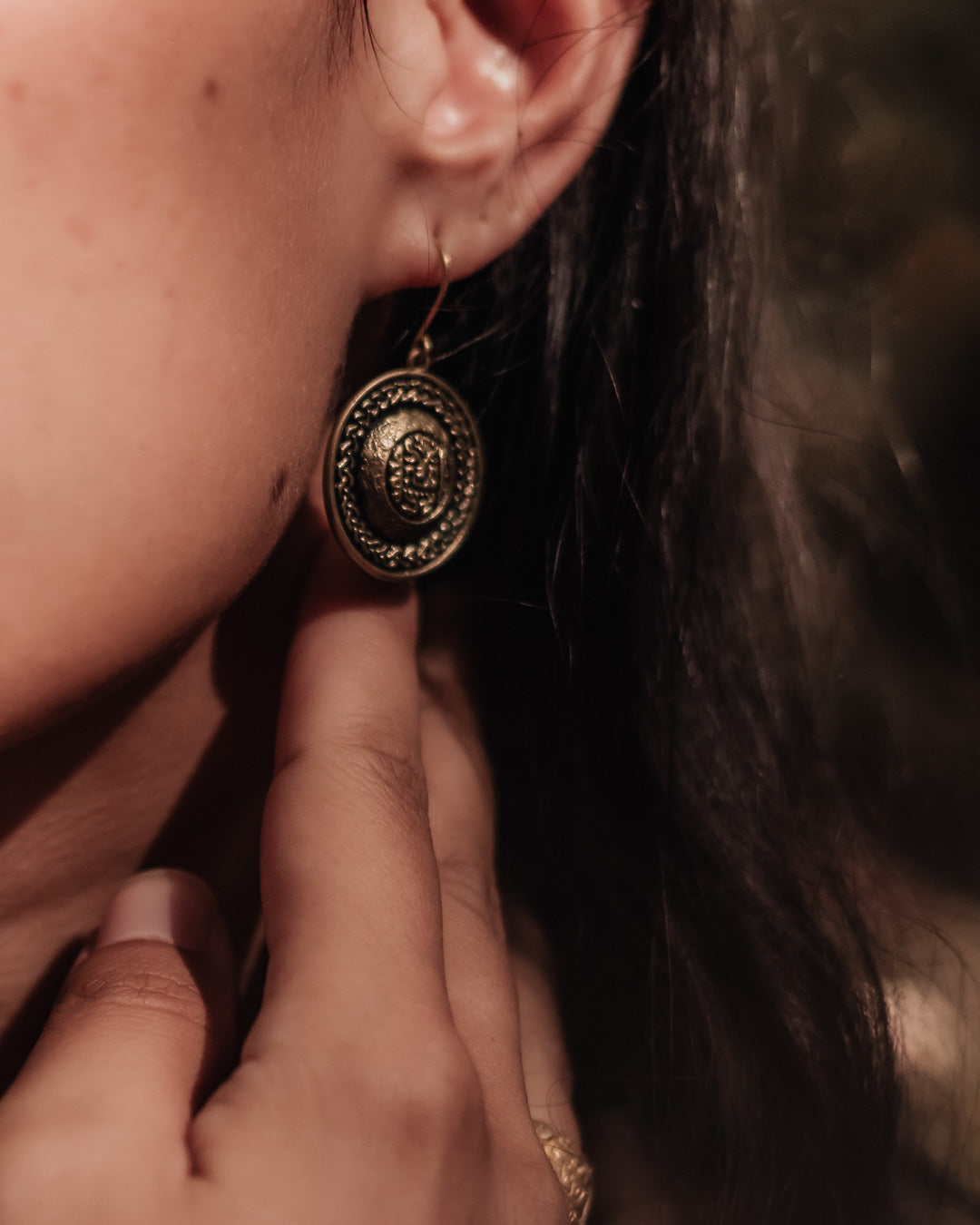
There is something in this face that stays with you. It is the absence that holds attention. A mouth that cannot speak, and yet - everything is communicated. A force that does not announce itself, but is felt before it is named. In the ceremonial world of Chavín, the oracle did not explain. It revealed. Pilgrims traveled for days to consult the inner sanctum of the temple - passing through galleries of sound and darkness, until something shifted in their perception. The oracle was not a voice. It was a threshold. These earrings place that threshold at your ears - the portals of perception. An invitation to listen not only to sound, but to the deeper dialogue: what the stone holds, what the water knows, what moves beneath the surface of the visible world. La forma es oración cuando nace del centro. Form becomes prayer when it rises from the center.
The Punku Earrings carry the same agnathic feline image as the Punku Necklace, inspired by a gold plaque discovered at El Almendral, a site in the Chongoyape district of northern Peru's Lambayeque region. The finds were first brought to scholarly attention following excavations in 1928, and the site yielded one of the most important Early Horizon metalwork assemblages ever documented - repoussé gold ornaments worked in what scholars call the Chavinoid style: coastal interpretations of the sacred iconography originating in Chavín de Huántar. The original plaque, hammered from thin gold sheet, features the agnathic feline face - fangs curving downward, the jawline dissolving into serpentine forms, the entire face framed by the distinctive interlaced border also found in highland Chavín stonework. These hybrid beings - part feline, part serpent, part force-beyond-naming - are characteristic of Chavín art, where animals merged to express transformation, duality, and communication between worlds. The El Almendral finds date to approximately 400-300 BCE, placing them at the end of the Early Horizon period - a moment when Chavín's iconography had traveled far beyond the central highlands, embedding itself into the ceremonial life of distant coastal valleys. That a coastal goldsmith in Chongoyape was working the same sacred faces as the stone carvers of Chavín tells us something profound: these images were not simply art. They were transmissions, understood across geography and time. The circular form of the KANTU earrings - face at center, interlaced border wrapping the whole - mirrors the disk/plaque format of the original object, here adapted to rest at the ears, the portals of perception. What once rested at the chest now sits at the place of listening. The exact current museum location of this specific plaque is not widely recorded in public collections, though it has been published in multiple academic works and is recognized as one of the emblematic examples of Chavinoid metalwork from the Chongoyape region. Primary references: Burger, Chavín and the Origins of Andean Civilization (1992); Lumbreras 1969; L. Larco 1941; Emmerich 1965; Easby 1966; Alva 1992; Tello, Chavín: Cultura Matriz de la Civilización Andina (1960).
Handcrafted in brass - a material chosen for its warmth, its quiet luminosity against the skin, and its long history of being worn close to the body. Brass is a living metal. It breathes with you, responding to your skin, your climate, the life you live. Over time it may deepen in tone or develop a soft golden patina. This is not wear. It is presence. - Material: Brass - Finish: Protective coating to slow oxidation - Made by hand in Bali, in collaboration with artisans who work metal from a place of respect for process and material - Designed in Peru Dreamed in Peru. Handcrafted in Bali.

PRACTICAL INFORMATION