Skip to content

Cart

Your cart is empty

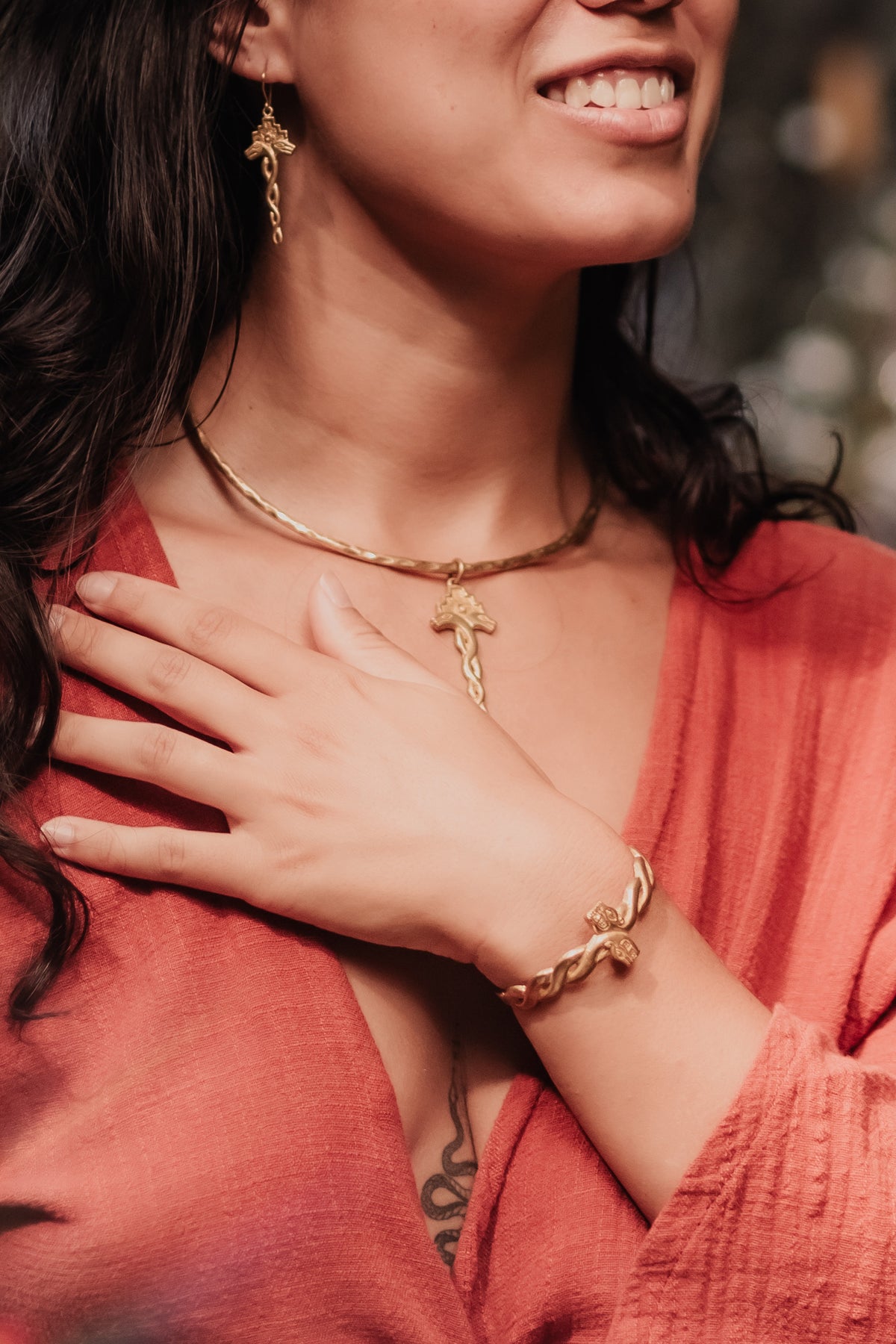
Qorimayu Cuff

Sale priceRp 2.650.000,00 IDR

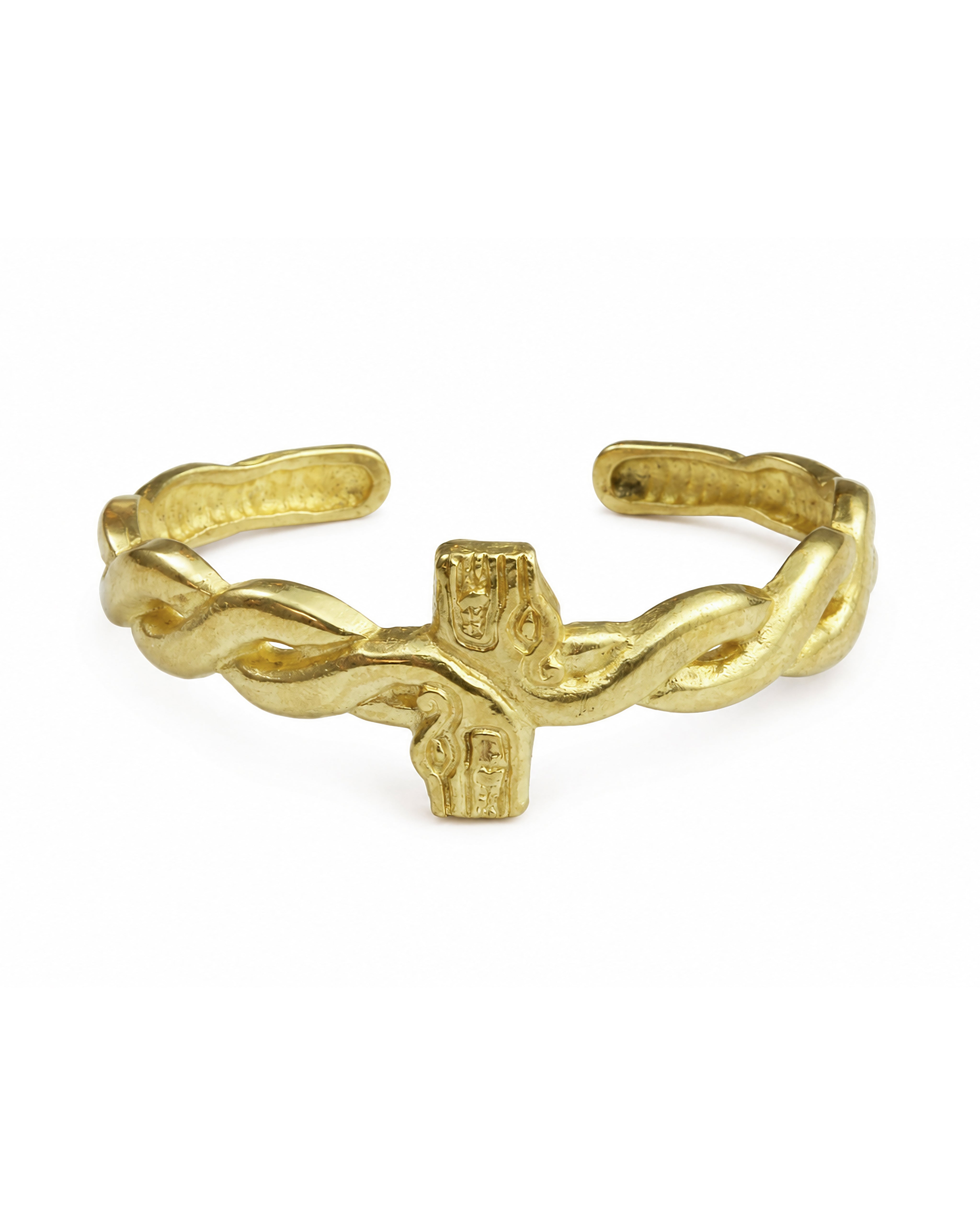
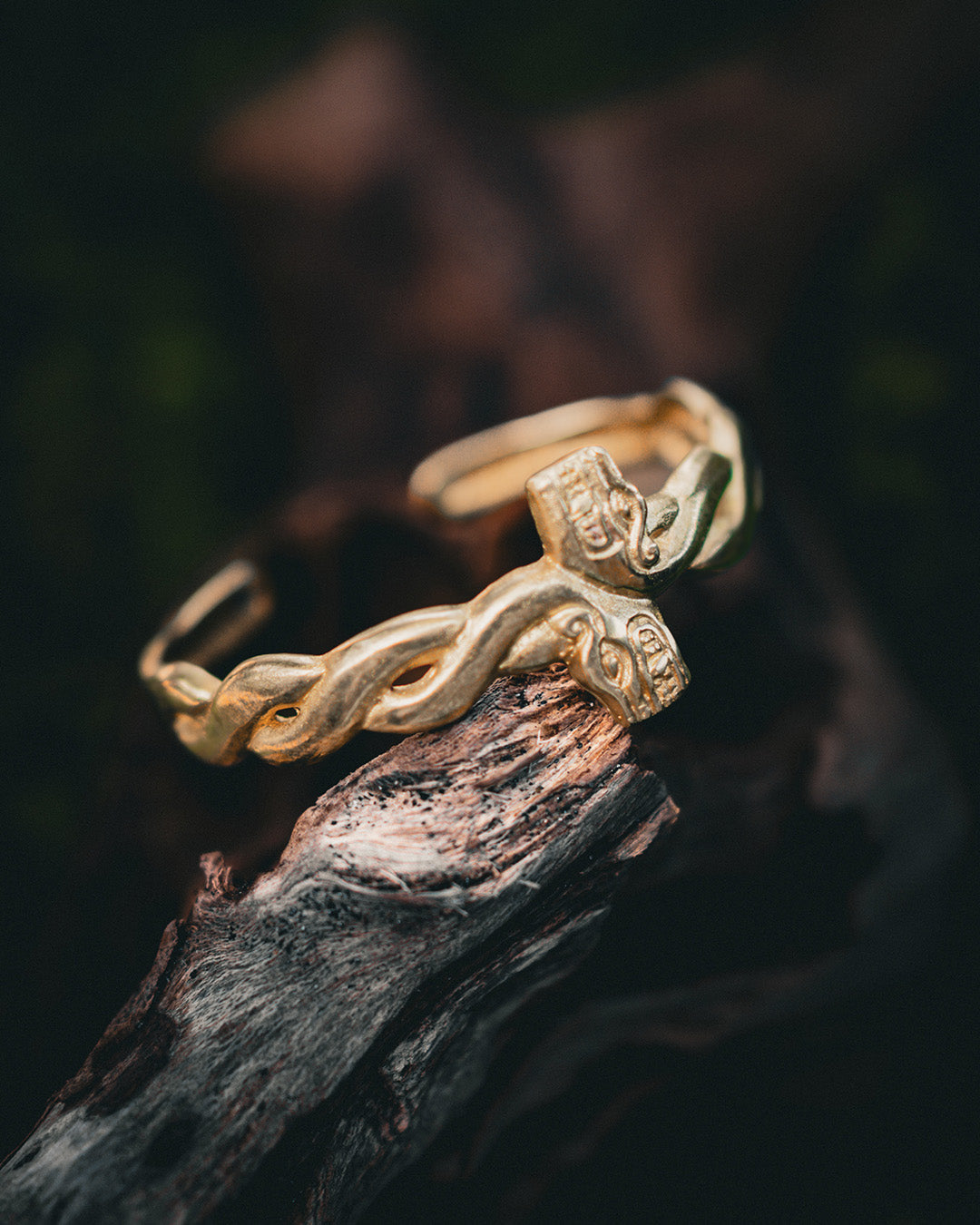
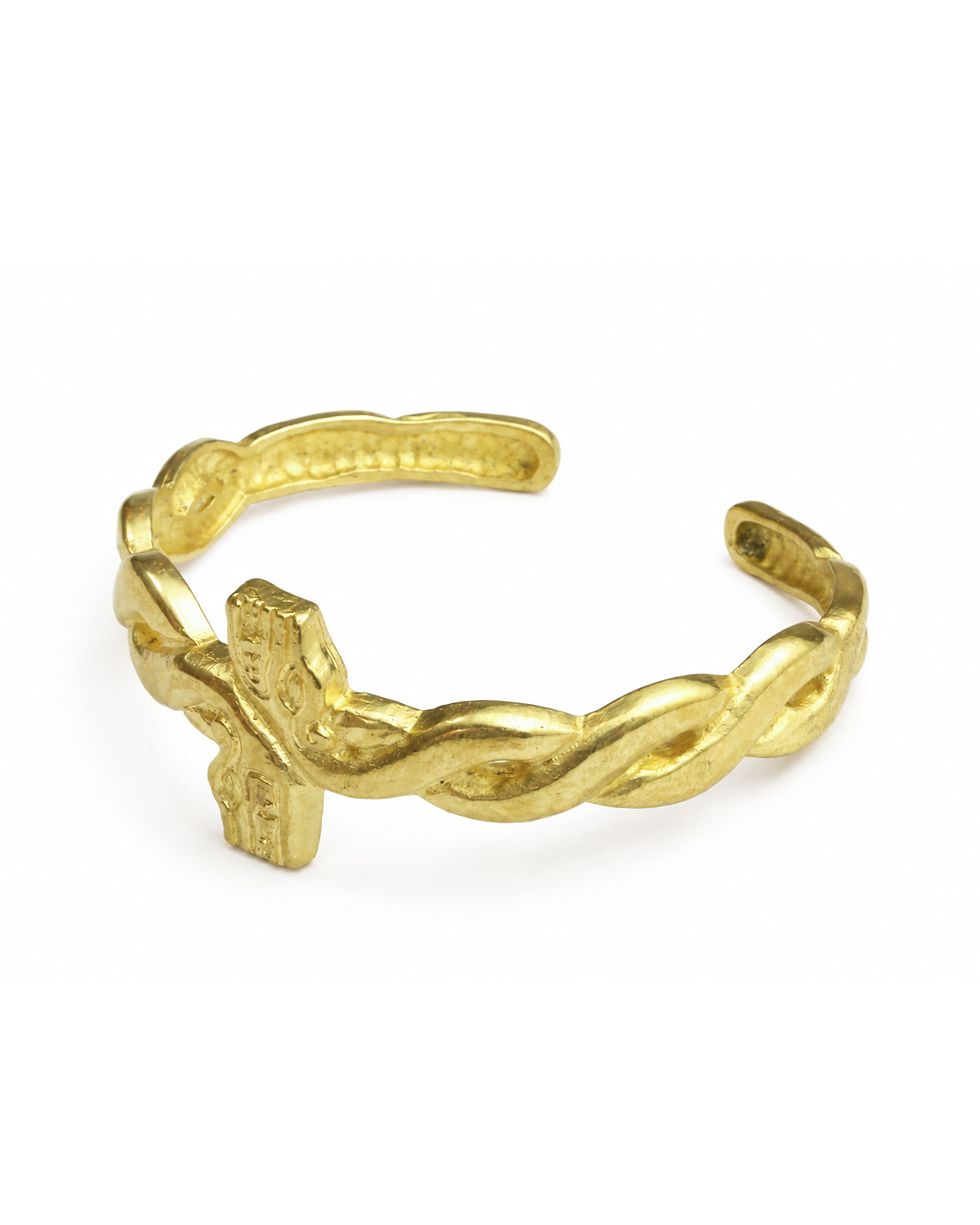
Two serpents with feline faces intertwine in mirrored dance - no background, no anchor. The balance is not architecture here. It is in the movement itself. One rises as the other descends. One coils as the other releases. The dance is the order.

In Chavín cosmology, the serpent was the living current of vibration - the being that moves through all worlds, carrying transformation as its nature. The feline face it wears brings vision into that flow: the clarity that ensures the current goes somewhere true.

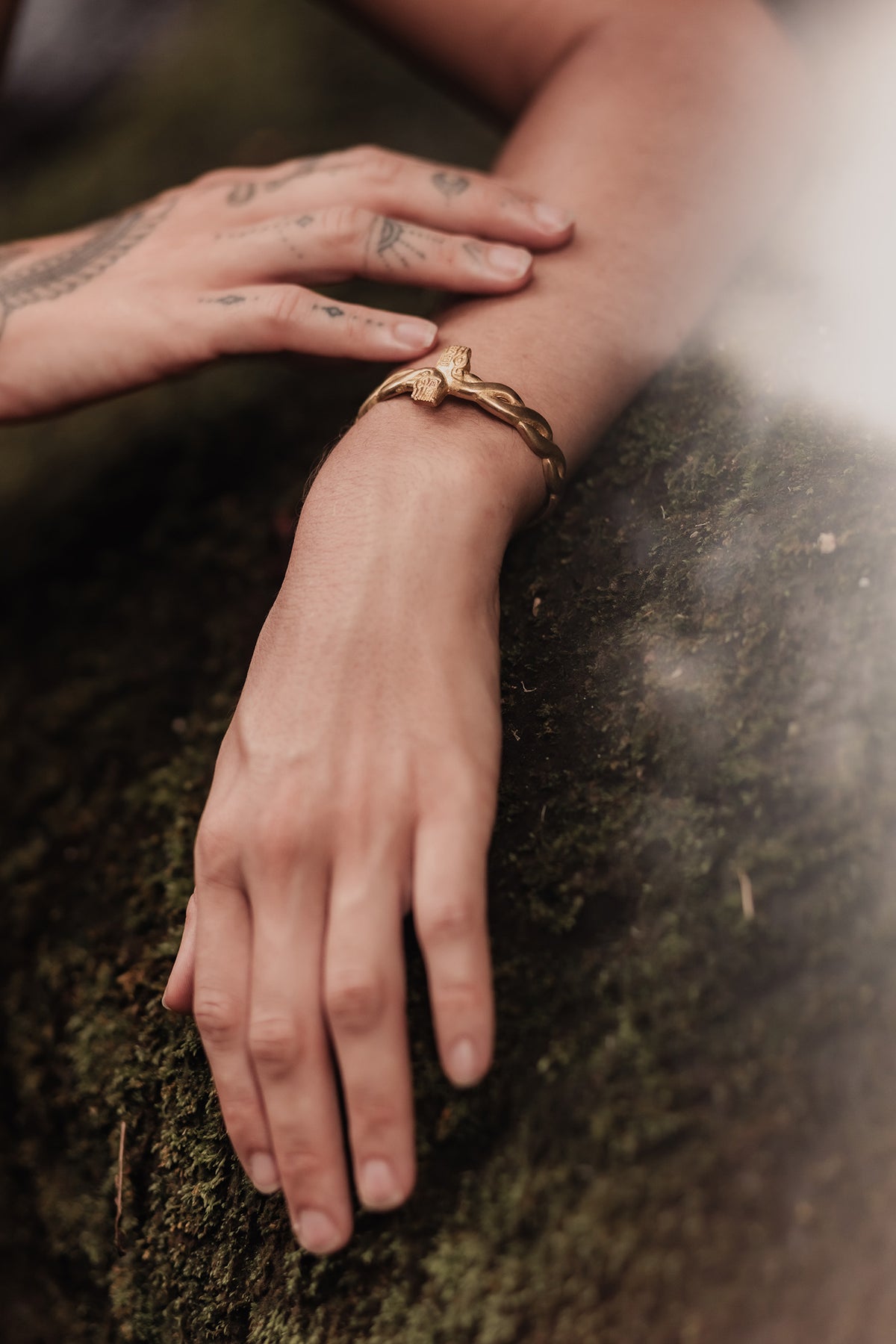
Worn at the wrist - the passage between heart and hand - this cuff reminds the wearer that life is always in motion, that endings are thresholds, and that what transforms does not disappear. It returns renewed.

Adjustable, unisex. Handcrafted in brass.

ABOUT YOUR PIECE

The Feline-Serpents - Pure Current Two serpents, feline-faced, intertwining in perfect mirror. Their bodies flow without fixed geometry behind them - no Chakana as ground, no stepped horizon. The balance here is not shown as architecture. It is embodied in the dance itself. One rises as the other descends. One coils as the other releases. The order is in the movement. In Chavín cosmology, the serpent - Amaru in Quechua (the great cosmic serpent), and Quru in the Áncash Quechua of the Chavín tradition (the smaller serpents) - was the living current of vibration - the form energy takes as it travels through all worlds, all matter, all time. The serpent does not belong to one realm. It moves through them all: through water underground, through rivers on the surface, through rain and wind above. Its movement IS the connection. The feline face it wears is the force of vision - the guardian clarity that ensures the current goes somewhere true. Flow with direction. Vibration with sight. The Shedding - Renewal as Cosmology The serpent sheds its skin. This is not metaphor in Chavín thought - it is cosmological fact: what was, releases. What is becoming, emerges. The cycle of transformation is not a concept but a lived rhythm, written into the body of this being that the cosmos chose as its messenger of change. To wear the serpent is to remember that we too shed - that every ending is a threshold, every loss a preparation, every transformation not a departure from life but its deepest expression. The Bilateral Mirror - Duality as Reciprocity Two presences in perfect mirror: one rises as the other falls, one gives as the other receives. This is the Chavín teaching of sacred duality - not opposition but reciprocity. Two currents that define each other, need each other, together make a wholeness that neither could make alone.
The wrist is the passage between heart and hand - where the body's inner rhythm meets the world. The pulse here is constant, close, alive. Every gesture begins here. The serpents at the wrist say: let what moves through you, move freely. Let transformation happen. Let the current carry what needs to be carried, release what needs to be released. Let your gestures come from that living flow. Beneath the brass, the pulse echoes. The body's rhythm joins the serpents' own. The two currents become one.
The composite feline-serpent - a being that unites the guardian force of the feline with the vibrational current of the serpent - is one of the most consistently documented forms across Chavín and Chavinoid art. It appears in stone carvings at Chavín de Huántar itself (including the Medusa carving, which depicts a supernatural being whose emanations become serpentine streams of living energy), in architectural reliefs, in the early goldwork of Chongoyape (Lambayeque) and Kuntur Wasi (Cajamarca), and across the ceramic traditions influenced by Chavín's religious sphere. The bilateral composition - two feline-serpents in mirror symmetry - draws from the foundational Chavín visual convention of bilateral symmetry and contour rivalry: a grammar in which forms are always paired, always in dialogue, always generating meaning through their relationship to each other. Rowe (1962) first identified this as a core structural principle of Chavín iconography; Burger (1992) documented its persistence across media and centuries. This cuff is an original design - not a reproduction of any single object - but a new form assembled from this deep visual and cosmological language. Its spiritual ancestor is the same feline-serpent tradition that runs through the Chavín Medusa carving, the Chongoyape goldwork, and the stone friezes of the Old and New Temple complexes. Primary references: Burger, Chavín and the Origins of Andean Civilization (1992); Rowe, Chavín Art: An Inquiry into its Form and Meaning (1962); Tello 1943; Lothrop 1941 & 1951; Lumbreras 1977.
Handcrafted in brass - chosen for its warmth, its quiet luminosity against the skin, and its long history of being worn close to the body. Brass is a living metal. It breathes with you, responding to your skin, your climate, the life you live. Over time it may deepen in tone or develop a soft golden patina. - Material: Brass - Finish: Protective coating to slow oxidation - Wide cuff band - two feline-serpents intertwining in mirrored dance across the full band - Diameter: 6 cm. Designed to fit most wrists. A larger size for wider wrists will follow later in the year. - Adjustable and unisex - Band height: 2 cm (tallest part) - Weight: 16.6 g - Made by hand in Bali, in collaboration with 'orfebres' (masters of metalwork) who carry this lineage with devotion - Designed in Peru Dreamed in Peru. Handcrafted in Bali.

PRACTICAL INFORMATION