Skip to content

Cart

Your cart is empty

Quru Choker

Sale priceRp 2.856.000,00

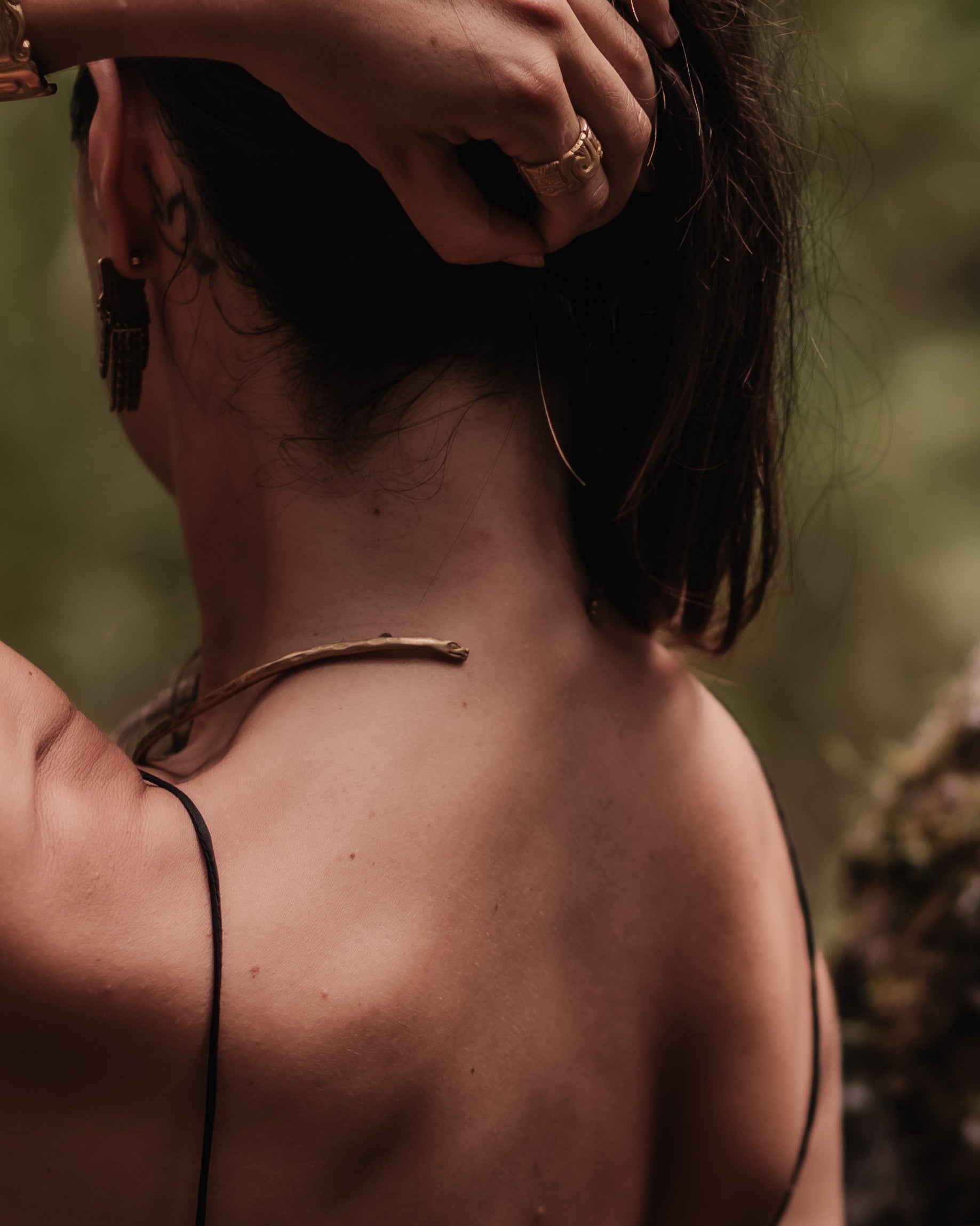
Two small serpents rest at the back of your neck.

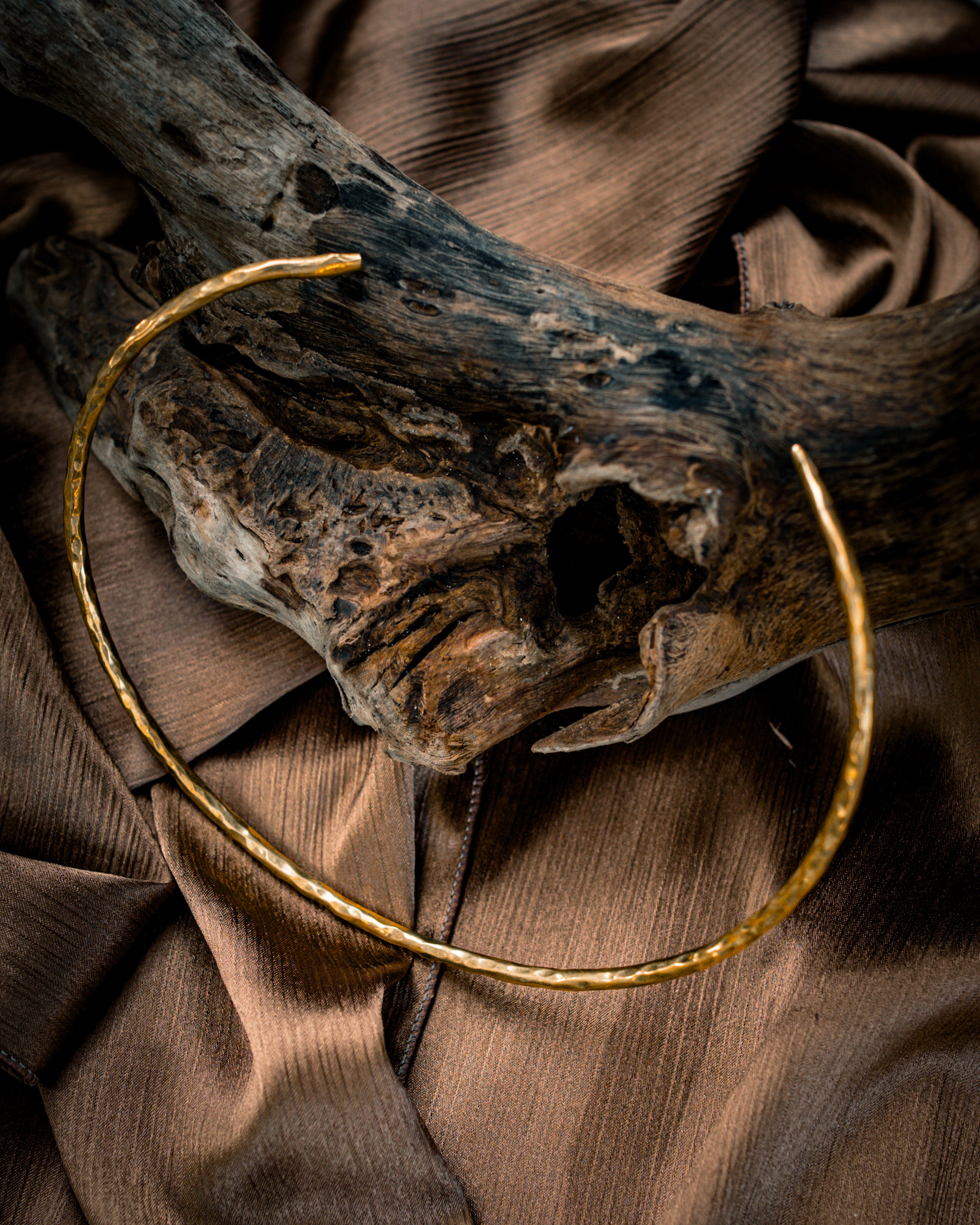
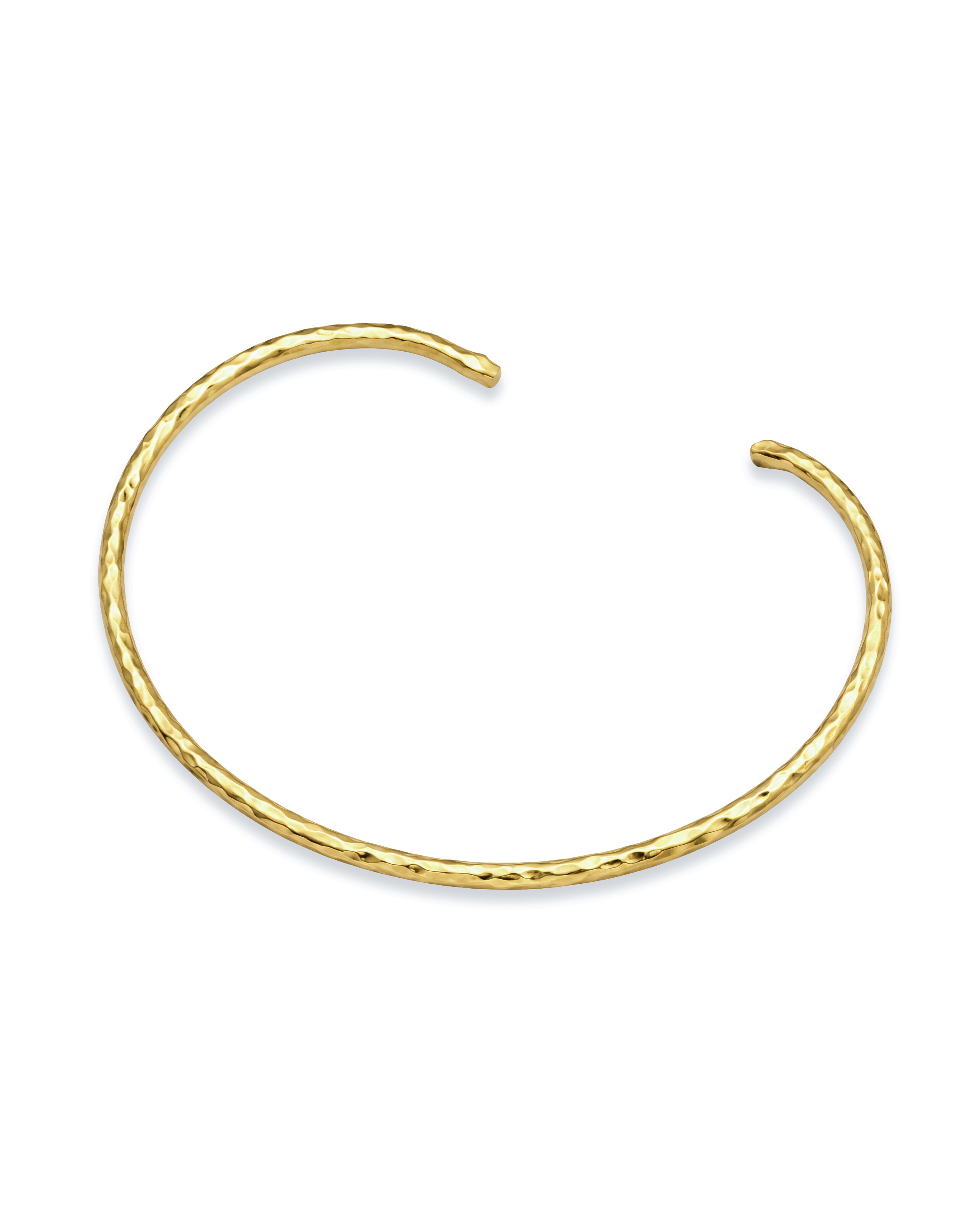
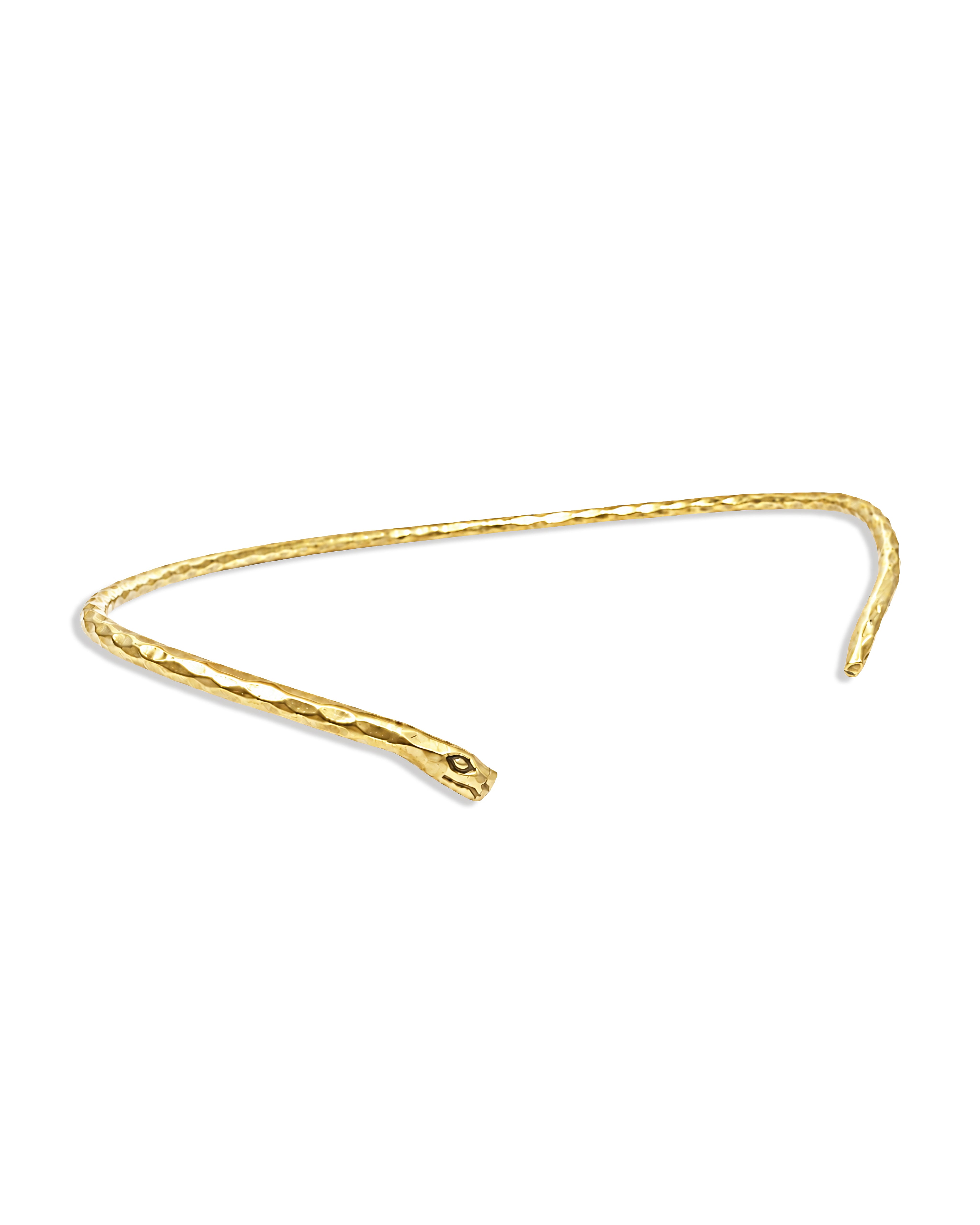
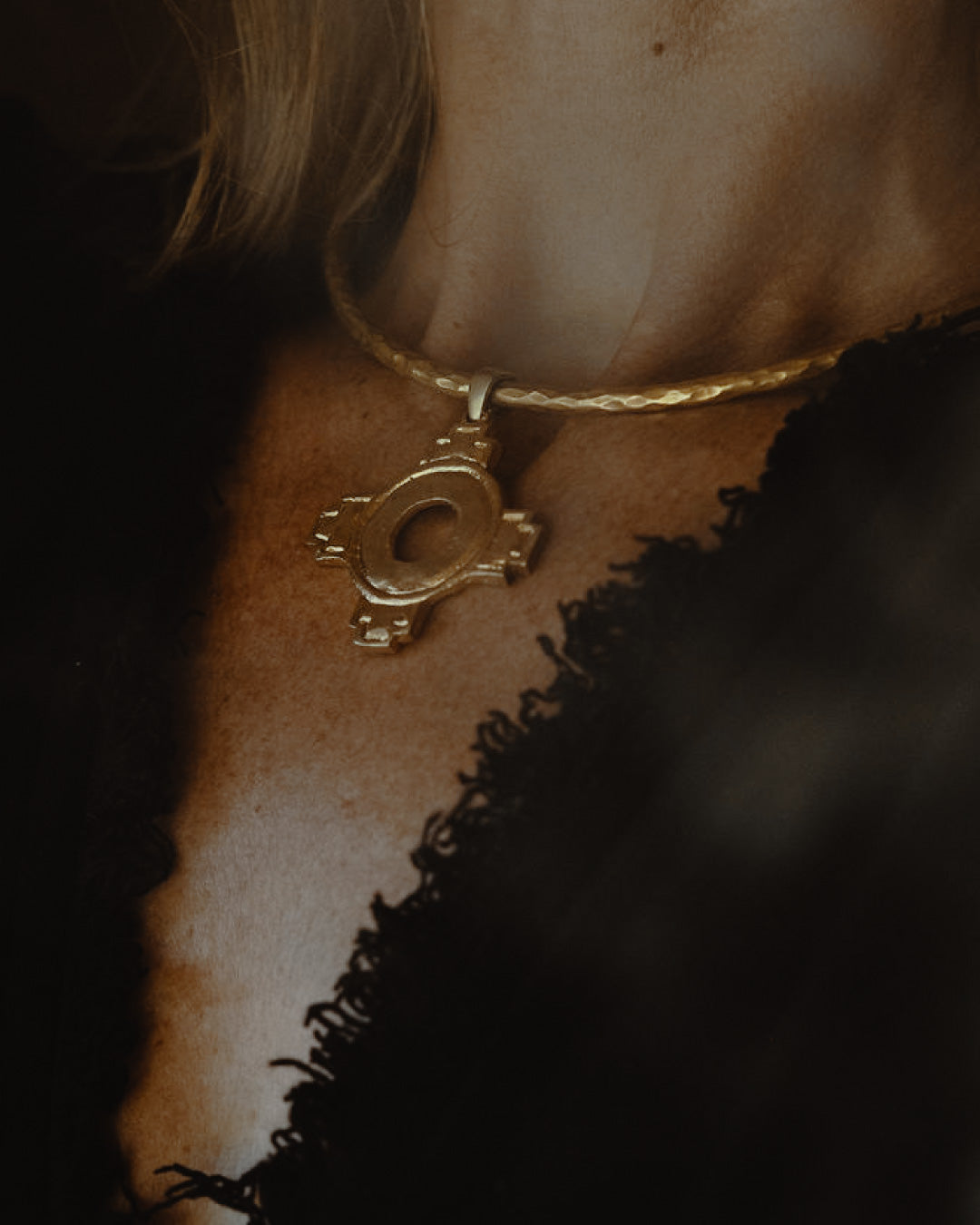
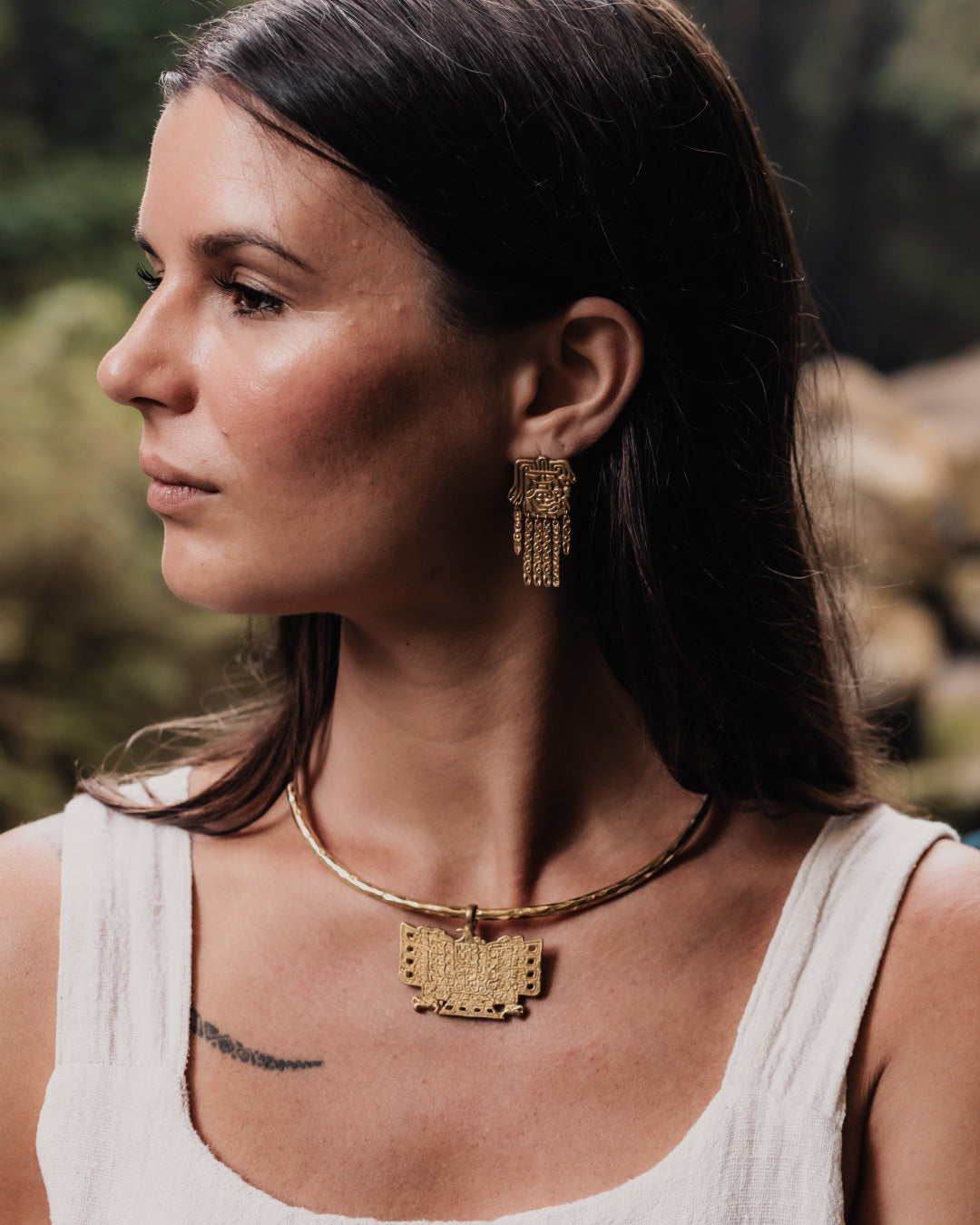
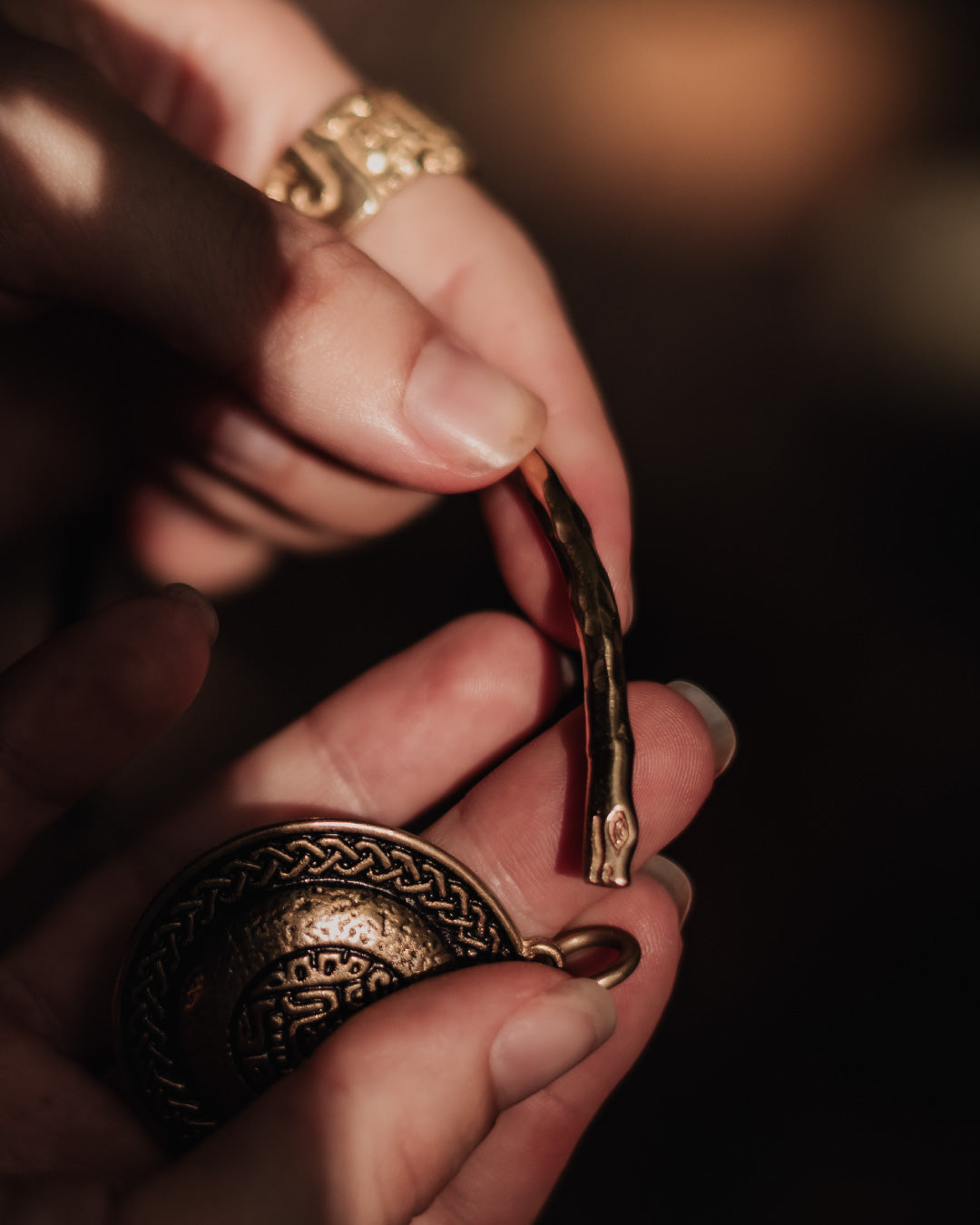
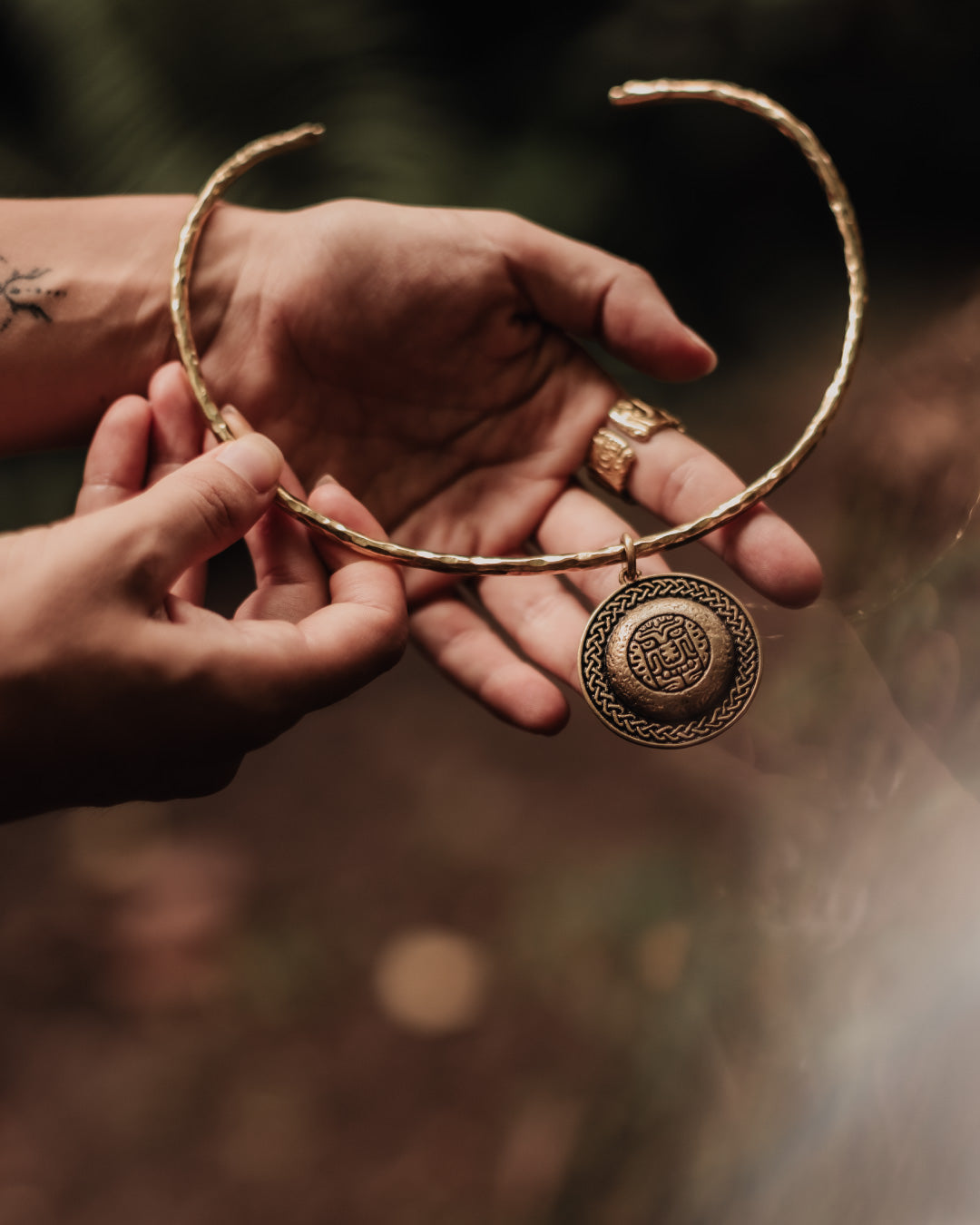
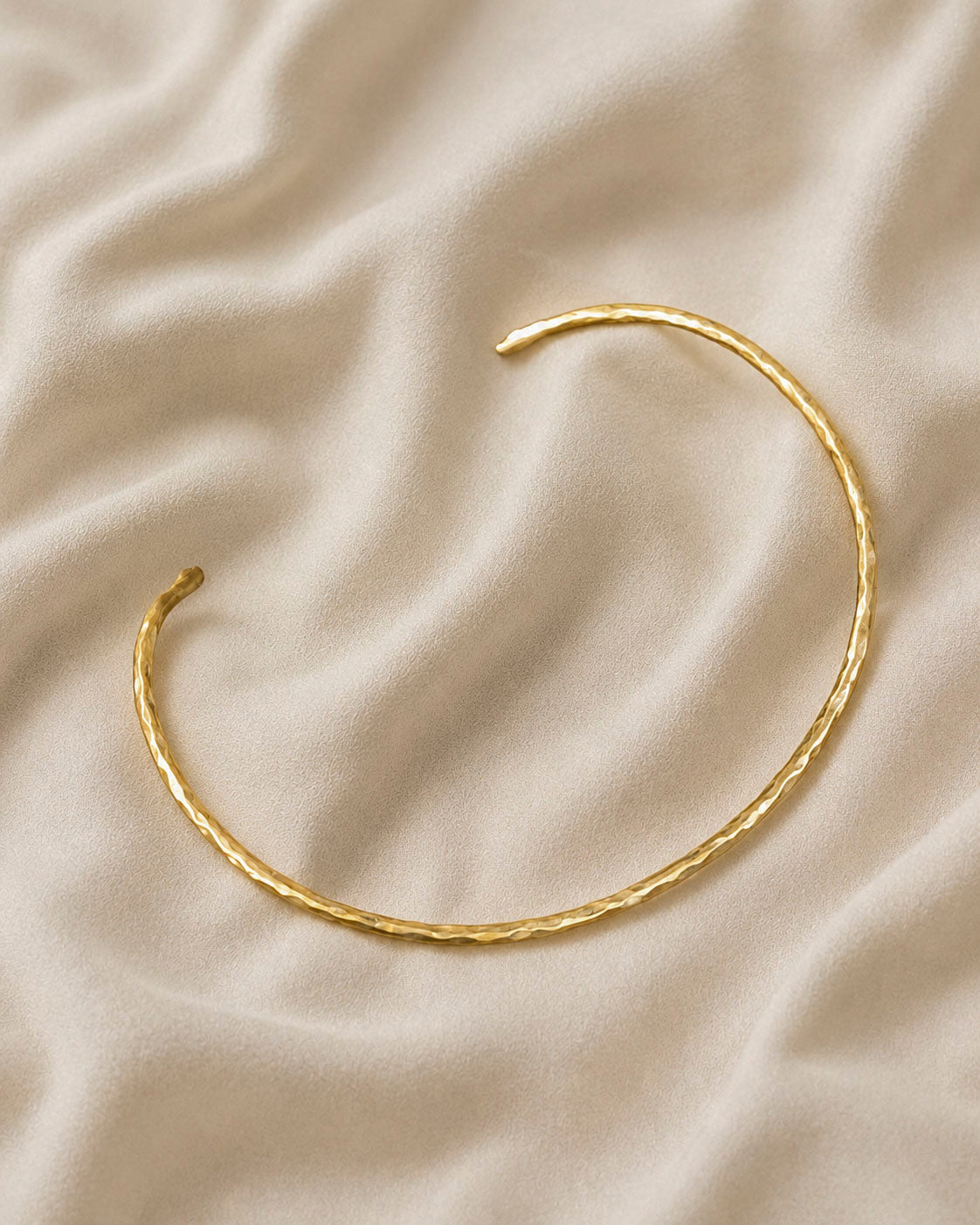
This is an open collar of hand-hammered brass, light against the throat. Where it comes to its two ends, the metal is shaped into the heads of Quru - the smaller serpents of the Chavín tradition, the carriers of the current that moves through stone, water, breath, and body.

The Quru are placed where they are for a reason. The nape is where the spine begins, the body's own axis, the column along which energy travels. The two serpents meet you there. Their current enters the line of the spine and runs its length, quiet and continuous.

And they face outward. Two heads, two watching eyes, turned toward all that is behind you: the side you cannot see, the ground already walked. The Quru keep that watch, so your own gaze can rest forward.

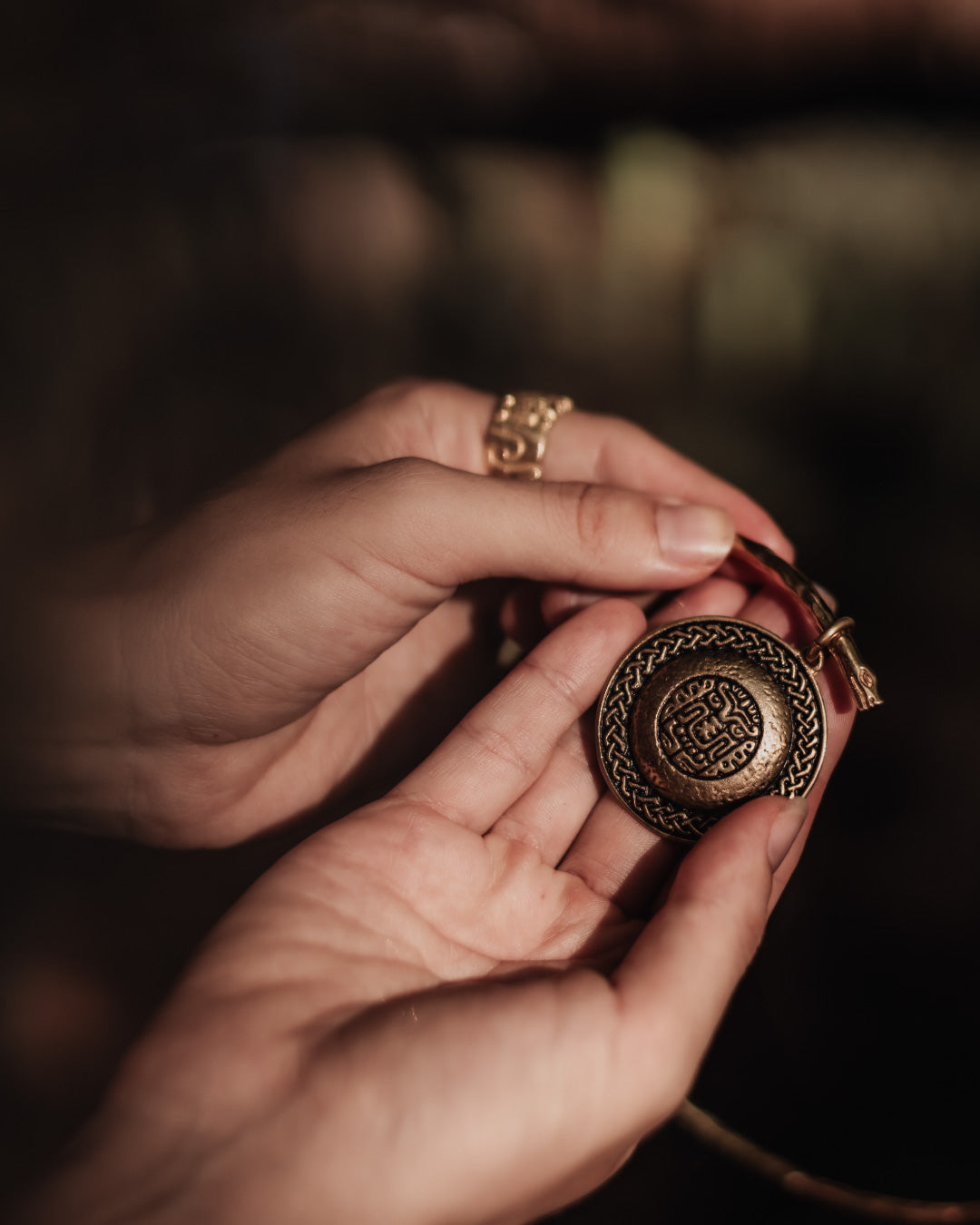
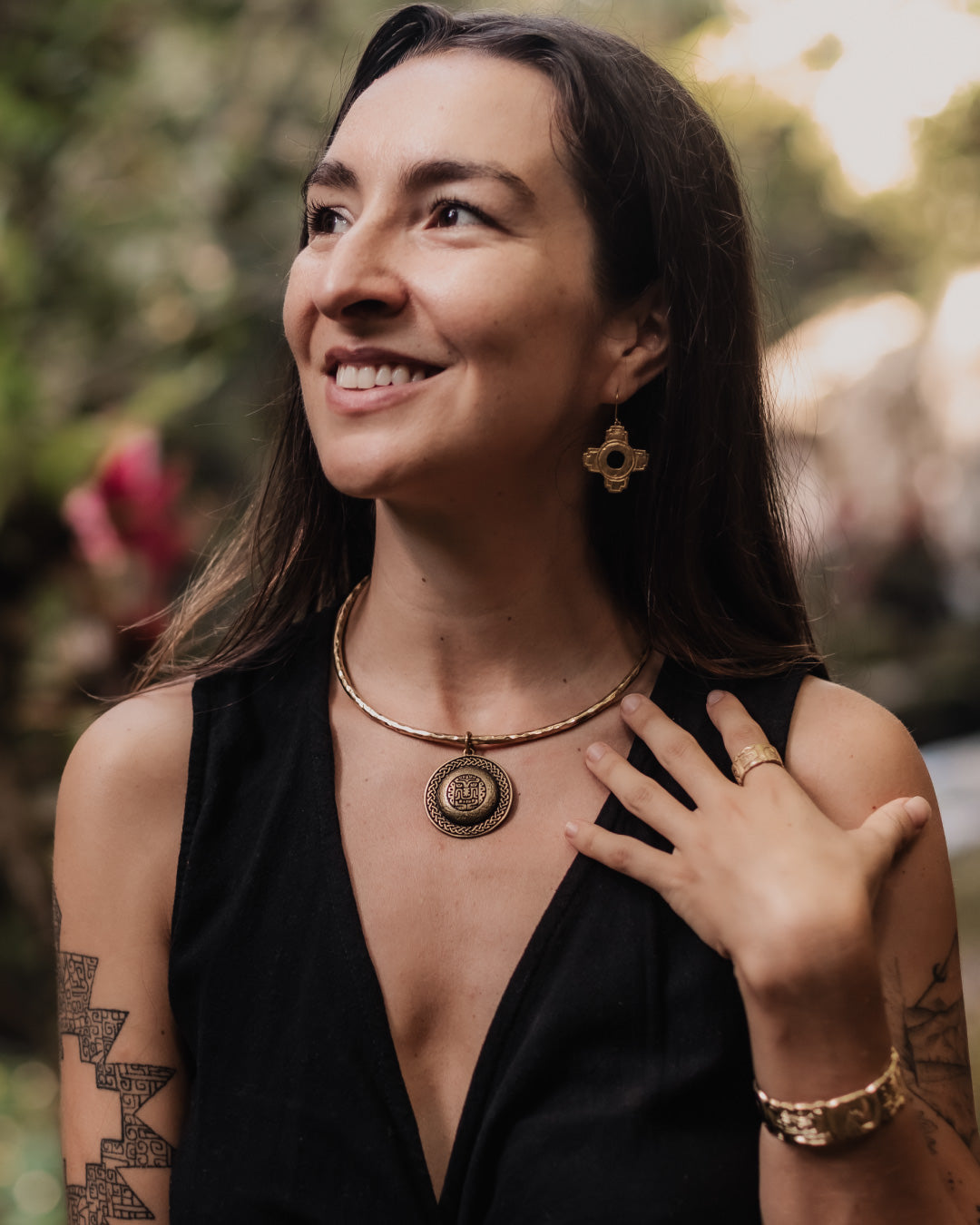
Worn alone, the collar is complete. Worn with a pendant of the collection, it becomes the thread that carries it, the one piece that holds the others.

A note for clarity: the Quru Choker is offered on its own - the open brass collar with two Quru heads. It does not include a pendant. The pendants of the collection are offered separately, each arriving with its own handmade brass chain, on their own pages.

ABOUT YOUR PIECE

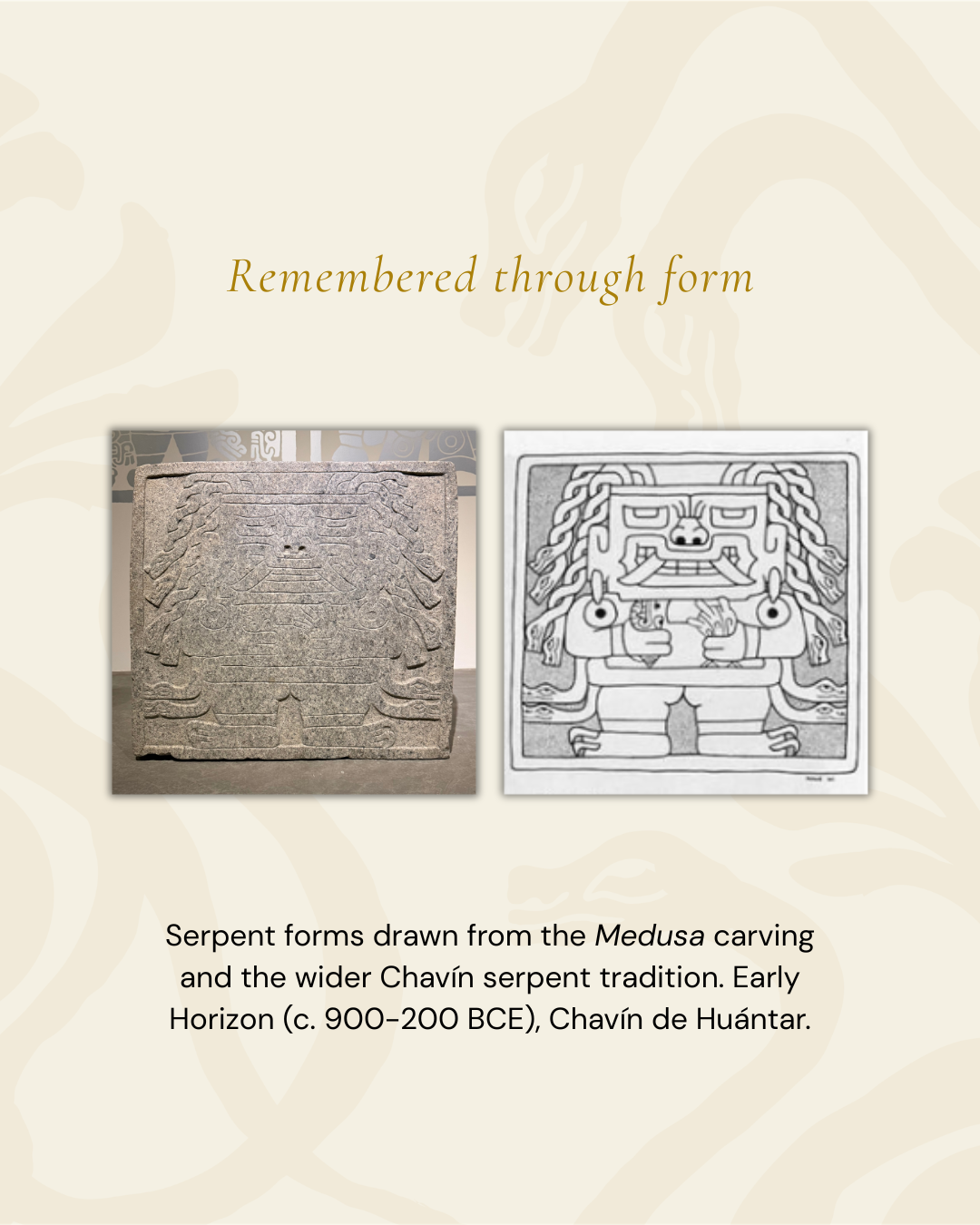
The Quru - The Smaller Serpents The serpent is not a symbol of danger but of vibration itself - the living current that moves through stone, water, wind, and body. Amaru, in Quechua, is the great cosmic serpent. Quru, in the Áncash Quechua of the Chavín tradition, are the smaller serpents, and it is the Quru who rest at the two ends of this collar. Their forms come from the serpents that move all through Chavín stone: the carving known as the Medusa, where a deity's hair has become a crown of snakes, and the many other reliefs where the serpent appears as the visible shape of energy. The design of the choker is KANTU's own. The serpents are ancient. The serpent sheds its skin as a teaching: renewal is not an ending, but a transformation. Here the Quru appear in two, one at each end of the band, mirrored, in quiet dialogue - the same teaching the Quru Earrings carry, that transformation happens not alone but in relationship. The Two Heads - The Watch Behind You The serpents are placed at the back of the neck, and they face outward. Two heads, two watching eyes, turned toward what is behind you: the side you cannot see, the ground already walked. In the Chavín tradition the serpent is messenger, healer, protector, a being that moves between worlds and keeps watch at thresholds. Here the threshold is your own back. The Quru hold it, so your gaze can rest forward. The Open Collar - A Form That Holds Without Binding The collar does not close. It is a circle left open at the nape, hand-hammered so the brass catches light unevenly, like water, like skin. It holds without binding. It rests on you rather than locking around you.
The Quru Choker sits where few pieces do: not at the heart or the chest, but higher, at the throat and the back of the neck. At the throat, the band rests over the place of voice, the passage between what is felt in the body and what is spoken into the world. To wear something here is to bring a quiet attention to that gate: to what you let through it, and how. At the nape, the two serpents meet the top of the spine. The spine is the body's own axis, the central column, the line along which energy travels. The Quru enter there. Their current runs the length of the spine, quiet and continuous, the way a river is present without announcing itself. Turned behind you, the serpents keep a watch the rest of your adornment does not. Most pieces are worn to be seen from the front. This one guards the back: the part of you that cannot see is witnessed and held, so you are free to face forward. Worn alone, the choker is its own quiet ceremony. Worn carrying a pendant, it brings that pendant's teaching to rest at the collarbone while the Quru keep their watch behind. The body knows when it wants this one. Often it is on the days you need to feel held from behind. Las serpientes velan tu espalda. Camina sin volver la mirada. ~ The snakes are watching your back. Walk without looking back.
The serpent forms in this piece draw from the carved stone of Chavín de Huántar, where the serpent is among the most constant of all images. It appears as the hair of deities, as emanations rising from their bodies, as the borders that frame the great supernatural beings. The carving known as the Medusa is the most celebrated of these: a face whose hair has become a crown of serpents - energy made visible, the inner world radiating outward as living frequency. In Andean cosmology the serpent was never merely an animal. Amaru, in Quechua, is the great cosmic serpent. Quru, in the Áncash Quechua of the Chavín tradition, are the smaller serpents. Both name the same truth: the serpent is the visible form of the energy moving through all living things. The stone carvers of Chavín depicted serpents with great care, capturing not the creature but the force it carried. The Quru Choker takes its serpents from this tradition, and its form from no single object. The open collar is KANTU's own design. The two serpent heads that finish it are drawn from the Medusa and from the wider body of Chavín serpent carving, brought together into a new form that honours where they came from. Primary references: Burger, Chavín and the Origins of Andean Civilization (1992); Rowe 1962; Tello 1923 & 1943; Rick et al., Stanford Chavín Archaeological Project.
Handcrafted in brass - chosen for its warmth, its quiet luminosity against the skin, and its long history of being worn close to the body. Brass is a living metal. It breathes with you, responding to your skin, your climate, the life you live. Over time it may deepen in tone or develop a soft golden patina. - Material: Brass - Finish: Hand-hammered, with a protective coating to slow oxidation - Form: An open collar, worn with the opening resting at the nape - Worn alone, or carrying any pendant of the collection - Made by hand in Bali, in collaboration with artisans who work metal from a place of respect - Designed in Peru

PRACTICAL INFORMATION