Skip to content

Cart

Your cart is empty

Quru Earrings

Sale priceRp 1.594.000,00 IDR

In the carvings of Chavín de Huántar, serpents appear everywhere, curling from mouths, flowing as hair, weaving through borders, framing sacred beings. They are not decorative lines. They are the visible presence of the Amaru: the great Andean serpent, the living form of energy itself.

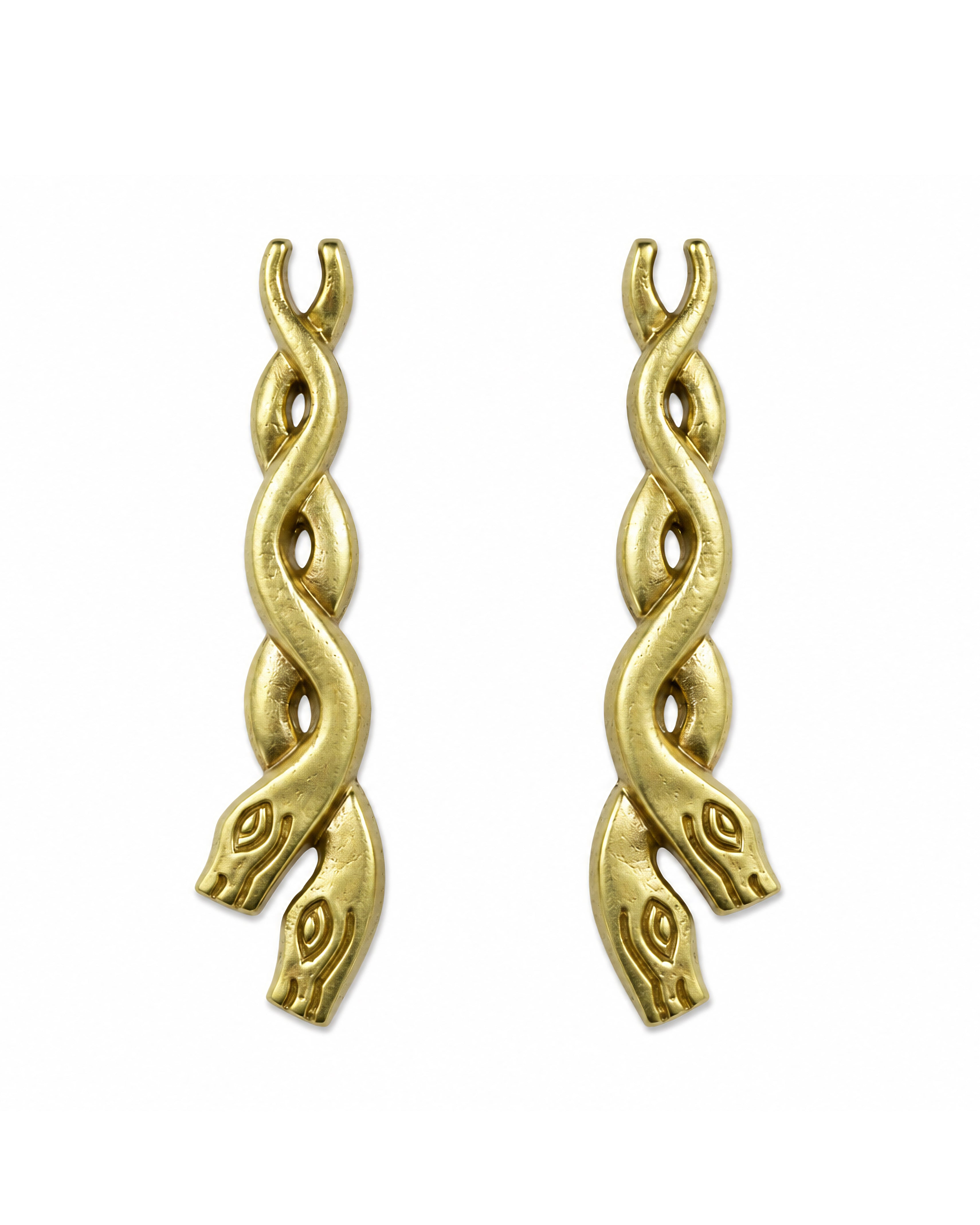
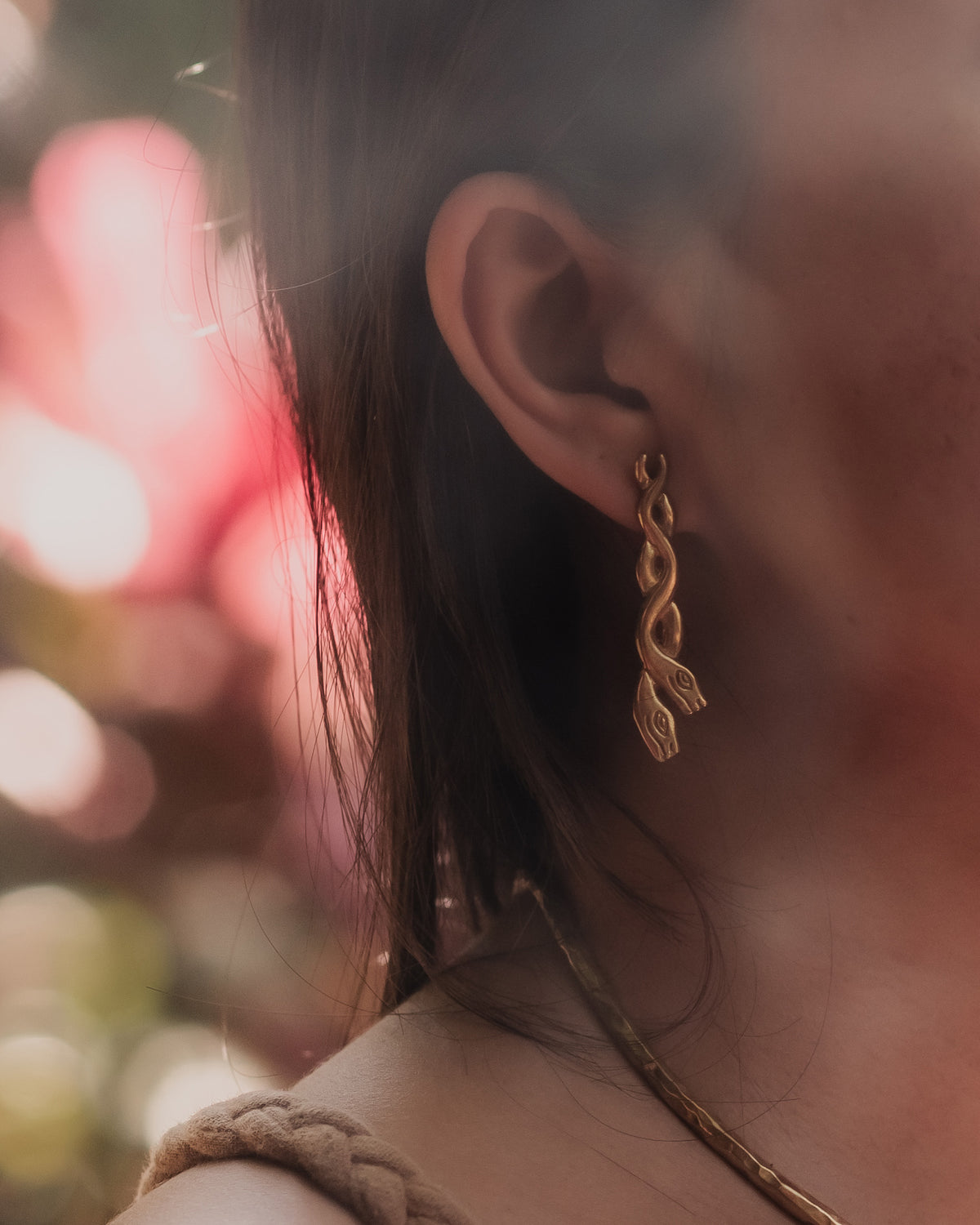
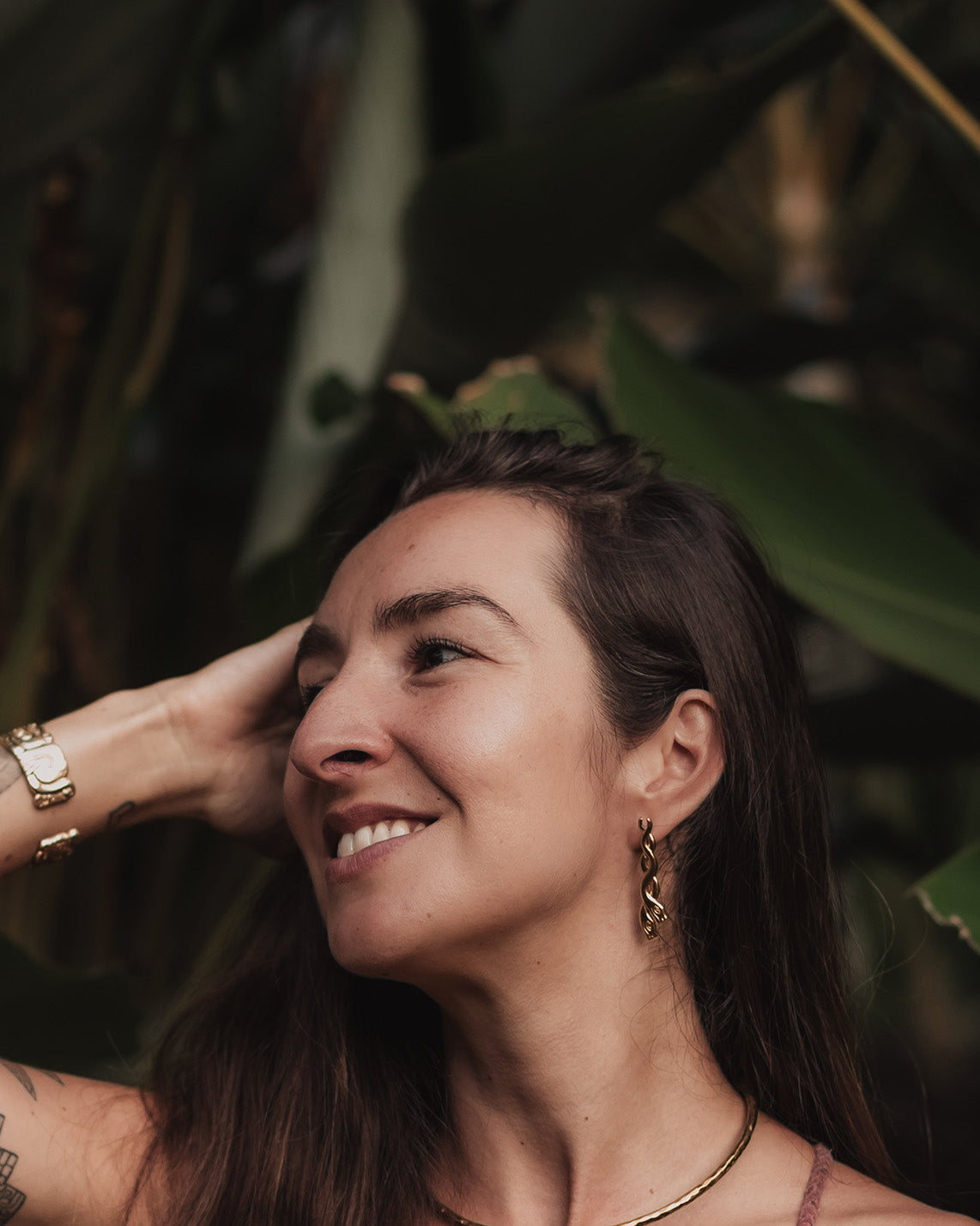
The Quru Earrings distill this to its essence. No crown, no cross, no feline face above. Only the serpents: two bodies intertwined in mirrored dance, flowing together. Pure vibration. Pure dialogue.

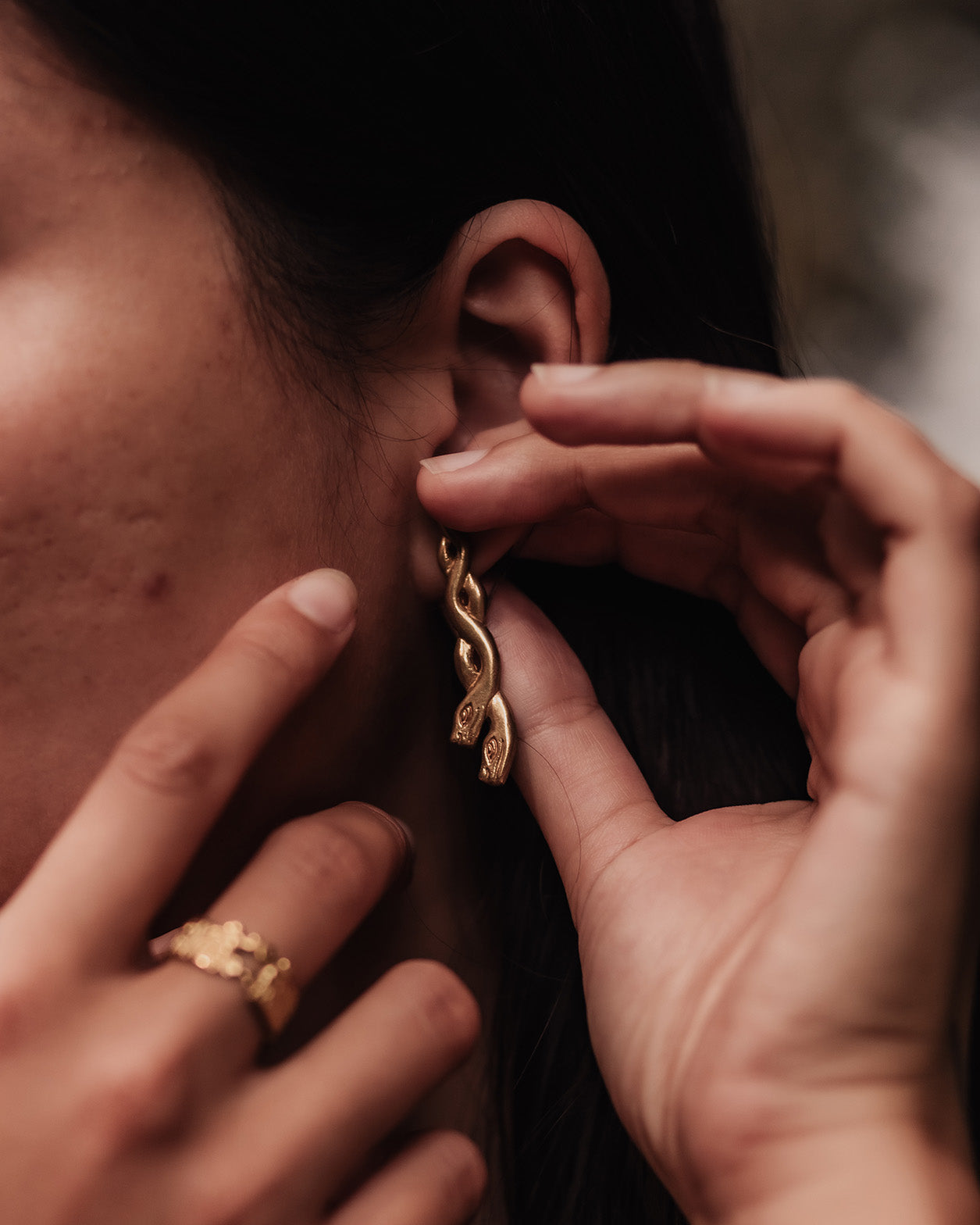
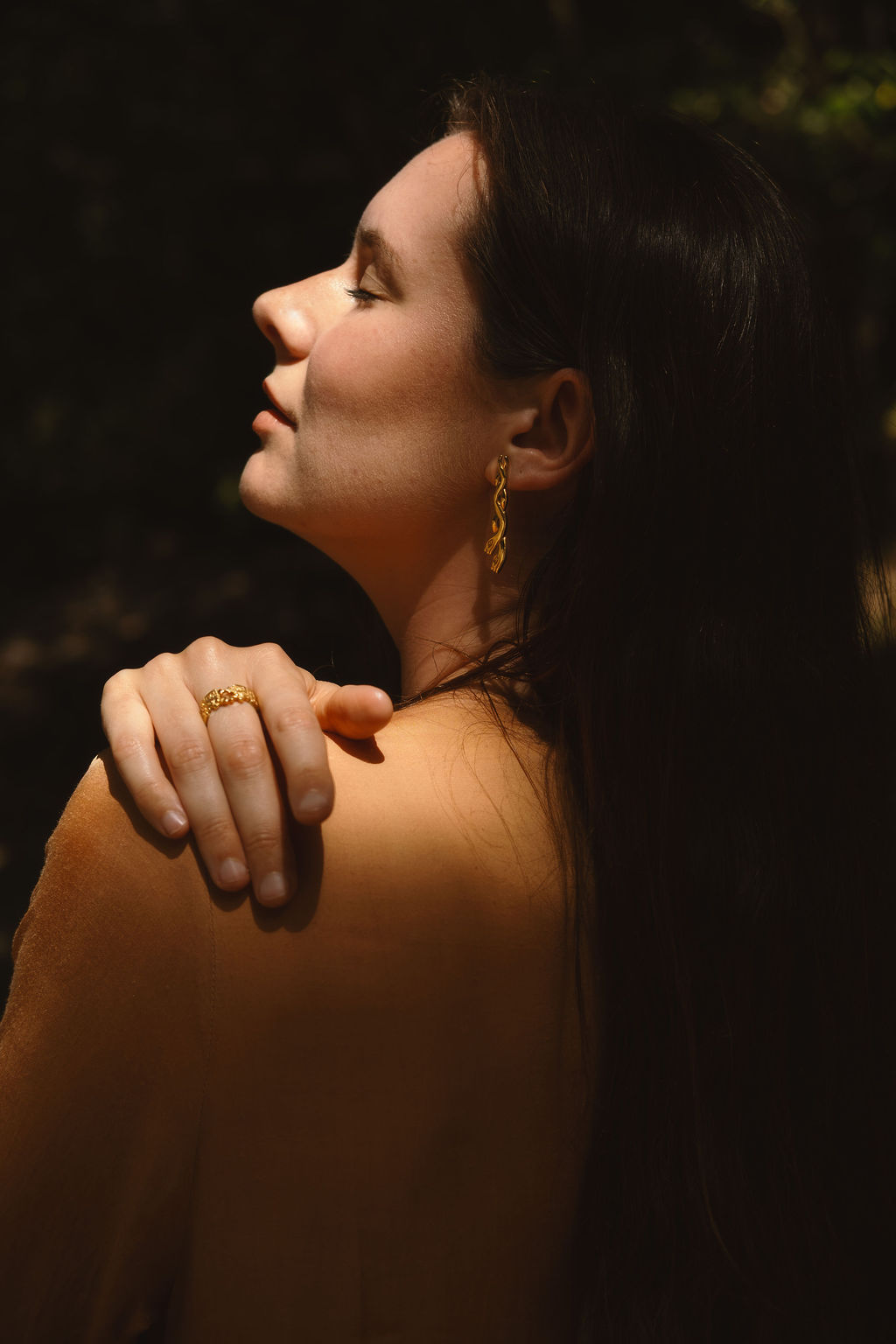
Worn at the ears, they honor the portals of perception. An invitation to listen not only to sound, but to the living frequency of everything around and within you.

Handcrafted in brass.

ABOUT YOUR PIECE

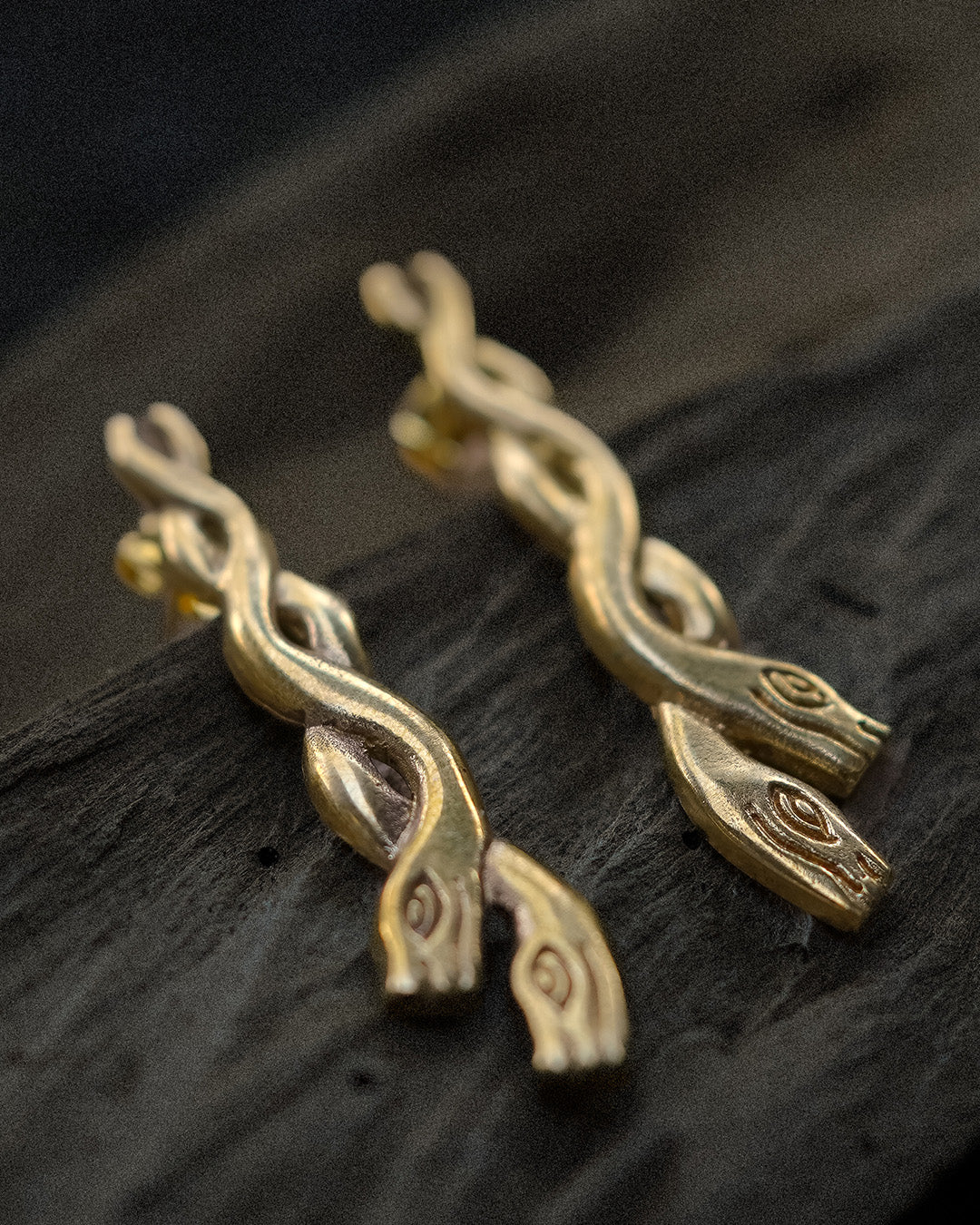
The Quru: The Living Current The serpent is one of the most ancient and continuous presences in Andean cosmology. The wider Quechua tradition names the great cosmic serpent Amaru. In the Áncash Quechua of the Chavín tradition, the smaller serpents that curl from mouths, flow as hair, and trace every sacred border are named Quru. These are the serpents this piece carries. Not creatures to be feared but forces to be understood: the living current that moves through all things, through stone, through water, through body, through dream. For the people of Chavín, all matter was alive: animate and inanimate, everything in constant communication. The serpent was the visible form of that communication. To carve a serpent was not to depict an animal. It was to show energy in motion. Serpent hair meant thought turned into vibration. Serpent borders meant forces in flow. Serpent bodies meant dialogue between realms. The Mirrored Dance: Duality in Motion Here, two serpents intertwine in symmetrical ascent. This is not static balance but duality alive. Two currents, two forces, moving together: not merging, not separating, but in continuous dialogue. The Chavín understood that harmony was not the absence of difference but the dance between opposites. These two serpents are that dance. The eyes carved into their bodies watch as they move. The serpent sees even as it flows, alert and present in its motion.
Serpent ornaments at the ears were not simply aesthetic in the ancient Andean world. They were a statement about perception. In Chavín ceremony, ornaments shimmered and swayed as the wearer moved, blurring the boundary between body and temple, the person becoming a living instrument, a vessel through which the forces depicted continued to move. Serpent hair on the deity figures of Chavín radiated vibration outward from the sacred face. To wear the Quru at the ears is to invite that same quality: receptivity, attunement, the willingness to listen beyond the surface of sound. The ears were portals. Hearing, for the Chavín, was never only about sound but about attunement. To the vibration of stone and water, to the frequency of what moves beneath the visible, to the voices of ancestor and earth. To wear serpents here is to become more porous to that dialogue. To remember that we too are bridges, carriers of communication between worlds.
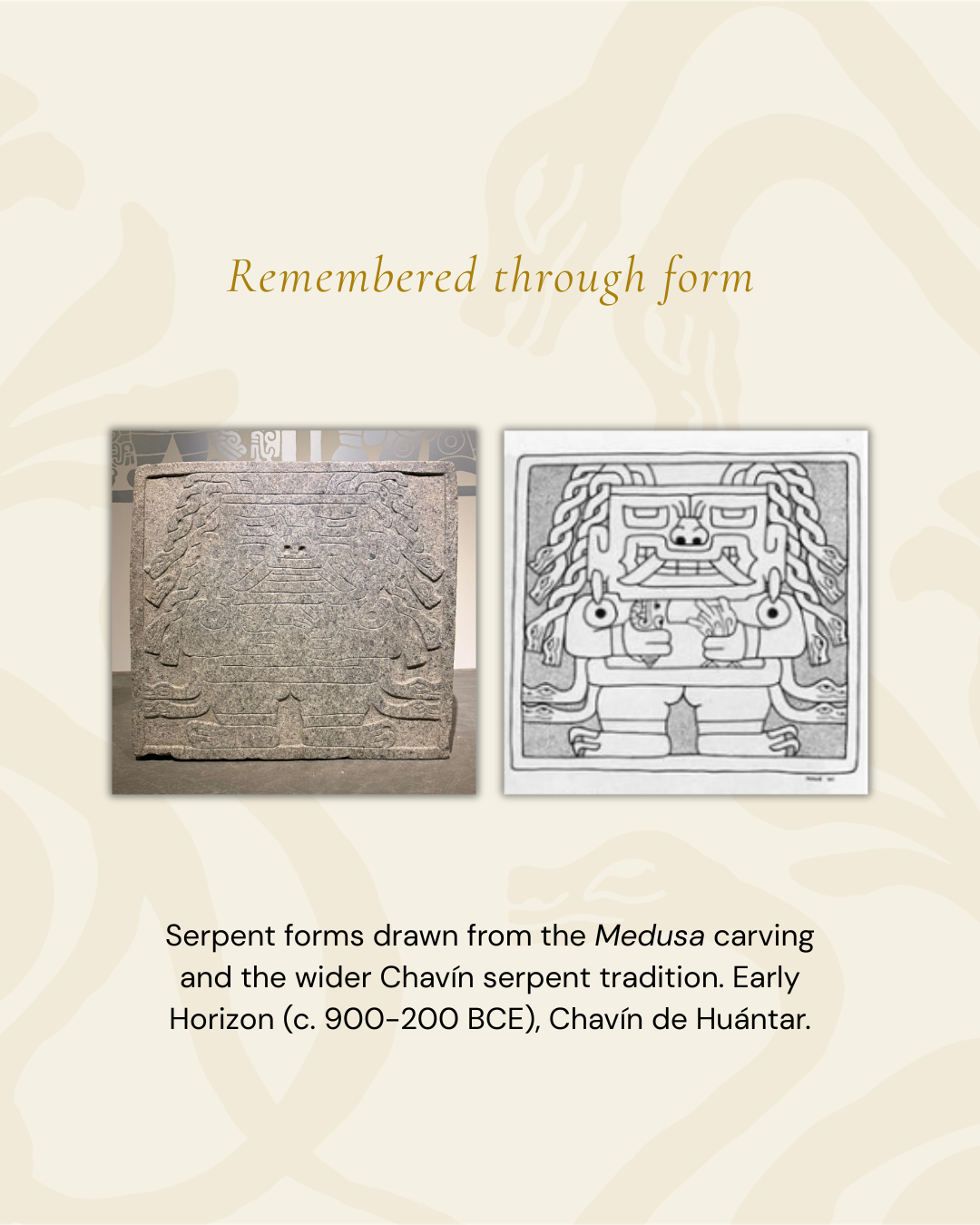
The serpent forms in this design draw directly from the Medusa carving at the museum in Chavín de Huántar, one of the most celebrated images in the Chavín iconographic tradition. A supernatural being with serpents flowing as hair, its face fierce and luminous, its entire form animated by the living current. It stands as one of the clearest expressions of the Chavín understanding of the serpent as vibration made visible. The Quru, the smaller serpents of the Chavín tradition, appear across nearly every medium at Chavín de Huántar: in carved stone tenon heads, on the Black and White Portal friezes, in goldwork from associated sites, in painted textiles. Their omnipresence, together with the great cosmic Amaru, was the visual language through which the living energy of the world was expressed. The intertwined double-serpent motif, two bodies in mirrored movement, echoes patterns found throughout Chavín and broader Andean iconography, where paired forms express the principle of duality not as opposition but as complementary dialogue. The eyes carved into the serpent bodies reflect the Chavín artistic practice of embedding awareness into form: the serpent sees as it moves. Primary references: Burger, Chavín and the Origins of Andean Civilization (1992); Rowe 1962 (Chavín iconographic analysis); Tello 1923 & 1943; Rick et al., Stanford Chavín de Huántar Archaeological Project.
The Quru Earrings sit close to the ear: two serpents intertwined along their length, ending in distinct heads at the base, eyes open in vision. Studs, worn as a pair. Handcrafted in brass, chosen for its warmth, its quiet luminosity, and its long history of being worn close to the body. - Material: Brass - Finish: Protective coating to slow oxidation - Style: Stud - Size: 1 × 5 cm - Weight: ~3.3 g each, 6.6 g pair - Made by hand in Bali, in collaboration with *orfebres* (masters of metalwork) who carry this lineage with devotion for process and material Dreamed in Peru. Handcrafted in Bali.

PRACTICAL INFORMATION