Skip to content

Cart

Your cart is empty

Runku Ring

Sale priceRp 1.591.000,00

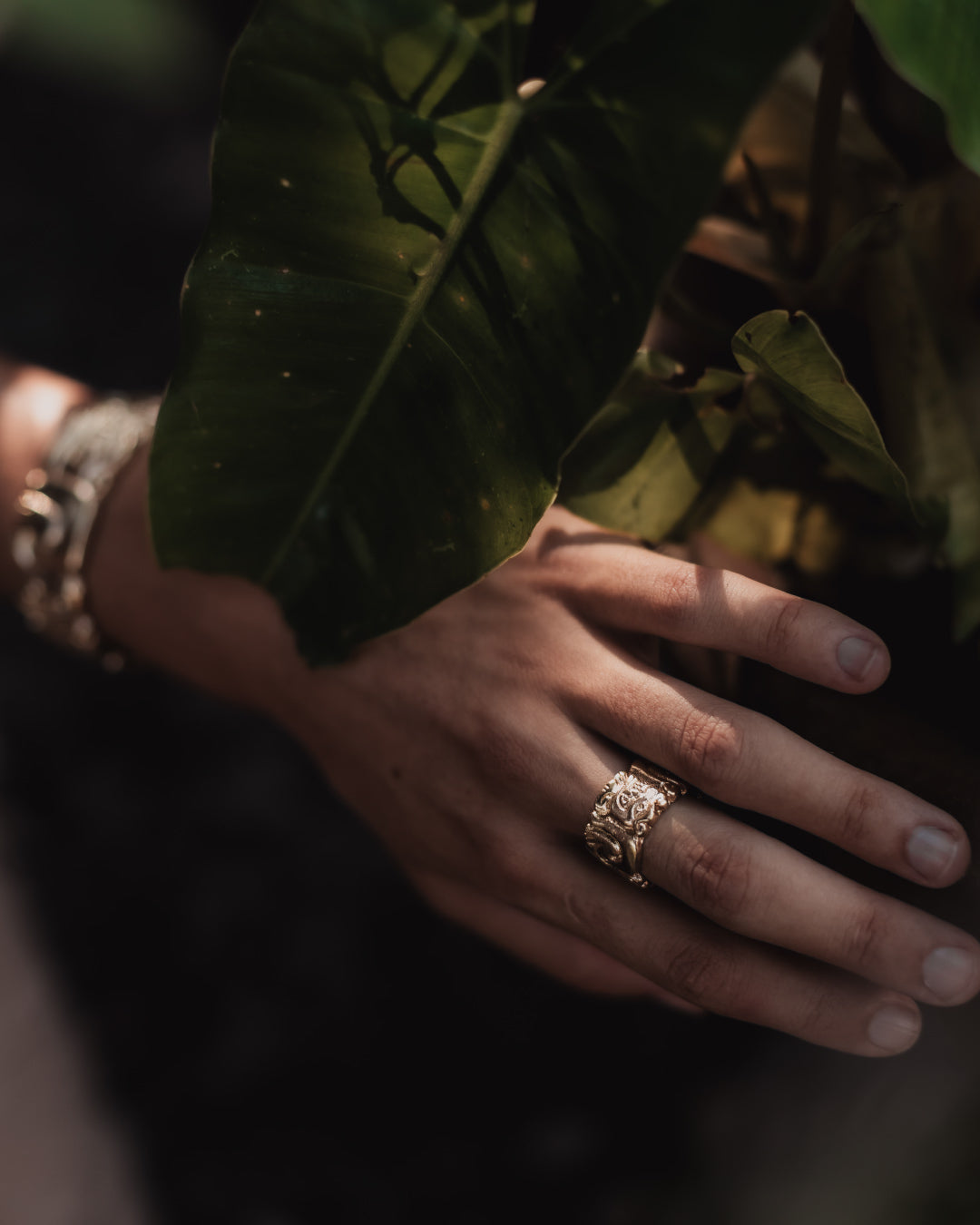
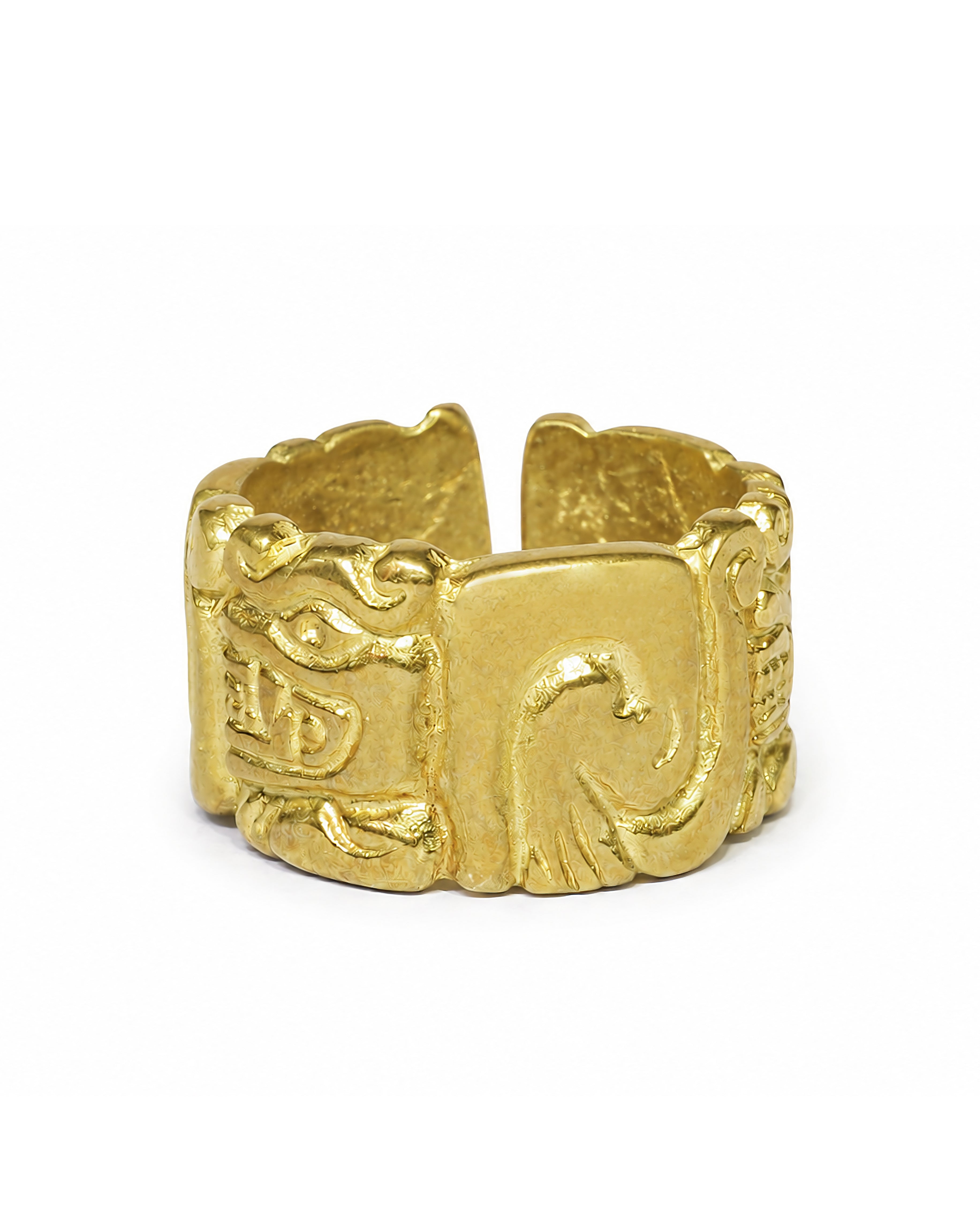
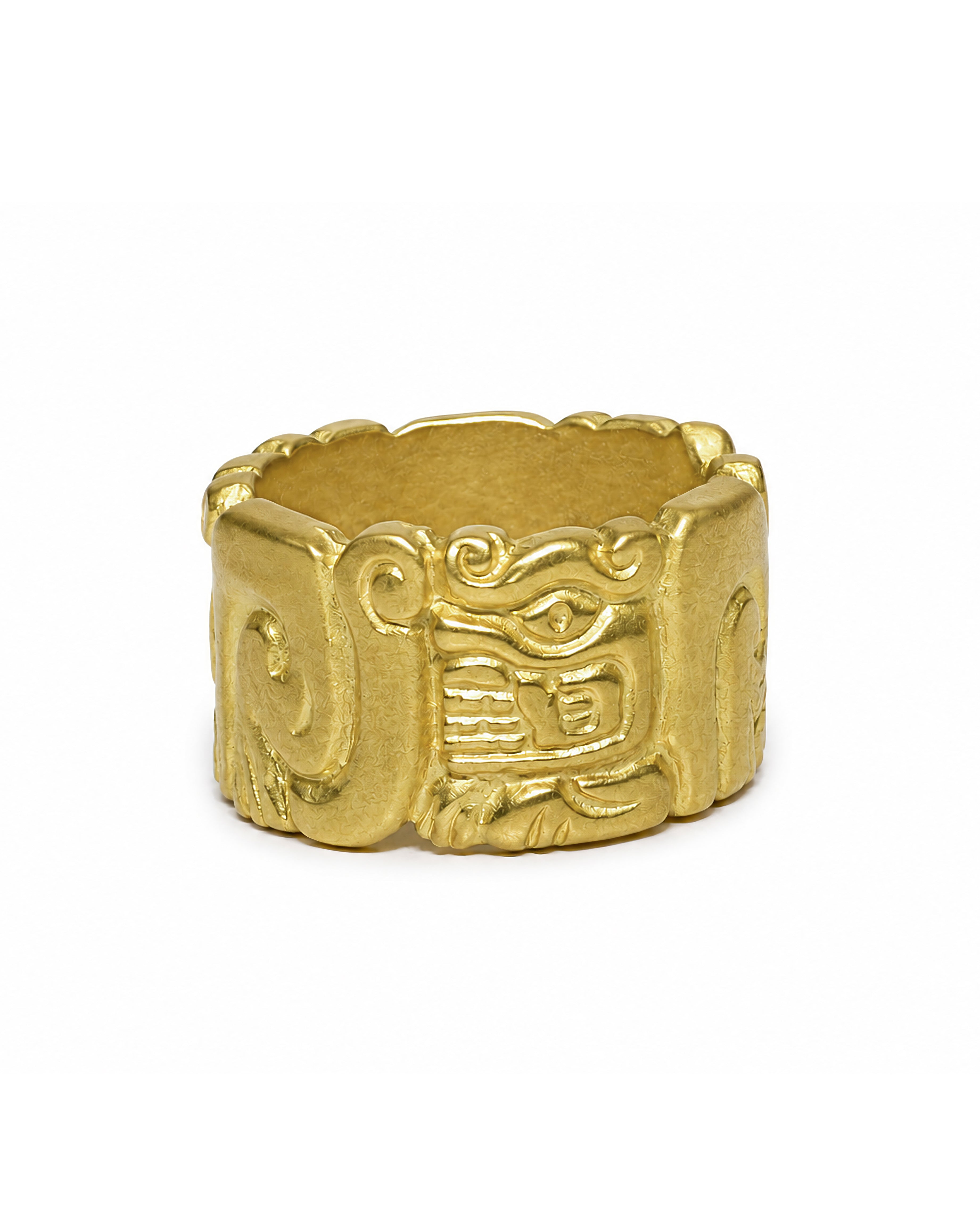
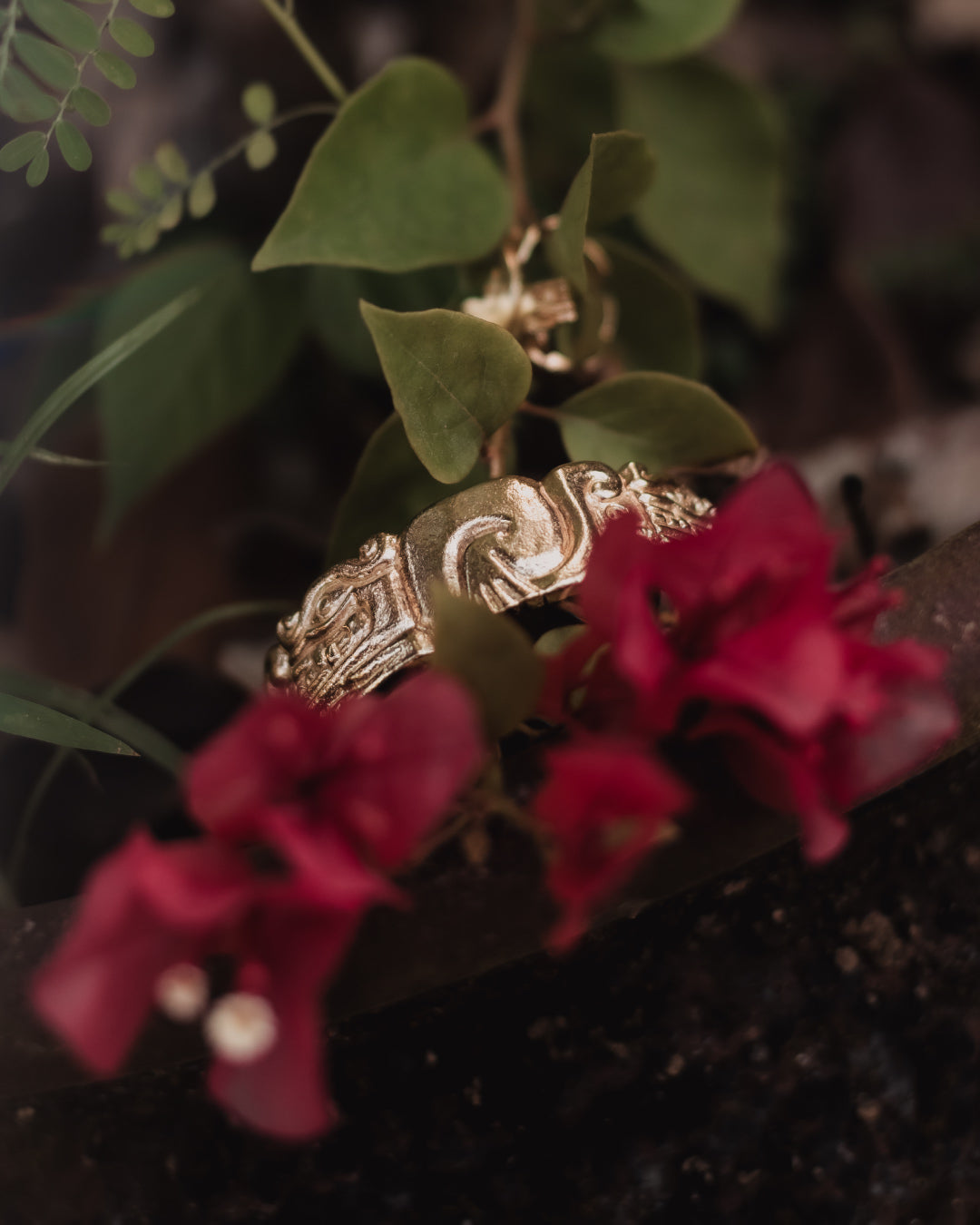
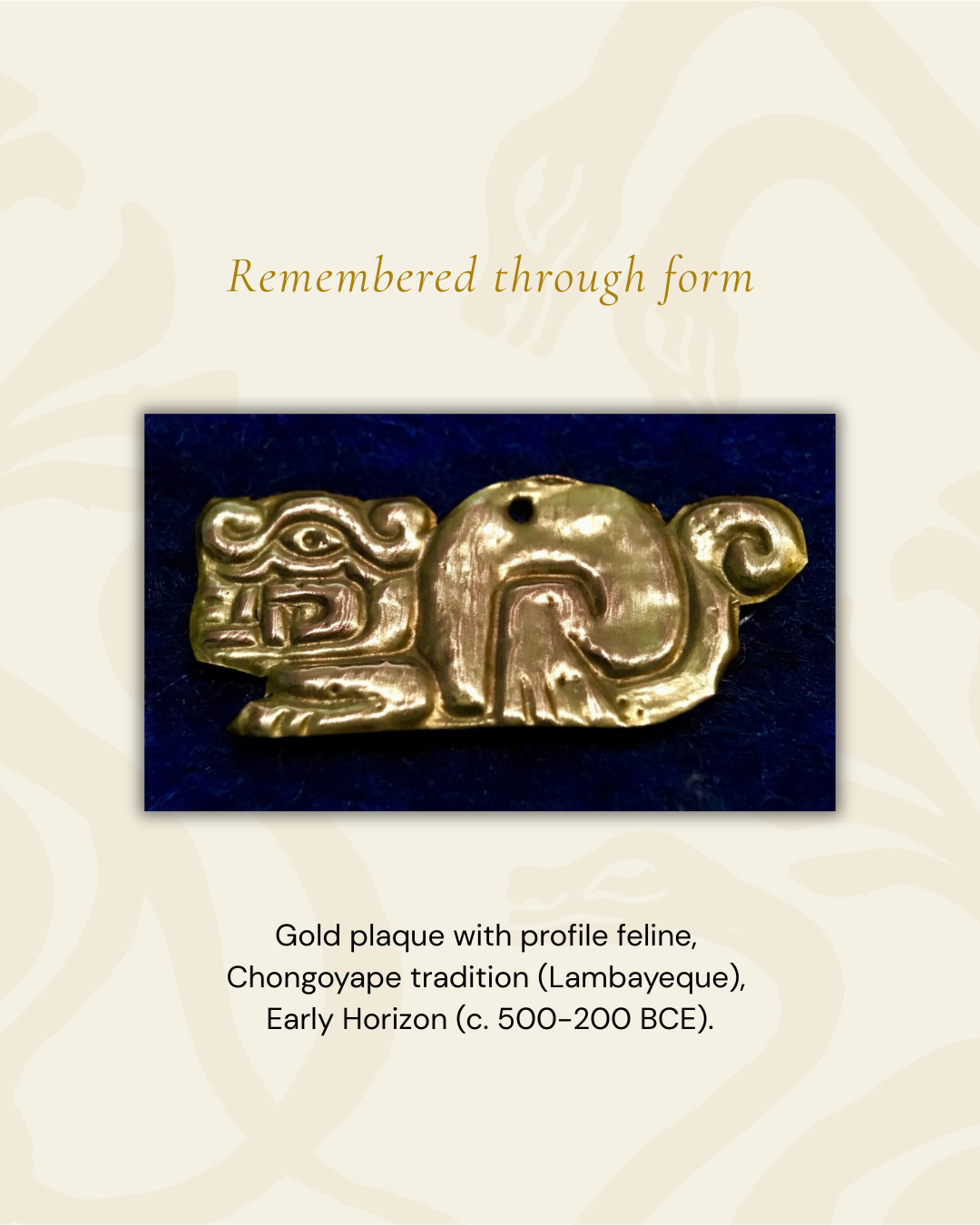
Among the treasures of Chavín goldwork are small plaques and ornaments hammered into form - compact, fluid, yet alive with a force that has not diminished across millennia. The design that inspires the Feline Ring is one of these: a feline rendered in profile, body coiled with swirling energy, a central eye-like motif watching from within the curling lines.

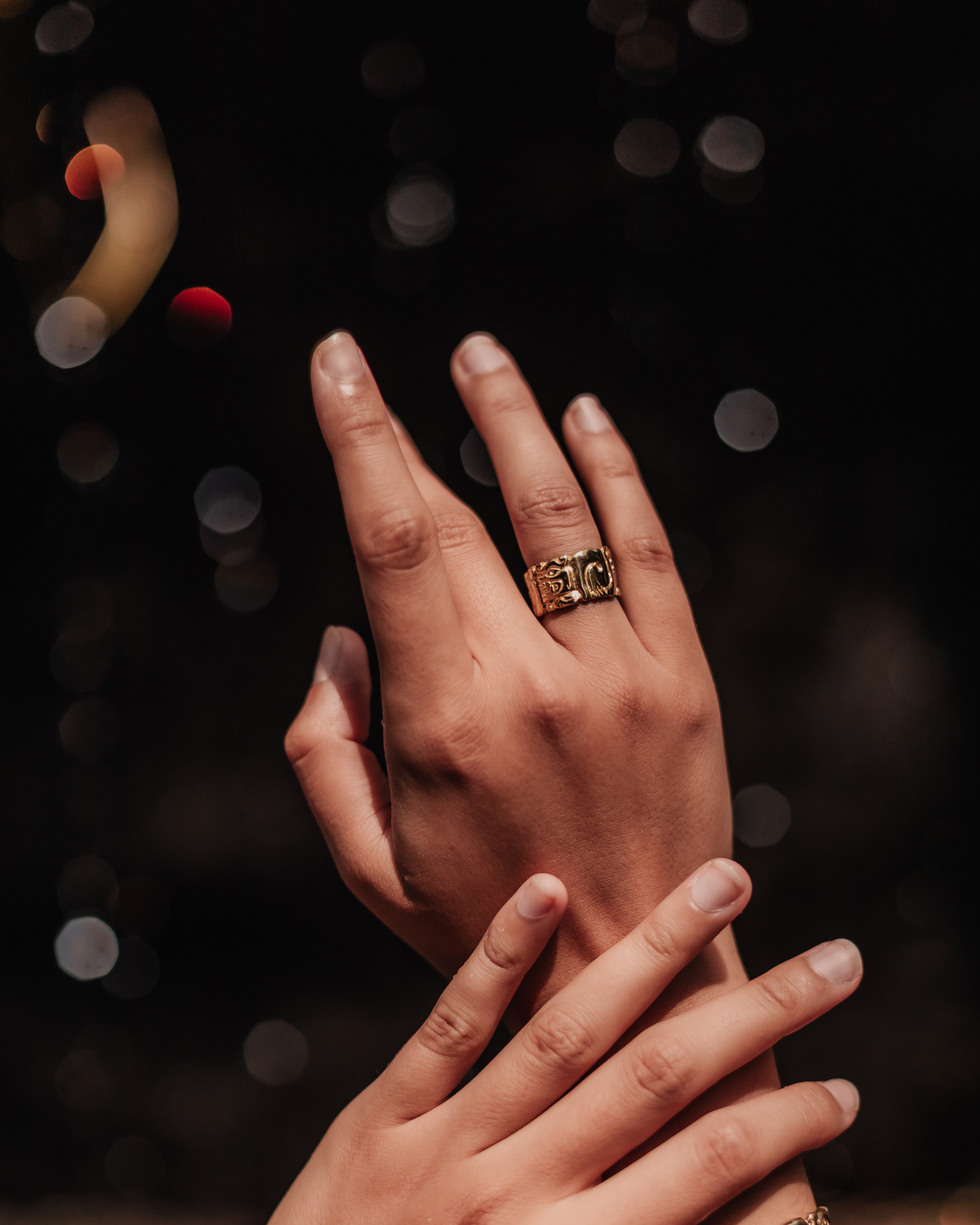
On the ring, this being appears not once but three times - wrapping around the hand in continuous procession, as if the feline is always arriving, always present, always watching.

The hand is the place of action, creation, and offering. What you carry here, you carry into everything you do.

ABOUT YOUR PIECE

The Feline - Guardian, Transformer, Night-Walker The feline was the supreme icon of Chavín cosmology. Not merely an animal but a force: the great guardian and transformer, the one who moved between realms. With its nocturnal vision and sharp fangs, it embodied the ability to see beyond the ordinary - to pierce the veils of illusion, to walk through darkness without turning away, to hold what is fierce and channel it into clarity. In this design, the feline's essence is abstracted - reduced to flowing contours and bold forms, body curving and alive. But the power is unmistakable. This is not a decorative animal. This is a presence. The Eye - Shamanic Vision and Awakening Set within curling lines: the eye. In Chavín art, the eye was never merely an organ of sight. It was a symbol of perception - of shamanic vision, of the awakened gaze that sees what is ordinarily hidden. The eye of the oracle. The eye that looks inward while appearing to look outward. To carry this eye on the hand is to let that quality of perception inform what you create, touch, and offer. The Scrolls - Energy in Transformation The surrounding curves and scrolls evoke energy in motion. Chavín artisans worked with flowing lines that suggested transformation: a fang that might also be a claw, a swirl that might also be breath or sound. Nothing is fixed. Everything is alive in dialogue. The feline here is not static; it is always in the middle of becoming. The Full Arc - Descent, Origin, Return The feline's cosmological role is not only guardianship of the surface world. In the living tradition around Chawpin, the feline walks into the depths of Ukhu Patsa - the inner world, the realm below and within - to find the seed of Origin there. It descends not with fear but with the precision of the one who sees in the dark. And from that depth, it rises - elevating to the stars, then returning, carrying messages from the deepest and highest places simultaneously. This is the full arc: descent into the depths → encounter with the seed of Origin → ascent → return as messenger. The feline does not simply protect the doorway. It travels through it, all the way to the other side, and comes back transformed - bringing what it found. To wear the feline is to hold this arc in the body. The capacity to go deep without losing your way. The knowledge that what rises must first descend. The Tripling - Presence Without Interruption The feline appears three times around the band. Not a portrait but a procession - the guardian present on all sides, surrounding the hand completely. In Andean sacred objects, repetition was not redundancy but amplification: what is said once carries force; what is said three times becomes a field.
Where earrings attune listening - and pendants resonate at the heart, at the throat, at the thymus - the ring belongs to the hand. The hand is the part of the body most associated with action, creation, and offering. In ritual traditions across the Andes and the world, the hands were understood as the body's outward prayer - what they touch, they consecrate; what they make, they sanctify; what they offer, they transmit. To carry the feline at the hand is to infuse action with guardianship. To let vision guide what you create. To consecrate your gestures - the work you do, the things you make, the people you reach toward - as extensions of something sacred. The hand that acts from vision is the hand that prays.
The design of the Feline Ring draws from Chavín-style gold plaques in the tradition of the Chongoyape tomb groups - among the most significant Early Horizon metalwork assemblages documented in the Andes. The Chongoyape finds came to scholarly attention primarily through excavations in the Lambayeque region during the 1920s, and were first rigorously analyzed by Samuel K. Lothrop in his foundational papers on Chavín goldwork (American Antiquity, 1941 and 1951). These tombs yielded an extraordinary range of high-status gold objects: crowns, cuffs, ear spools, nose pendants, chest plaques, and small ornamental plaques - all worked in thin hammered and repoussé gold, all carrying the characteristic Chavinoid iconography of felines, serpents, and hybrid beings. Among these objects are a number of small horizontal plaques featuring the feline rendered in profile - compact body, swirling contour lines, suspension hole at the top suggesting use as a worn ornament. The piece that most directly inspires the Runku Ring belongs to this type: a crouching feline in profile, body alive with curvilinear energy, a prominent eye motif set within the scrolling lines. The specific piece pictured has not been definitively attributed to a single named collection in published literature, and its exact museum location, if it is in a public collection, has not been confirmed. It belongs to the broader Chongoyape stylistic group and shares all the formal characteristics of Early Horizon Chavinoid goldwork from the Lambayeque region. The Cleveland Museum of Art (accession 1946.117) holds related plaques from this tradition - hammered gold with feline deity imagery, attributed to Chongoyape and dating to approximately 500-200 BCE. The David Bernstein collection and publications by Lavalle (Oro del Antiguo Perú, 1992) document further comparable pieces from the same ceremonial context. These objects were not decorative. They were markers of elite status, ceremonial power, and cosmological alliance - worn by those whose lives were understood as sacred responsibilities. Primary references: Lothrop, S.K., "Gold Ornaments of Chavín Style from Chongoyape, Peru," American Antiquity (1941); Lothrop, "Gold Artifacts of Chavín Style," American Antiquity (1951); Burger, Chavín and the Origins of Andean Civilization (1992); Lavalle, Oro del Antiguo Perú (1992); Cleveland Museum of Art accession 1946.117.
Handcrafted in brass - chosen for its warmth, its quiet luminosity against the skin, and its long history of being worn close to the body. Brass is a living metal. It breathes with you, responding to your skin, your climate, the life you live. Over time it may deepen in tone or develop a soft golden patina. - Material: Brass - Finish: Protective coating to slow oxidation - Wide band ring - the feline repeated three times around the hand - Diameter: 2 cm. Designed to fit most fingers. - Adjustable and unisex - Made by hand in Bali, in collaboration with artisans who work metal from a place of respect - Designed in Peru Dreamed in Peru. Handcrafted in Bali.

PRACTICAL INFORMATION