Skip to content

Cart

Your cart is empty

Tuku Ñawin Necklace

Sale priceRp 2.133.000,00

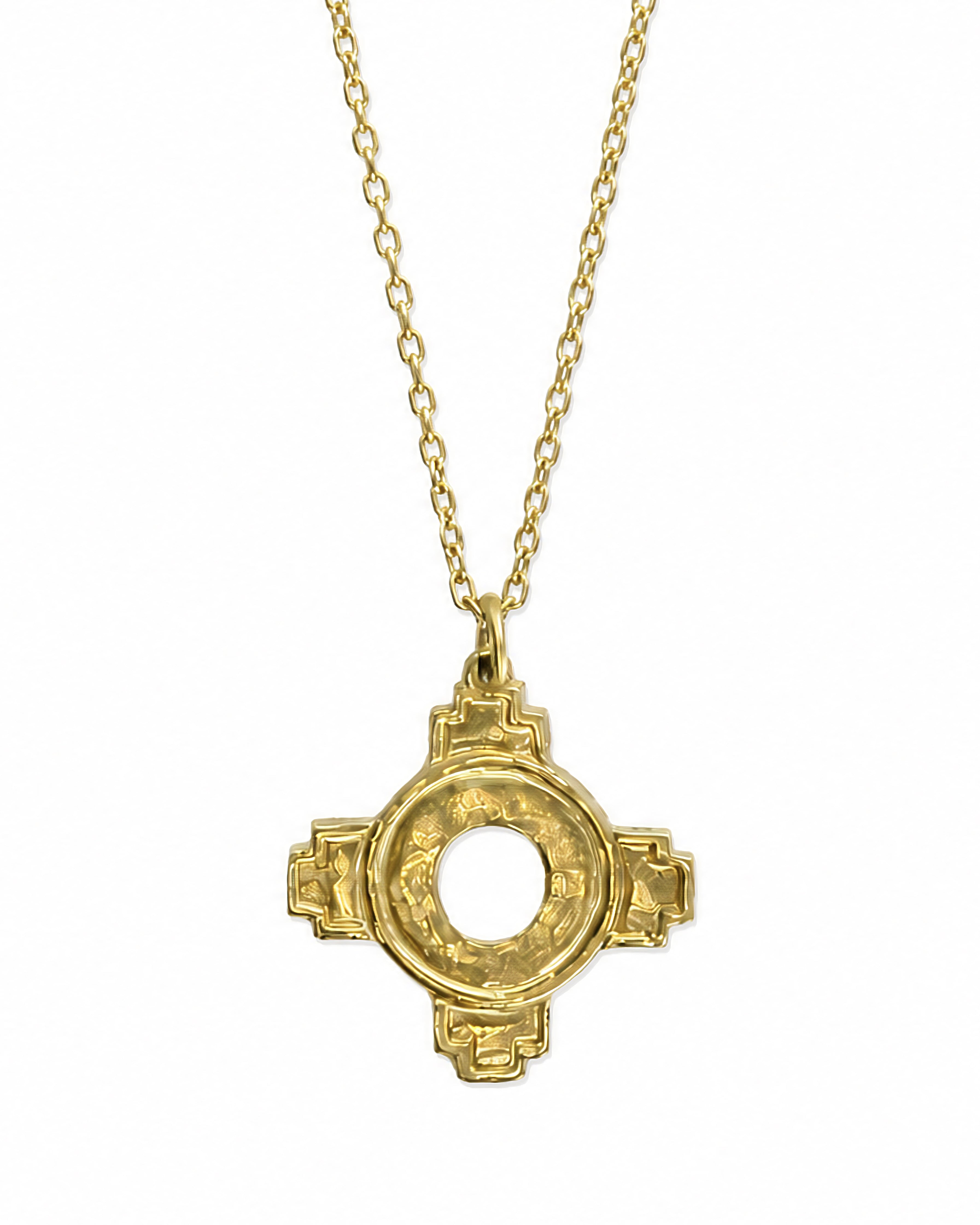
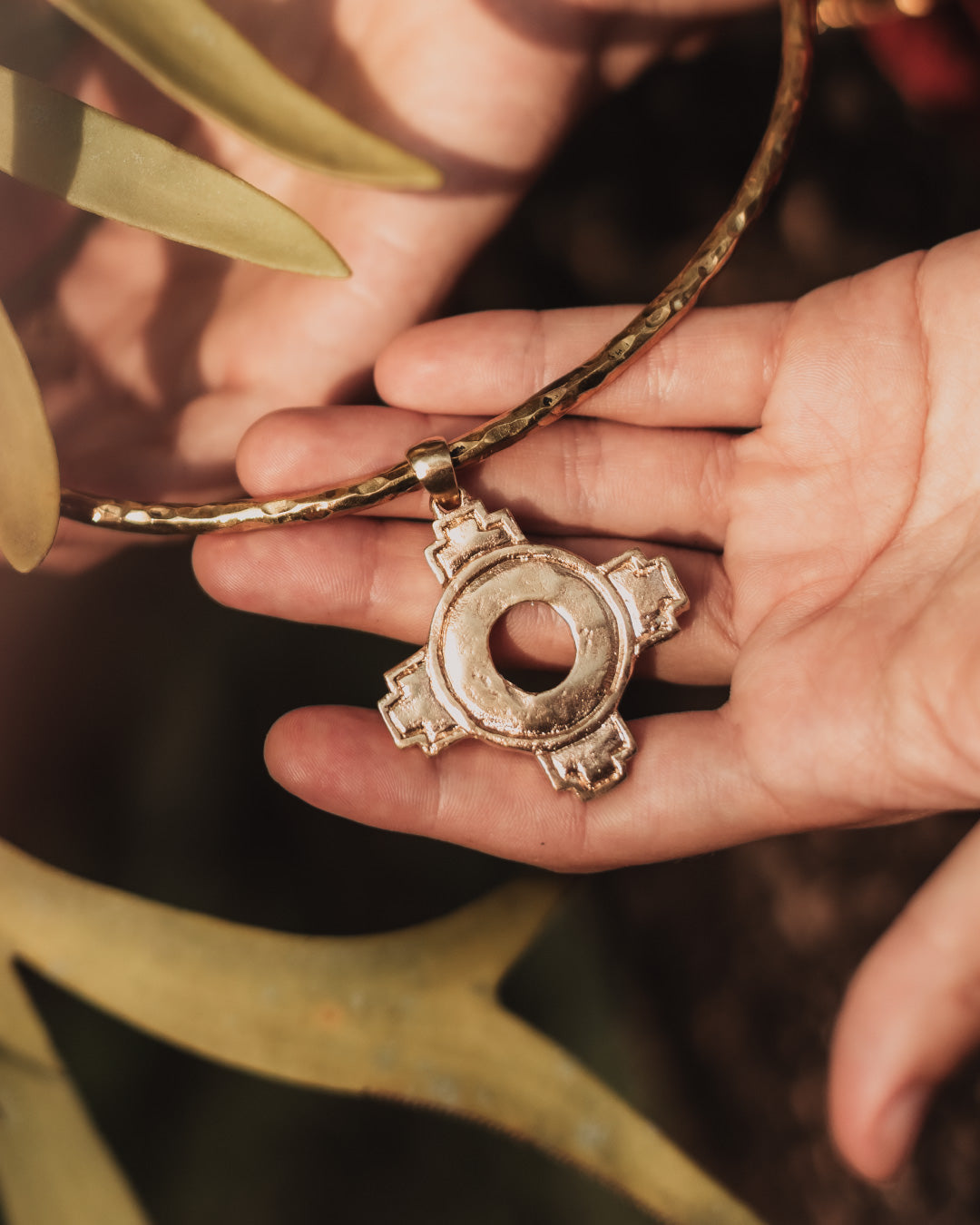
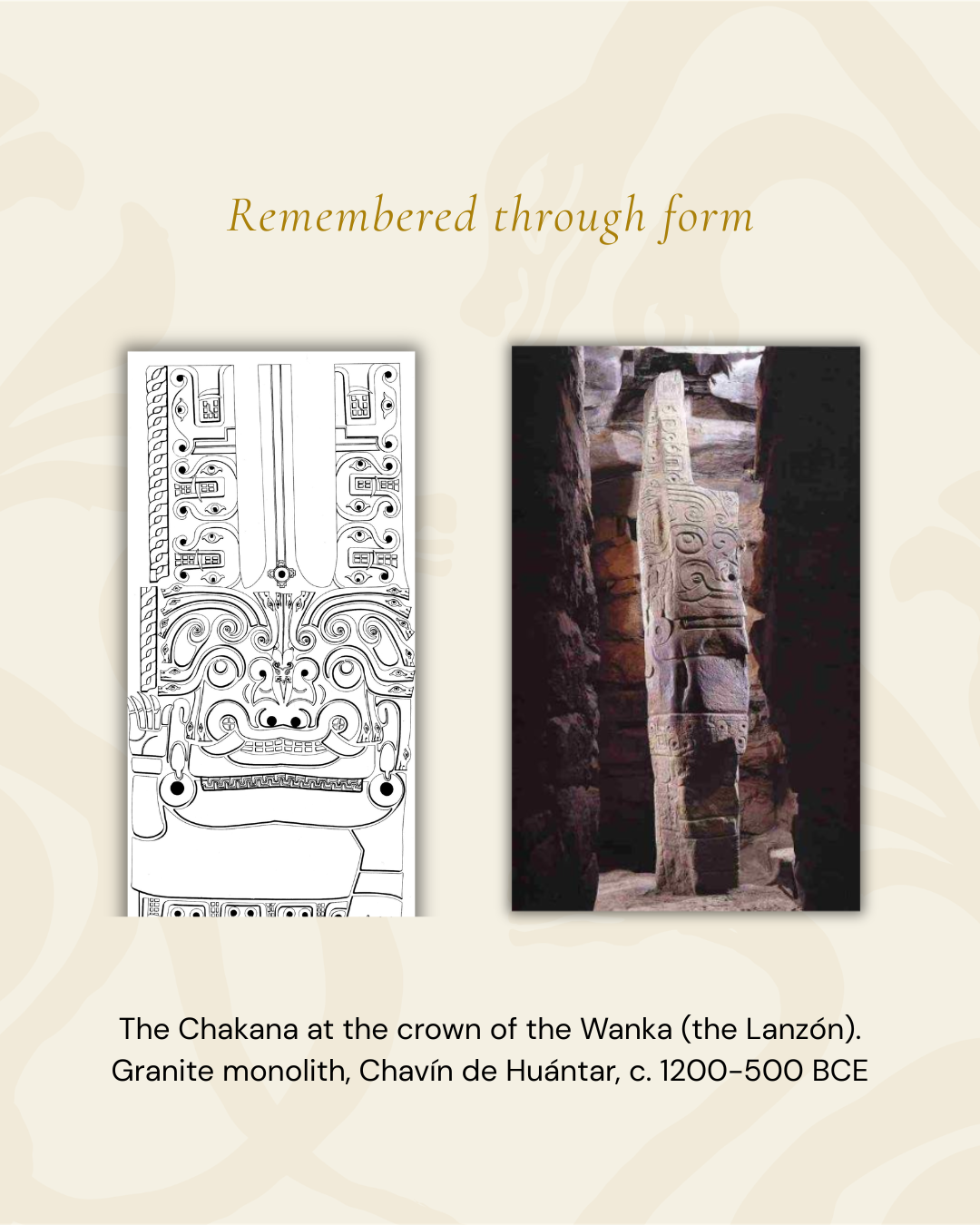
At the crown of the great Wanka - the sacred stone monolith of Chavín de Huántar, still standing in its original chamber after more than 2,500 years - rests a symbol so essential it became the oracle's crown: the primordial Chakana.

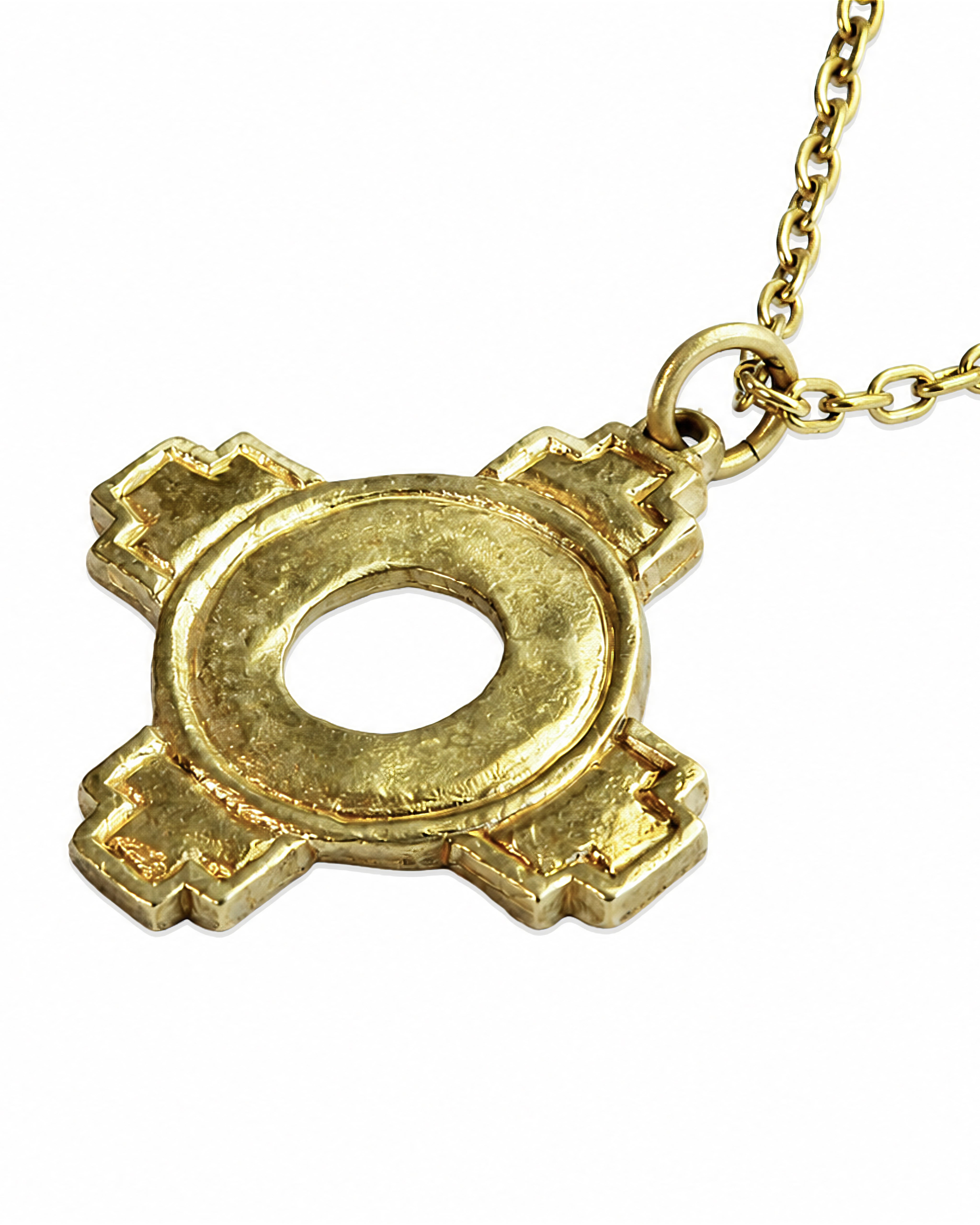
A circle at its center. Four stepped arms reaching outward. Not ornament - cosmogram. Not decoration - technology of balance. The structure through which the entire temple organized itself: its rivers, its stones, its sound, its teaching.

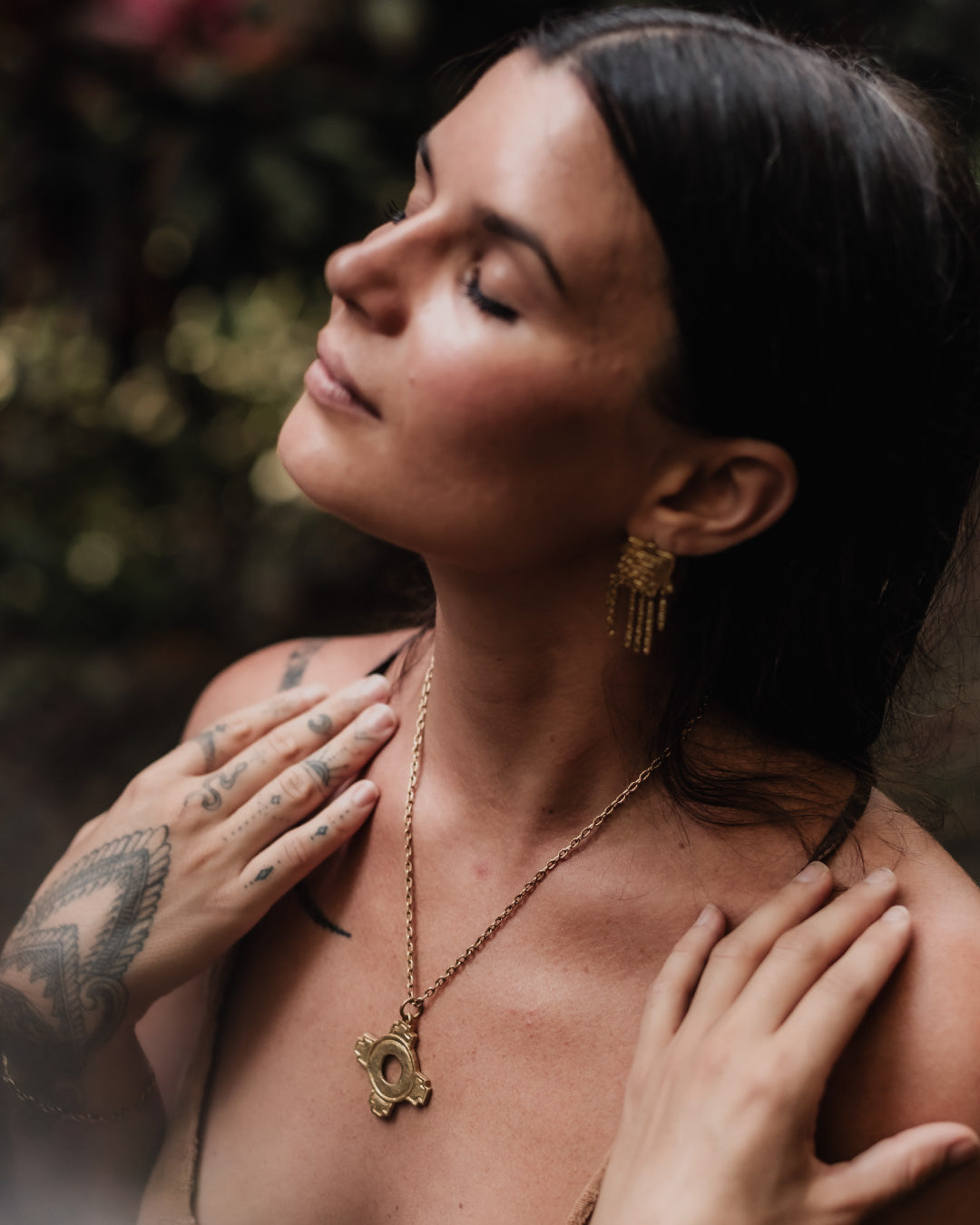
Worn on the body, it does not merely represent this geometry. It becomes it.

The circle holds. The arms reach. The steps move. The center is always here.

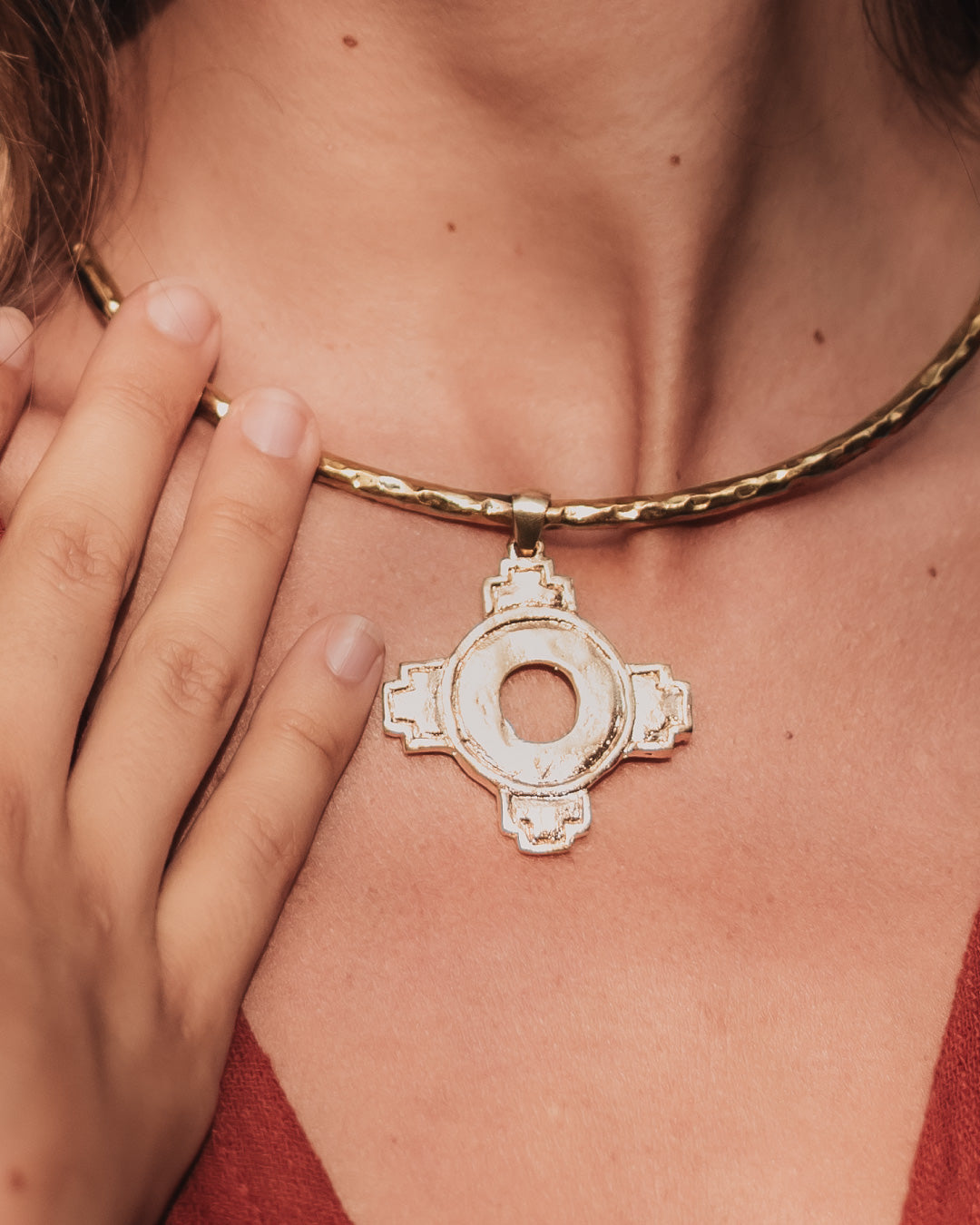
A note for clarity: this necklace comes complete - on its own handmade brass chain. The Quru Choker is offered separately, as an alternative chain, on its own page.

ABOUT YOUR PIECE

The Circle - The Source The open eye. The seed of origin. The still point around which all things turn. In Andean thought, the circle is not emptiness - it is the fullness before form, the silence before sound. It is the axis, the center that holds everything without grasping. Tuku Ñawin - the Total Eye - does not merely see from this stillness, it traverses and fertilizes: not searching, just perceiving, present to all that moves around it. The Four Arms - The Directions Reaching north, south, east, and west - not as abstract points on a map but as living relationships. The arms connect: human to cosmos, inner to outer, the one who wears this to the four winds and all that moves between them. You are already at the crossing. The arms simply remind you. The Steps - The Thresholds Each arm descends in steps - thresholds of transformation. The Chavín understood life not as a straight line but as a rhythm of ascent and descent: into the underworld and back to the heights, into silence and back into sound. The steps are not a ladder. They are a pulse. A teaching that growth requires the willingness to move in both directions. The Crown This Chakana sat at the very summit of the Wanka, the axis mundi of Chavín - the oracle whose body encoded the full cosmology of the temple. The entire site echoed its teaching: built where the Mosna and Huachecsa rivers converge, raised from black limestone in the north and white granite in the south. Opposites not in conflict, but completing each other. Duality woven into wholeness.
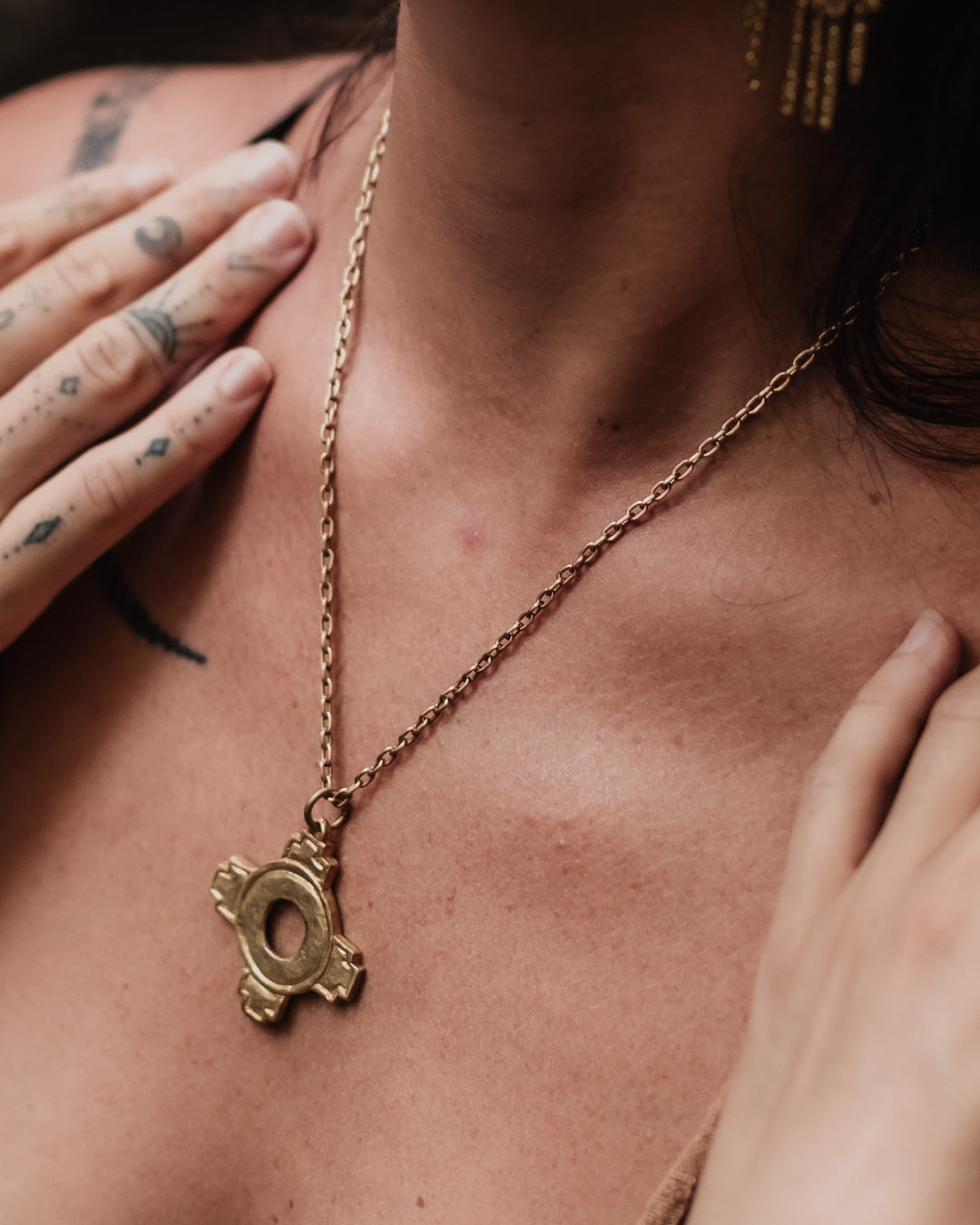
This pendant is alive to placement. Worn over the heart on a chain, the Chakana anchors balance through tenderness. The heart is the seat of feeling, of empathy, of connection - the place that knows before the mind catches up. Here, the Chakana becomes a living reminder: I am already at the center. I am already whole. It helps the wearer return - not to a fixed point, but to the practice of balance, again and again, with gentleness. Worn higher, at the collarbone on a choker, it becomes a point of activation - opening the channel of expression, aligning thought, word, and action with the heart's truth. The collarbone sits at the threshold between heart and voice. To wear the Chakana here is to ask: am I speaking from my center? Is what I say what I actually know? Neither placement is more correct. The body will tell you where it belongs. El cuerpo recuerda lo que el alma sabe ~ The body remembers what the soul knows.
The Chakana at the summit of the Wanka (Lanzón) is one of the earliest known representations of this cosmological form in the Andes. The Wanka itself - a 4.5-meter granite monolith - has stood in its cruciform gallery at Chavín de Huántar for more than 2,500 years, making it one of the most significant sacred objects of the ancient Americas still in its original place. The Chavín Chakana is distinct from the later twelve-pointed cross that spread across Andean cultures in subsequent centuries. This earlier form is more elemental: a circle at center, four stepped arms radiating outward. It appears not only carved on the Wanka but encoded in the spatial organization of the entire temple - in the cruciform gallery structure, in the convergence of two rivers at the site's location, in the deliberate placement of black and white stone as complementary poles. Scholars including Richard Burger (Chavín and the Origins of Andean Civilization, 1992) and John Rick (Stanford Chavín de Huántar Archaeological Project) have documented the Wanka as the axis mundi of the complex: the oracle whose placement, form, and carved imagery declared Chavín as the world-center, the meeting point of all realms. The Chakana at its crown was not decoration. It was the declaration itself. Primary references: Burger 1992; Rick et al. (Stanford Chavín Project); Lumbreras 1977; Tello 1943; Rowe 1962; Kembel & Rick 2004.
Handcrafted in brass - chosen for its warmth, its quiet luminosity against the skin, and its long history of being worn close to the body. Brass is a living metal. It breathes with you, responding to your skin, your climate, the life you live. Over time it may deepen in tone or develop a soft golden patina. - Material: Brass - Finish: Protective coating to slow oxidation - Includes a handmade brass chain. The Quru Choker is offered separately as an alternative. - Made by hand in Bali, in collaboration with artisans who work metal from a place of respect - Designed in Peru Dreamed in Peru. Handcrafted in Bali.

PRACTICAL INFORMATION