Skip to content

Cart

Your cart is empty

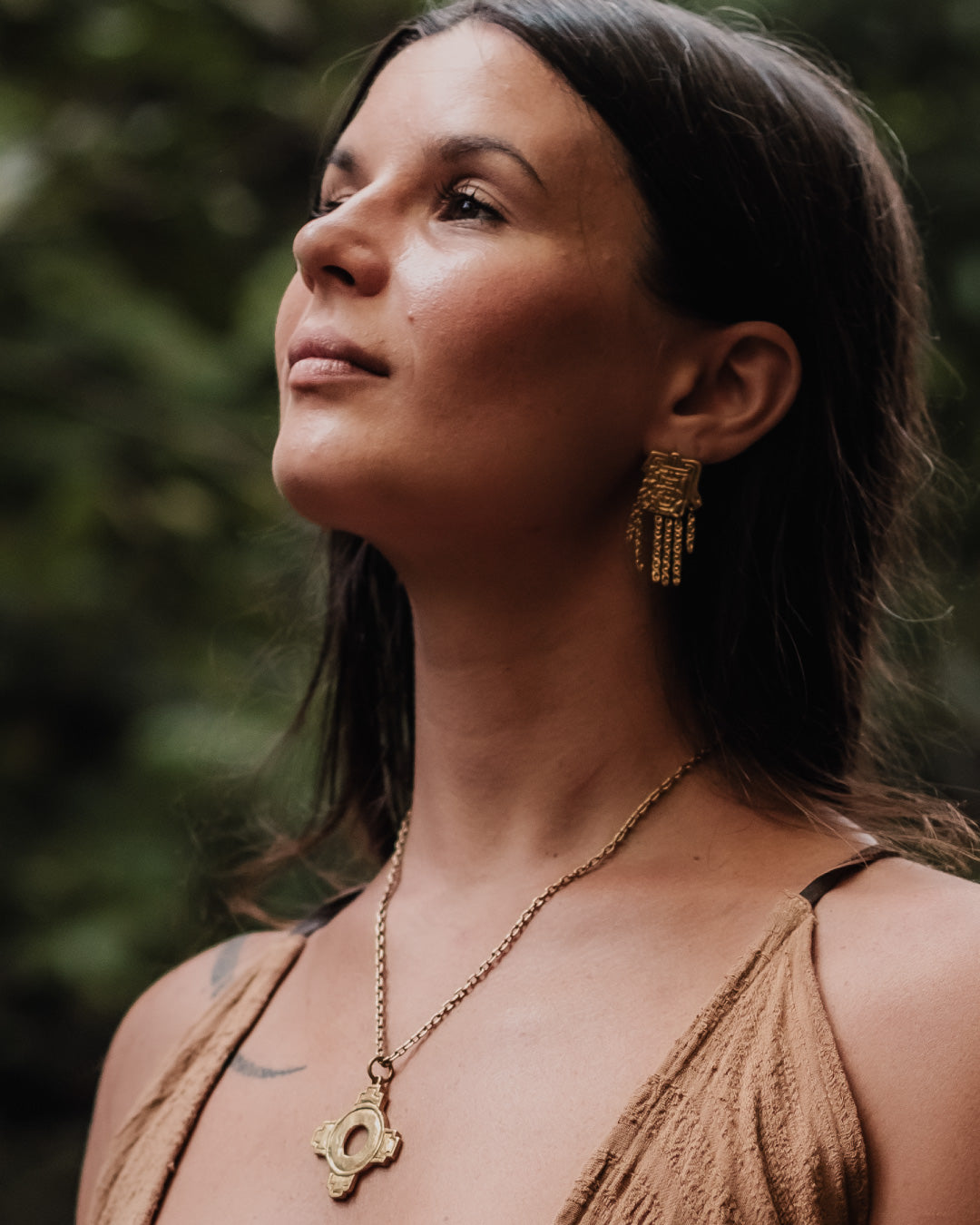
Willka Runa Earrings

Sale priceRp 1.609.000,00

The sacred, made person. Guardian above; vision below; the wearer, the carrier.

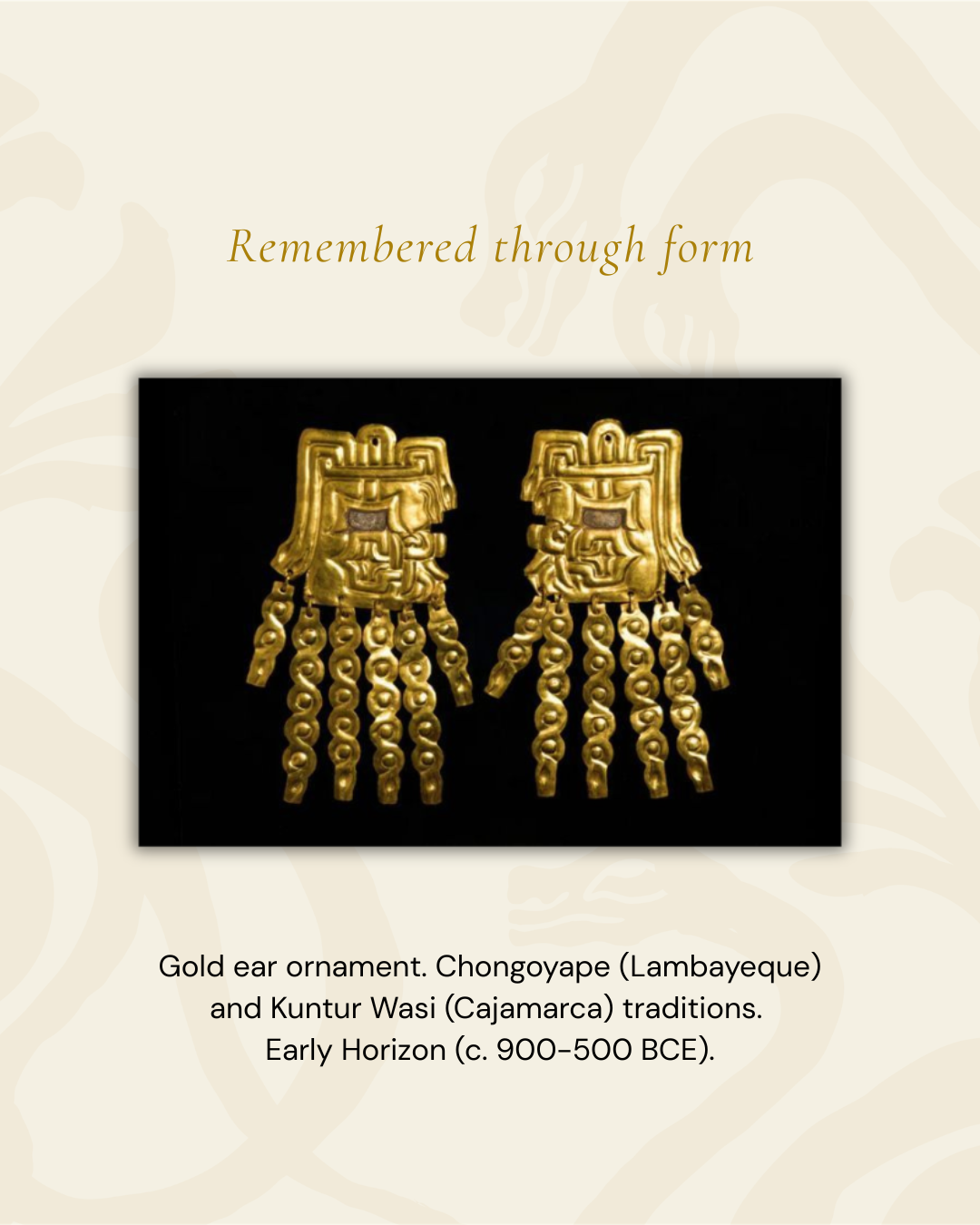
Among the treasures of Chavín de Huántar are great golden ear ornaments that once shimmered in ritual firelight. These were not jewels of vanity. They were living prayers - technologies of memory - visible signs that the body had become a vessel of transformation.

The Willka Runa earrings are born from this lineage. Willka - holy, visionary, inheritor. Runa - the person, the one who carries. Together: the sacred made person, the carrier of what was received.

ABOUT YOUR PIECE

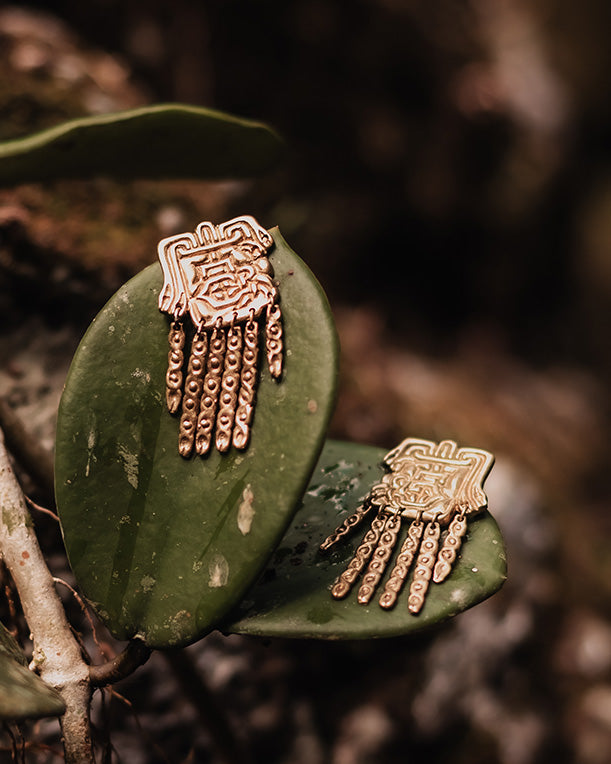
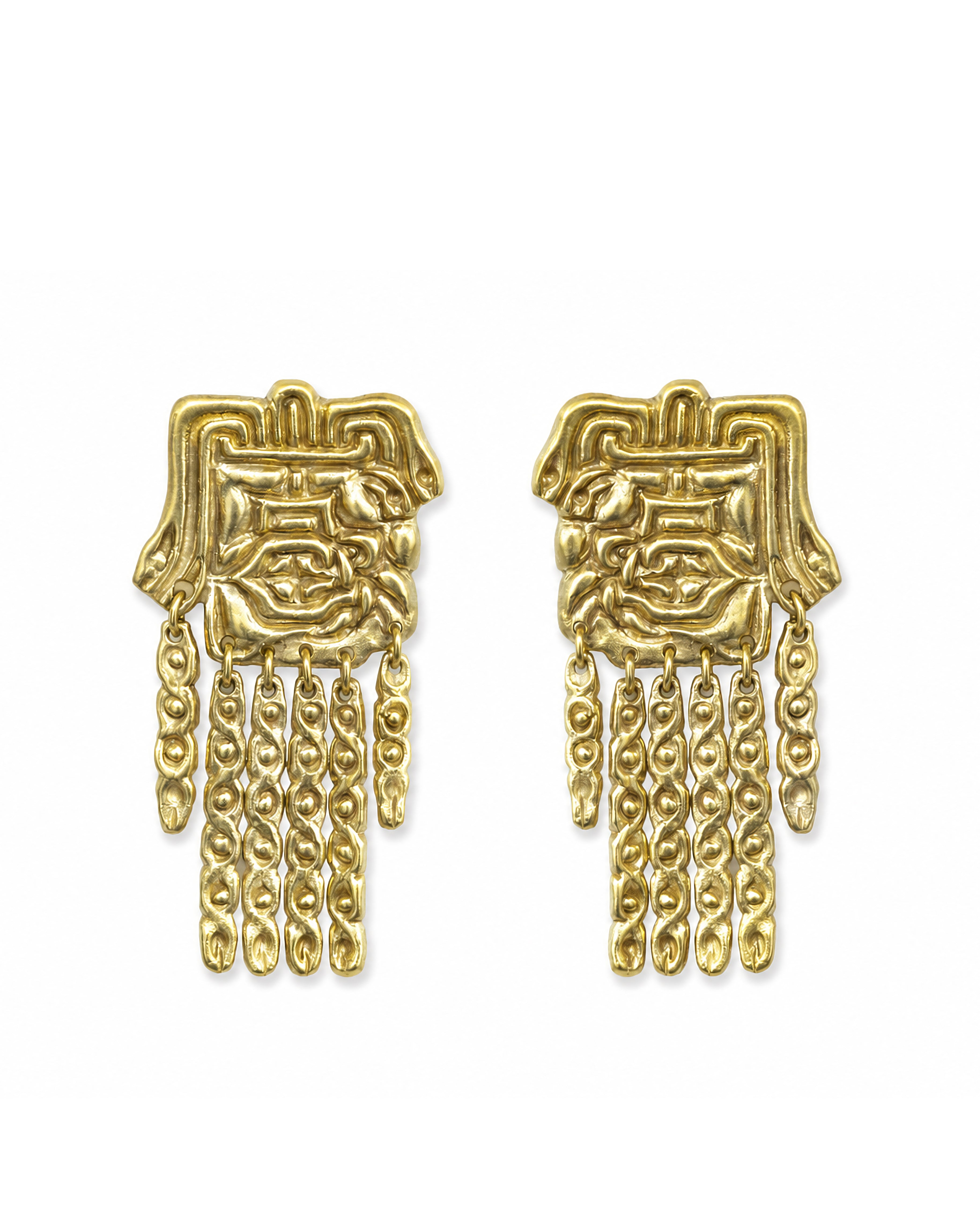
The Feline Face At the center: a guardian. Squared, symmetrical, crowned with precise geometry. In Chavín cosmology, the feline was the supreme icon of power - nocturnal, fierce, visionary, able to cross thresholds and see in darkness. To carry the feline was not to imitate it, but to embody its force: courage, clarity, the ability to walk between worlds. The Serpents Rising from the face like living currents of energy. In ancient Andean thought, serpents (Amaru) were not symbols of danger - they were carriers of vibration, messengers of the life force that connects stone, water, wind, and spirit. Here they flow as hair, as electricity, as the hum of the living world. The Willka Seeds Suspended below in cascading strands - forms that recall Willka seeds, hammered into discs that once swayed and caught the firelight. The Willka is no ordinary seed. In Quechua, the word carries three intertwined meanings: holy or divine; the visionary seeds that open the inner eye in ritual; and grandchild - the living continuation of lineage. Each strand ends in small serpent heads, completing the union of vibration and vision. This triple essence - divinity, vision, and ancestry - pulses within the earrings' design. Together, they form a complete altar: guardian above, medicine below. Strength paired with continuity. Power married to lineage. Willka Runa - The Sacred Made Person Willka - holy, visionary, inheritor - finds its home in the runa, the human being who carries it. In wearing these earrings, you become the carrier of what was received. The wearer is the meeting point: the sacred, made person.
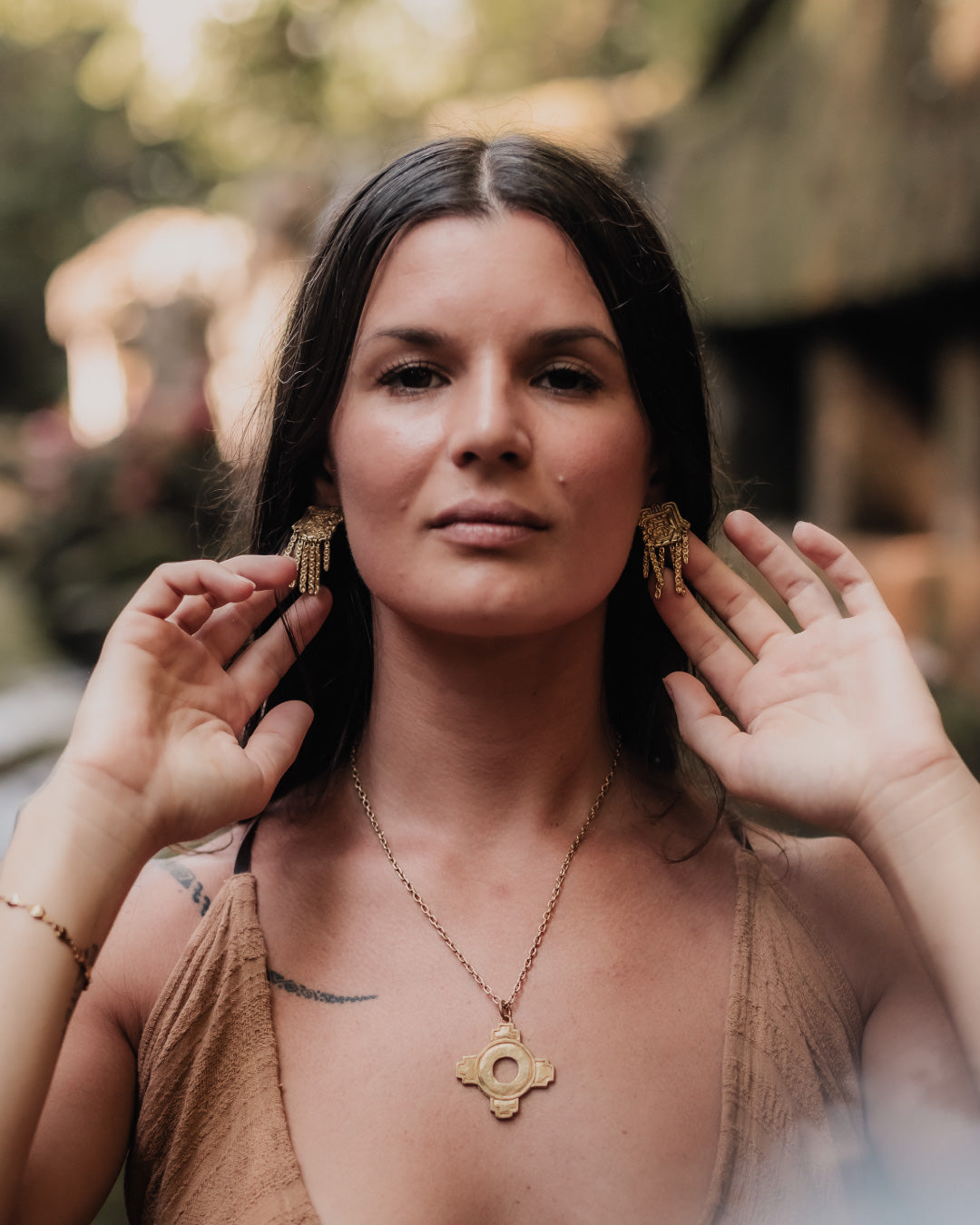
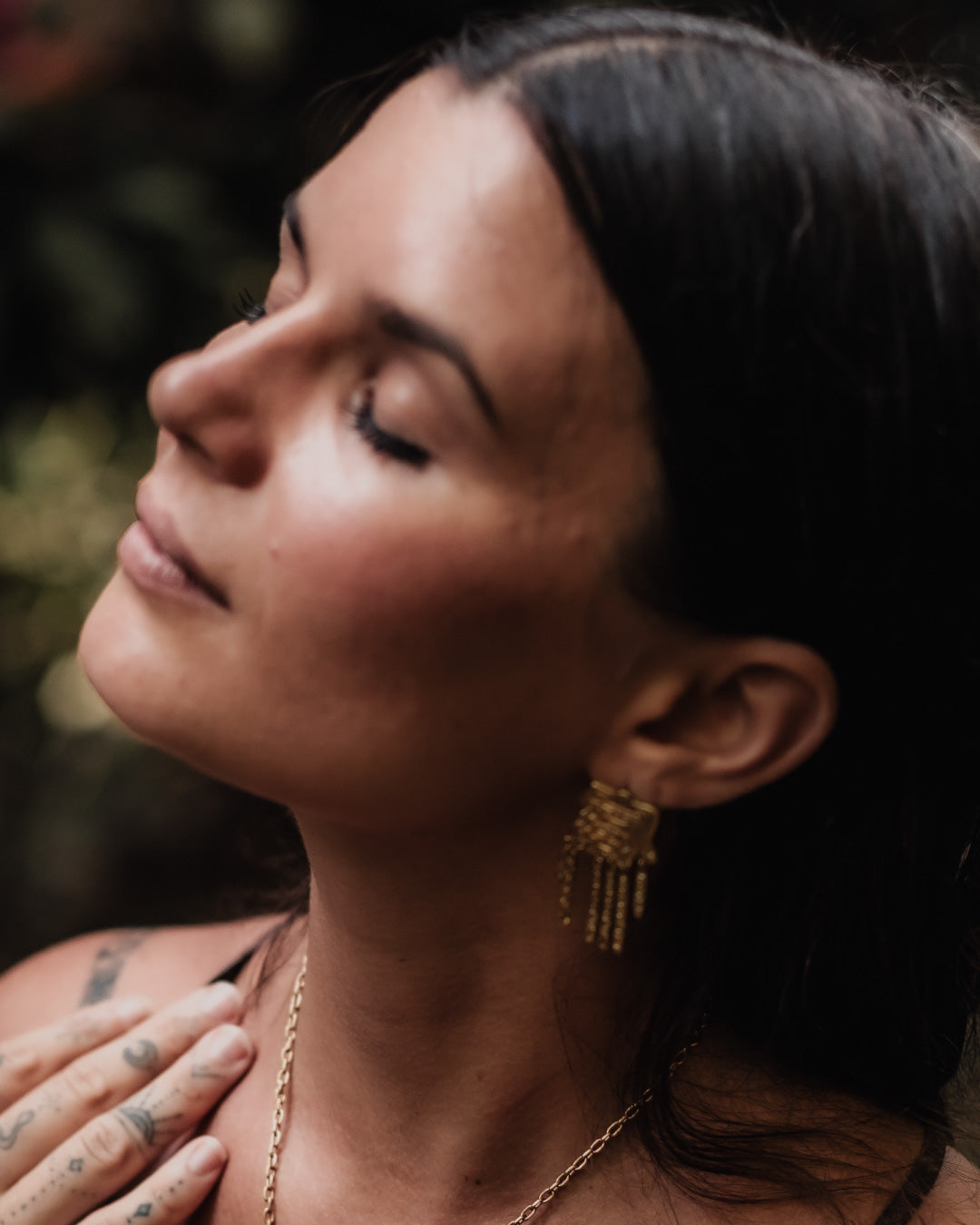
Even the act of wearing them carried layered meaning. In Chavín ritual, stretched earlobes bore the weight of massive ornaments - a body reshaped through devotion. When the golden seeds swayed, they caught the firelight and produced sound, turning sight and hearing into channels of transformation. The ornament blurred the line between body and temple, between human and the sacred. The ears were never passive receivers. They were thresholds - ways of attuning to the dialogue of life. To wear feline guardians, serpent frequencies, and visionary seeds here is to listen not only to sound, but to the subtle communications of stone, water, wind, and ancestor. Adornarse es un acto de presencia y vínculo To adorn oneself is an act of presence and connection.
The Willka Runa earrings are inspired by a well-documented type of Chavín-style gold ear ornament dating to the Early Horizon (c. 900-500 BCE). The original pieces - hammered sheet gold, repoussé-worked into a frontal feline face with serpentine forms and cascading pendant strands - are among the earliest significant works in gold known from Peru. Comparable examples have been recovered from elite contexts associated with the Chavín ceremonial sphere, most notably from Chongoyape (Lambayeque) on the north coast, where two tomb lots yielded an extraordinary assemblage of gold crowns, cuffs, ear ornaments, and pendants. These finds were first analyzed by Samuel K. Lothrop (Gold Artifacts of Chavin Style, American Antiquity, 1951) and reviewed in depth by Richard Burger (Chavín and the Origins of Andean Civilization, 1992). A comparable pair is held in the Cleveland Museum of Art (1957.400), attributed to the north highlands of Peru and linked stylistically to Chavín de Huántar. Similar ear ornaments have also been found at Kuntur Wasi (Cajamarca), where Japanese archaeologists excavated tombs between 1988 and 2003, uncovering some of the oldest gold objects in the Americas - including ornaments featuring feline faces, serpentine forms, and cascading pendants now displayed at the Kuntur Wasi Site Museum and lent to the British Museum. References: Lothrop 1951; Burger 1992; Cleveland Museum of Art (1957.400); Kuntur Wasi Site Museum; Metropolitan Museum of Art, Chavín and Early Horizon goldwork collections.
Handcrafted in brass - a material chosen for its warmth, its quiet luminosity against the skin, and its long history of being worn close to the body. Brass is a living metal. It breathes with you, responding to your skin, your climate, the life you live. Over time it may deepen in tone or develop a soft golden patina. This is not wear. It is presence. - Material: Brass - Finish: Protective coating to slow oxidation - Made by hand in Bali, in collaboration with artisans who work metal from a place of respect for process and material - Designed in Peru Dreamed in Peru. Handcrafted in Bali.

PRACTICAL INFORMATION