
Before the First Piece - Taking the Samples to the Temple
Before the First Piece - Taking the Samples to the Temple
There is a moment in the making of KANTU that I have not talked about publicly, because it feels like the most private moment of the whole process. But it is also, I think, the most important one. And before you receive one of these pieces, you should know it happened.
The question of permission
When the first sixteen designs had been drawn - all of them in a single extraordinary day, the full vision arriving at once the way some things do when you stop trying to control them - I held them for a while before doing anything else.
I had been walking with the tradition of Chavín de Huántar for years. I knew, from that walking, that you do not take from a living tradition without asking. You do not draw on a lineage without acknowledging the lineage. You do not build something new from ancient materials without first returning to the source and presenting what you intend to do.
This is ayni. Sacred reciprocity. Not a transaction - the Ancestors do not need my permission slips. But an acknowledgment: that I know where this comes from, that I am not pretending this originates with me, that I am asking to be a carrier rather than claiming to be a creator.
So before the production began - before a single sample was cast in brass, before the artisan was formally contracted, before anything existed beyond drawings on paper - I made a plan. When the first samples were ready, I would take them to the Temple.
The journey
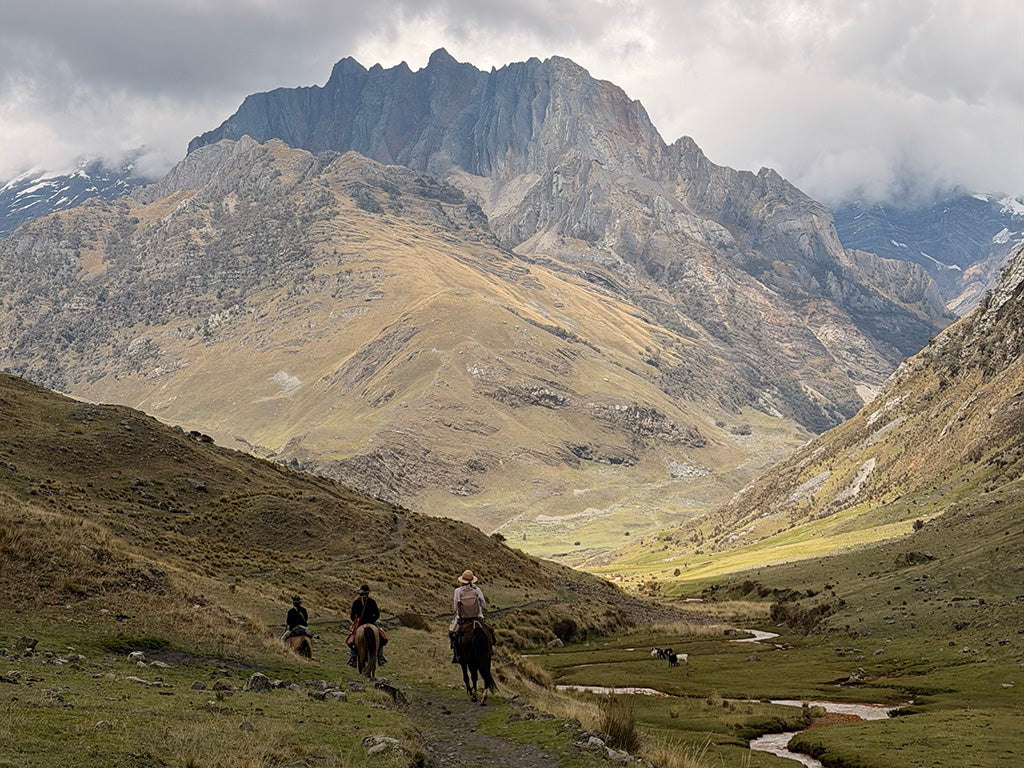
The road to Chavín de Huántar is not easy. The site sits at over three thousand meters, in a valley in the Áncash highlands that requires hours of travel from the nearest city. The road winds through mountains that are, in the tradition, not backdrop but presence - the Jirkas, the great mountain beings who watch and hold and sometimes speak in their own way.
I have made this journey many times over the years. Each time it is different. Each time the altitude and the road and the particular quality of light on the stone does something to the ordinary mind - quiets it slightly, makes it more receptive to what is actually present.
I arrived with the samples wrapped carefully. One piece of each design. I was not alone - my teacher was there, and the dear brothers of this path, my family in Chavín. The people who have walked this tradition alongside me, who know what it means to ask something of the Ancestors before beginning.
In the plaza
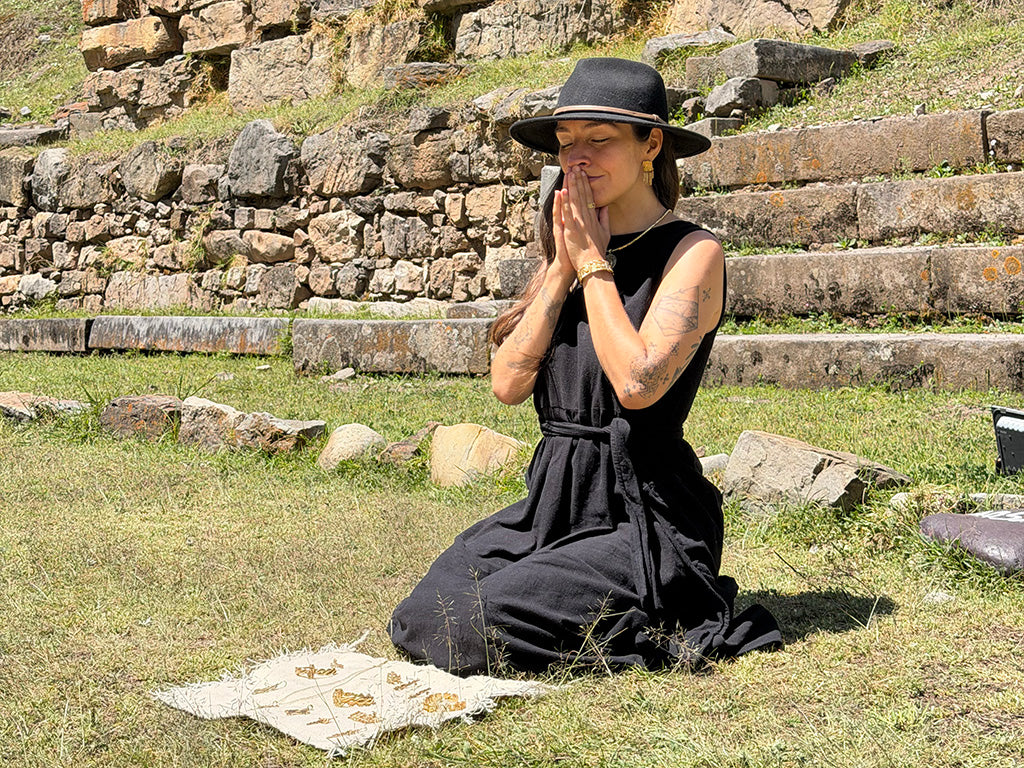
We gathered in the open plaza of the temple complex. The stone walls around us. The mountains present. The sky the particular blue it becomes at altitude when the air is thin and clear.
The galleries of Chavín - the underground stone passages built with such precision that after two and a half thousand years they have not shifted - are now lit as an archaeological site, as they need to be for visitors. But the plaza is open. It is held by the same mountains, breathed by the same air, oriented by the same cosmological axes that the builders of Chavín understood when they chose this place three thousand years ago.
We made the prayer together. Each of us spoke, or held in silence what needed to be held. I placed the pieces before the space, presented what I intended to do with them, said where they were going. Asked for permission. Asked for blessing.
In this tradition, you speak aloud to the forces you are addressing. The Ancestors, the mountain beings, the living presence of a place that has held ceremony for millennia - they are addressed directly, personally, with the particular quality of attention that ceremony asks for.
What happened
I will not claim a vision or a voice or anything dramatic. What happened was quieter than that, and more certain.
A quality of stillness arrived in the group. A particular kind of presence - the kind I have learned, over years of sitting in ceremony with these people, to recognize as the tradition's way of saying: yes. Proceed. Carry this.
When we gathered the pieces and left the plaza, I felt what I can only describe as changed - not dramatically, not visibly, but in the way that happens when something important has been acknowledged and received.
The pieces left blessed. Not because I blessed them - because I brought them to the source, with my community, asked the source to receive them, and something said yes.
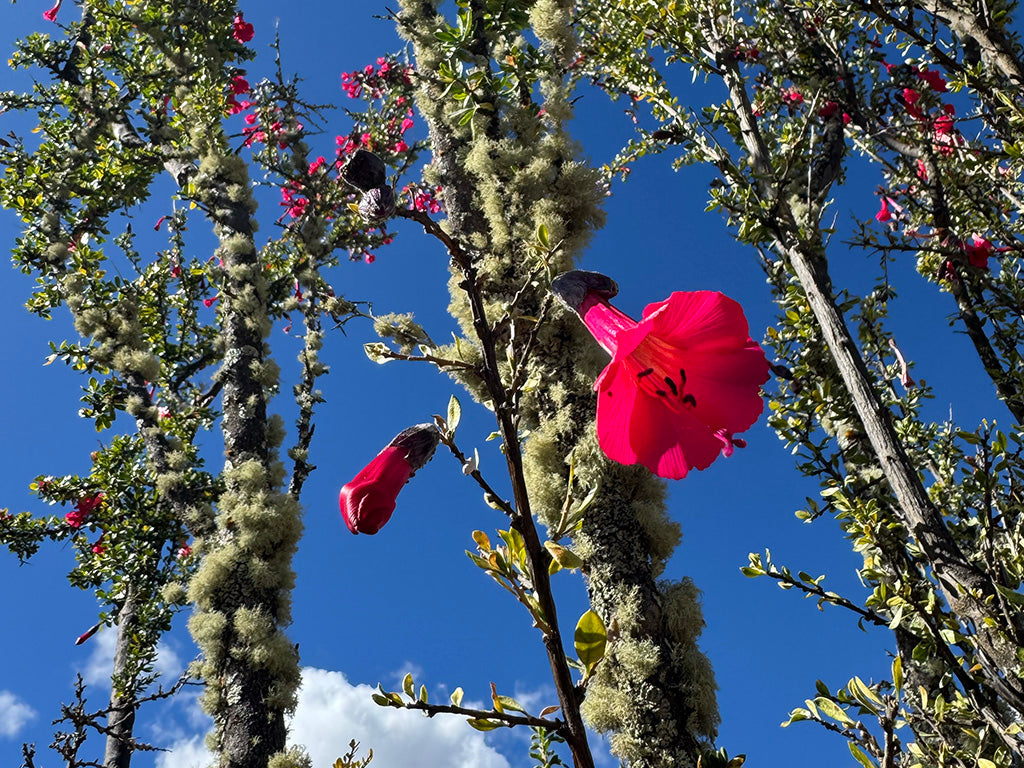
A note on photographs: any images you see alongside this piece were taken on a different visit to Chavín. The actual moment of the ceremony was not photographed. Some things are not meant to be recorded. That moment belongs to the Ancestors, to the community present, and to the silence that held us.
Why this matters for you
When you receive a KANTU piece, you are not receiving something that began in a studio or a factory or a brand strategy meeting. You are receiving something that began in the dark, in the presence of a two-and-a-half-thousand-year-old oracle, in an act of asking.
I do not say this to make the pieces seem magical in a commercial sense. I say it because it is true, and because you deserve to know what you are actually carrying.
The Ancestors were asked. They said yes. Everything that has followed - the photographs, the website, the packaging, the care that has gone into every word written about each piece - everything follows from that yes.
That is why KANTU launches on the solstice. Because some things need to begin at the right moment. And the moment was given, not chosen.
This collection does not begin with me. It begins with them.

Leave a comment
This site is protected by hCaptcha and the hCaptcha Privacy Policy and Terms of Service apply.