
On Pilgrimage - Walking the Intention
On Pilgrimage - Walking the Intention
There is a phrase from the Chavín tradition that has stayed with me since the first time I heard it: caminar la intención - to walk the intention.
It is a teaching about pilgrimage. But it is also a teaching about everything.
What pilgrimage means in the Andean world
In many traditions, pilgrimage is understood as a journey to something - to a sacred site, a holy relic, a place of power. You leave your ordinary life, travel to the extraordinary place, receive whatever is there to receive, and return. The sacred is located elsewhere.
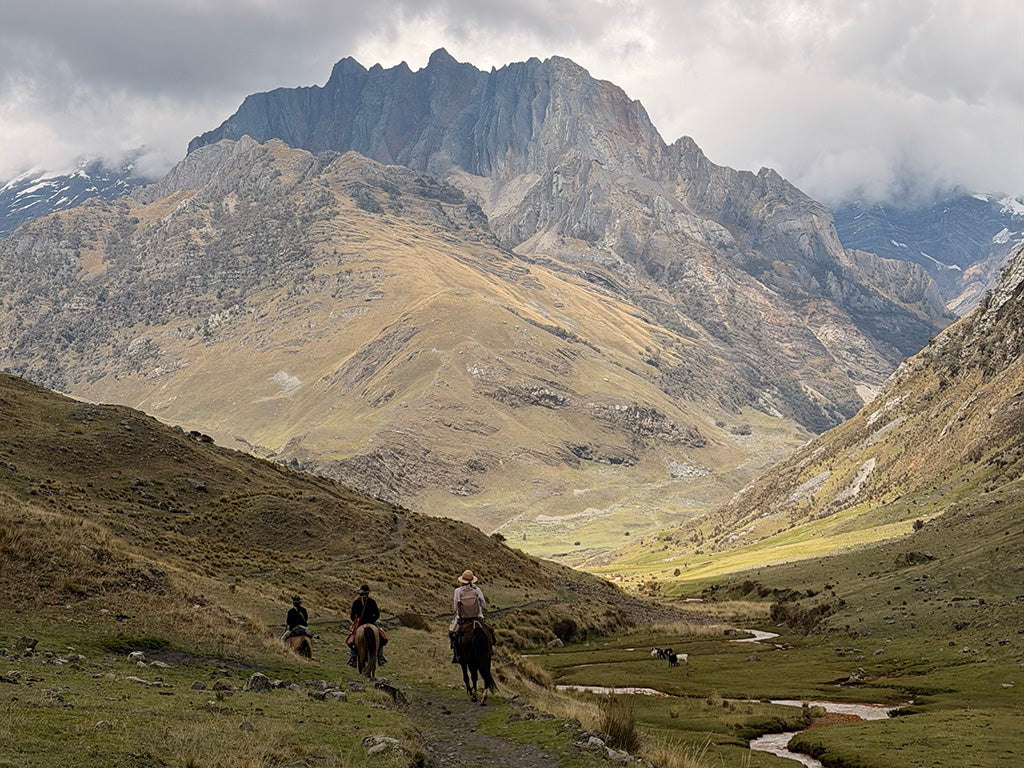
The Andean understanding of pilgrimage works differently. The journey is not primarily about the destination. It is about what happens to the person walking. Every step is an act of intention. The body moving through the landscape - through altitude, weather, exhaustion, beauty - is itself the ceremony. You do not arrive at the sacred place and then begin the practice. The practice begins when you take the first step.
Caminar la intención. The walking is the prayer.
This reframes the entire relationship between the ordinary and the sacred. There is no ordinary journey, if you bring the right quality of attention to it. The path through the mountains is not the route to the ceremony - it is the ceremony. The Andean pilgrim does not separate the traveling from the arriving.
The body as instrument
What makes this teaching so radical is its insistence on the body. Western spiritual traditions have often treated the body as an obstacle - something to be transcended, denied, or disciplined in order to reach the spirit. The Andean cosmovision holds the opposite position. The body is the instrument through which the sacred is encountered. You cannot arrive at the center of the center by leaving your body behind. You must bring it with you, all of it.
This is why ceremony in the Andean tradition is so physical. Why the pilgrimage on foot matters more than the arrival. Why the cold at altitude, the effort of the climb, the way the lungs work harder, the way the feet learn the terrain - all of this is part of the teaching. The body is being recalibrated. The ordinary mind is being slowly quieted by the demands of the walk. Something in the walker shifts.
What we carry
This teaching has implications that extend far beyond pilgrimage in the formal sense.
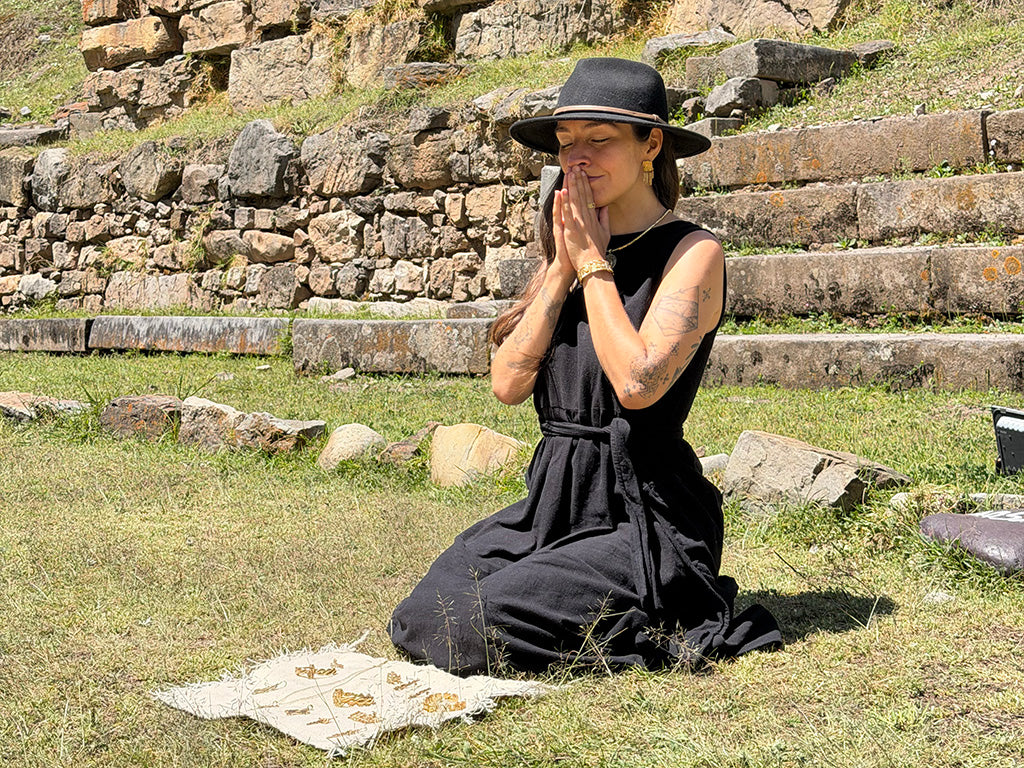
If every deliberate movement can be an act of intention, then what we carry on our bodies matters. The clothes we wear, the objects we hold, the adornment we choose - these are not neutral. They participate in the quality of attention we bring to our days.
This is not superstition. It is the recognition that what we surround ourselves with affects us. That objects chosen with care carry a different quality than objects chosen carelessly. That when we bring intention to what we place against our skin, we are doing something - small but real - in the direction of caminar la intención.
In the Andean tradition, adornment was never merely aesthetic. Objects worn on the body in ceremony were chosen for what they carried: symbols that would speak to the deeper layers of perception, forms that encoded cosmological knowledge, materials that had their own qualities of presence and resonance.
This is the understanding behind every KANTU piece. The serious, ancient recognition that what we carry close to the body is part of how we move through the world - and that we can choose to make that movement a prayer.

Leave a comment
This site is protected by hCaptcha and the hCaptcha Privacy Policy and Terms of Service apply.