
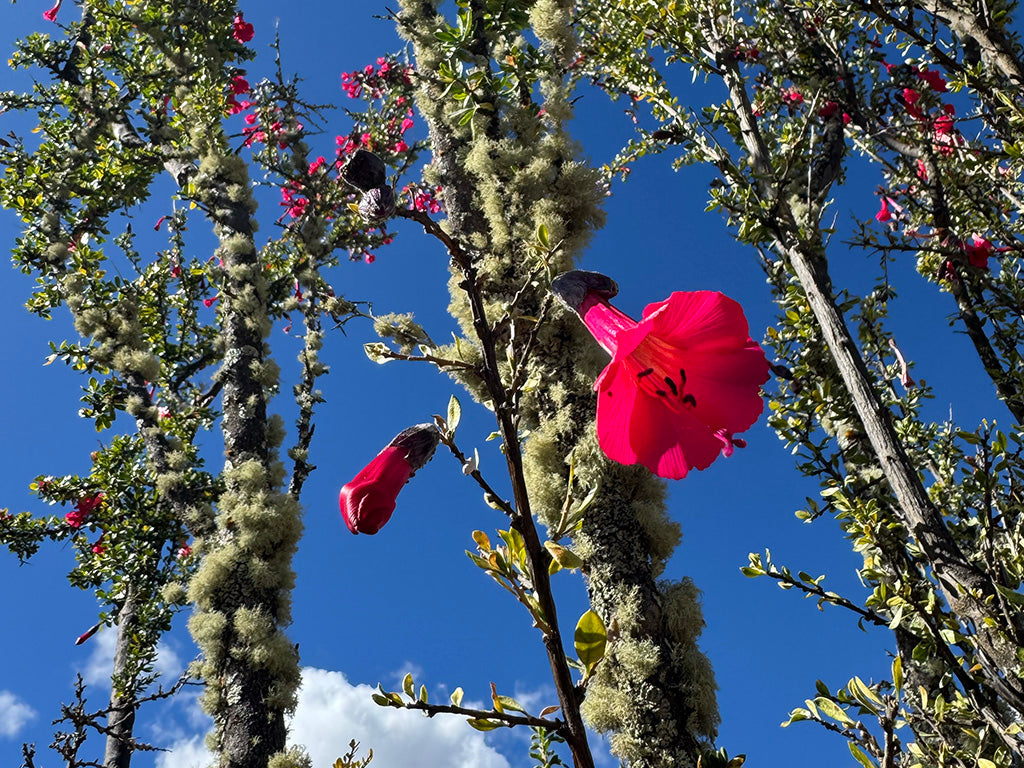
The Kantuta - Flower of the Andes
The Kantuta - Flower of Memory, Flower of the Andes
At elevations above 3,000 metres, where the air thins and the landscape becomes spare and austere, the kantuta blooms. Red, yellow, and purple - the colors of the wiphala, the Andean flag - hanging in clusters from arching branches, it is one of the most striking plants of the high Andes. And one of the most sacred.
Its botanical name is Cantua buxifolia. In Quechua, kantuta. It is the national flower of Bolivia and one of Peru's most revered plants. But its significance predates any nation.
The flower that remembers
In the Andean cosmovision, the kantuta is associated with the capacity to hold memory across time. It appears in ceremony, in weaving, in the iconography of sites and textiles that span centuries. It is offered to the Apus - the mountain spirits - and to Patsamama, the great mother of space and time.
What makes the kantuta significant is not only its beauty but its resilience. It grows where other flowering plants cannot. It blooms in conditions of scarcity. It does not require rich soil or sheltered warmth - it flourishes precisely at the altitude where most things struggle. This quality has made it a symbol of endurance, of memory that persists despite difficulty, of beauty that is inseparable from the harsh and magnificent landscape it grows in.
You cannot take the kantuta out of the Andes and have it remain itself. It is specific to its place in a way that carries meaning: it is a flower of the highlands, not a universal flower. It belongs.
Why KANTU
The name KANTU comes from this flower - and it was chosen with care. Not because the jewellery resembles a flower, or because the brand wanted a botanical reference. But because of what the kantuta holds as a symbol.
Remembrance. The capacity to carry memory across time and distance. The beauty that grows at altitude, in conditions that demand something from the person who seeks it. The connection between what is alive now and what has always been.
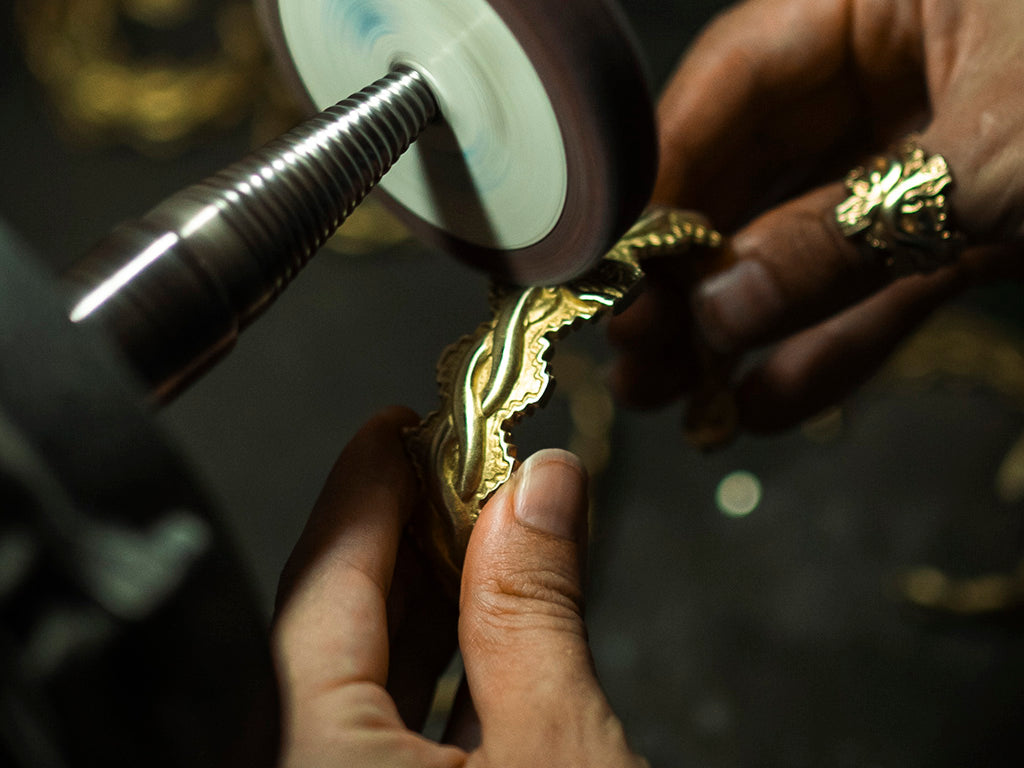
Every KANTU piece is, in this sense, a kind of kantuta: a small flowering of ancient memory, brought into a form that can be worn and carried in daily life. Not transplanted from its origin - it still carries the highlands in it, still carries the symbols of Chavín, still carries the teachings of the tradition it comes from. But offered outward, across distance, to whoever is ready to receive it.
The colors
The kantuta's signature colors - red, yellow, and purple - echo those found in the wiphala, the checkered flag that is the symbol of the indigenous peoples of the Andes. The wiphala itself contains the full spectrum of the rainbow, seven colors representing the diversity of peoples, territories, and natural forces. The kantuta does not hold all of those colors - but its three carry the warmth of the earth and the depth of the highlands from which it grows.
These are colors that KANTU does not use in its visual identity - the brand speaks in gold and dark tones, in warmth and shadow. But the symbolism of the flower is present in a different way: in the rootedness of the work, in its refusal to be separated from where it comes from, in the long arc of memory it is trying to carry forward.

Leave a comment
This site is protected by hCaptcha and the hCaptcha Privacy Policy and Terms of Service apply.