
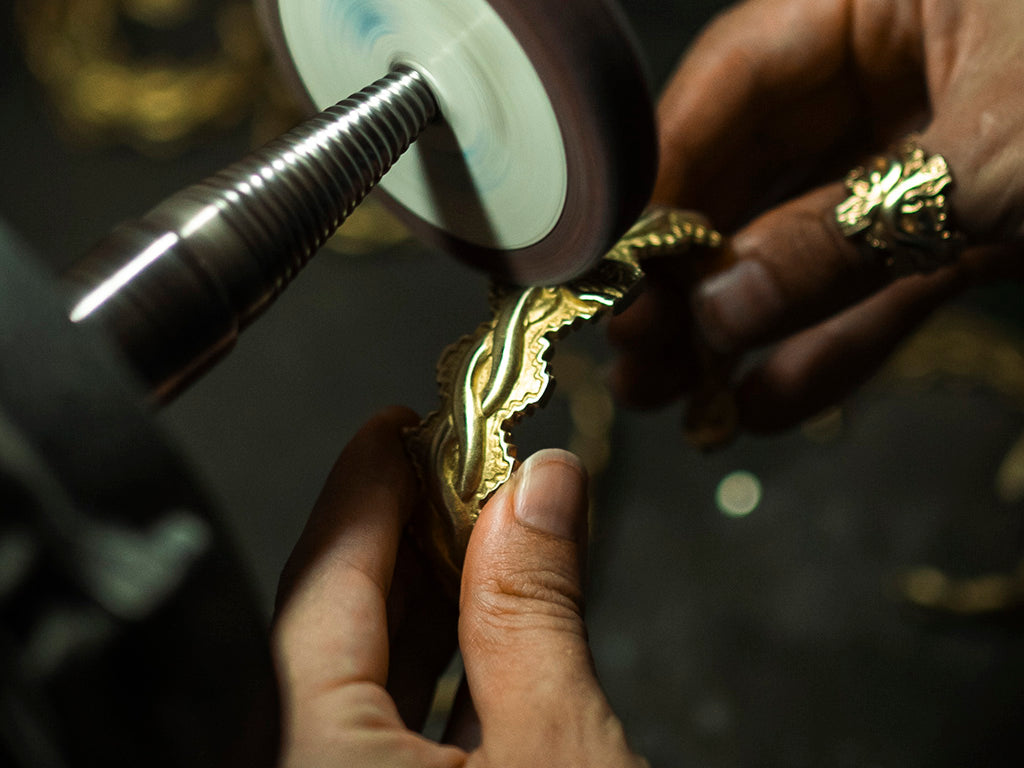
Why Brass
Why Brass - The Living Metal
There is a question that comes up often, and it deserves a real answer: why brass? Why not gold, which shines more permanently? Why not silver, which carries its own long ceremonial history?
The answer is not practical. It is not about cost, though brass is more accessible than either. It is about the nature of the material itself - and what that nature asks of the person who wears it.
Brass breathes
Brass is an alloy - primarily copper and zinc - and it is one of the most responsive metals that exists. It reacts to heat, to moisture, to the pH of your skin, to the oils your body produces. Two people can wear the same brass piece for a year and it will look different on each of them. This is not a flaw. It is the metal's most important quality.
We live in a culture that prizes permanence in its objects. We want things that look the same in ten years as they did when we bought them. We want materials that resist change, resist time, resist life. This preference carries a hidden cost: it teaches us, slowly, that change is damage. That aging is something to be prevented. That the traces left by living are something to be erased.
Brass does not agree with this. Brass participates in your life. It oxidises. It deepens. It develops what jewellers call a patina - a layer of surface chemistry that builds up through use and exposure. In many traditions, this patina is considered the most beautiful quality of the metal. It is proof that the object has been lived with, not stored.
The metalwork of ancient Peru
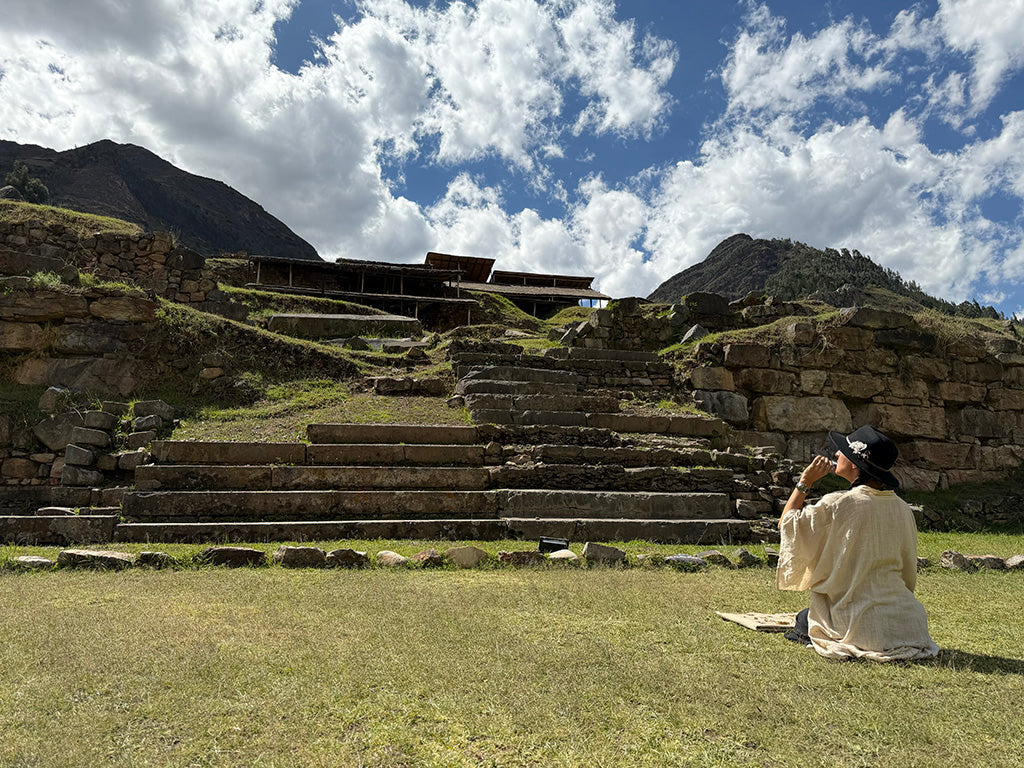
The earliest metalwork in the Americas was created in the Andes. Long before gold became associated with the Inca empire, Andean peoples were working copper, bronze, and alloys with extraordinary sophistication. The pieces found at Chavín de Huántar and surrounding sites - some over three thousand years old - were not made from the most precious materials available. They were made from the materials that could best carry the intention of the maker.
The question those early metalworkers were asking was not what is the most valuable material? It was what does this form need in order to live?
For adornment meant to be worn in ceremony, placed close to the body, held against the skin - the answer was a material that would respond. That would enter into relationship with the wearer. That would not remain indifferent to being touched and used and loved.
What brass asks of you
Wearing brass is a small practice in reciprocity. The metal gives you warmth, beauty, and the particular luminosity that no other material quite matches - that deep gold glow that sits differently against skin than bright yellow gold ever does. In return, it asks that you pay attention.
Keep it dry. Remove it before swimming or bathing. Store it away from perfumes and moisture. After wearing, wipe it with a soft cloth. These are small gestures, but they matter. They are the difference between a piece that thrives and one that struggles.
And if your piece has oxidised - if it has darkened or developed patches - know that this is not damage. It can always be gently restored with lemon and mild soap, rinsed well, dried completely. But you do not have to restore it. You can let it be where it is. Some of the most beautiful brass pieces in the world are the ones that have been worn for decades, that carry the full record of their life on their surface.
That is what brass is. A living metal.

Leave a comment
This site is protected by hCaptcha and the hCaptcha Privacy Policy and Terms of Service apply.